AI Video Generator for Founders: Visualize Your Product Before You Build It

Founders use AI video generators: concept films for investor decks, product demos before the MVP, one brief that aligns the whole team — prompts and costs.
The founder's hardest hour is the one where they have to explain the product before it exists. The investor can't see it, the team pictures something different, the first customer needs a reason to care — and the thing that would fix all three, a video of the product, is exactly what you can't produce when there's no product.
An AI video generator closes that gap: you describe the product in a sentence, and the tool renders it as a clip in minutes. The product doesn't need to exist; the brief does. For a founder, that turns video from a milestone you can't reach into a tool you use every week.
Here's how to put one to work — specifically Felo's AI Video Generator — across the three moments where a founder's story either lands or doesn't: the investor deck concept film, the product demo before the MVP exists, and the internal alignment that keeps a whole company building the same thing. With the prompts, the costs, and the acceptance criteria.

What a text-to-video generator does for a founder
One sentence: it turns a written brief into a 4-to-15-second clip, up to 2K, vertical or horizontal. The clips it makes best are concept pieces — dense, stylized, slightly abstract — which is precisely the register investors, teams, and early customers respond to. Nobody expects a pre-product video to be a shot of the real thing; they expect it to carry the idea.
Two facts frame everything below. Clips run 4 to 15 seconds, and generation is billed per second: 2K costs about $0.14 per second, 768P about $0.09 (roughly 1,000 credits ≈ $1). At that price, the video becomes iterable: you can test three versions of your story before you've spent more than a deck-design subscription. (For the generator's full feature set — reference images, opening frames, per-second billing — see the launch announcement.)
Scenario 1: The investor deck concept film
A pitch deck is a sequence of static slides, and the vision slide — the one that describes what the product will be — is where most decks go quiet. The reader has to imagine the future from bullet points. A 10-second concept clip drops into that slide and does the imagining for them.
Take a concrete venture — a vertical-farming module for restaurant kitchens. The vision slide's bullet list becomes a clip:
"A vertical farm module inside a bright restaurant kitchen, greens growing under soft grow lights, a chef reaching in to harvest. Slow dolly in, shallow depth of field, cinematic grade. Fresh, premium, inevitable mood. 10 seconds, 2K."
One prompt, six elements — scene, subject, motion, camera, style, mood — and the vision slide has a moment instead of a bullet list. The clip doesn't claim the product exists; it shows what the world looks like when it does.
Two variants to test before the meeting: swap the style and mood lines. "Sunlit rooftop greenhouse, documentary handheld, optimistic" pitches the same venture as a sustainability story; "dark kitchen at closing time, single pendant light, determined" pitches it as a kitchen-economics story. Three versions of the future, one afternoon, and the investor meeting tests which one the room buys.
Cost: a 10-second 2K clip costs about $1.38 in credits — on a big screen in a conference room, 2K is the right call. Test variants at 768P ($0.86 each) and ship the winner at 2K. A vision that used to live in bullet points now costs less than the deck's template subscription.
Common mistake: putting the interface in the prompt. On-screen text and UI mockups are where generators stumble, and a garbled interface in a pitch meeting reads as "the product doesn't work." Render the outcome — the chef harvesting, the kitchen transformed — and leave the screens to the design team.
Scenario 2: The product demo before the MVP exists
The validation trap is circular: you can't demo the product to first customers because the product doesn't exist, and you can't decide what to build without talking to first customers. AI video breaks the circle by demoing the experience instead of the product.
The experience is the story you're really selling — not the screens, but the moment the customer's life changes. Describe that moment, and you have a demo you can put in front of real people this week.
Take a venture that's still a mobile-app concept — an app that coordinates airport pickups. The demo clip isn't the app; it's the moment the app creates:
"A traveler walking through a bright airport arrivals hall, a friend waiting with a coffee, the moment they spot each other and smile. Warm morning light, handheld documentary style, shallow depth of field. Warm, human, relieved mood. 10 seconds, 768P."
Now run the validation loop: show the clip to ten people who travel for work, and watch where they lean in. The clip is cheap enough to iterate on the story — change the mood, the setting, the people — until the reaction says the concept holds. That feedback is what the MVP should be built to satisfy.
Cost: a 10-second 768P clip is about $0.86 in credits. Three story iterations to lock the pitch: about $2.58 — less than a single user-research session, and it reaches the same conclusion faster.
Common mistake: demoing the feature list instead of the outcome. "The app tracks flight status and coordinates meeting points" is a spec; "two people find each other in an arrivals hall" is a story people fund. If your demo clip would work as a changelog, rewrite the prompt until it works as a moment.
Scenario 3: Internal alignment — one brief, one video, one shared vision
Every misaligned team meeting is the same meeting: five people, five different products in their heads. The brief says "we're building X," but nobody agrees on what X looks like until it's too late — usually at the first demo, when half the room is surprised.
A 10-second clip from the brief ends that meeting. The founder writes the vision once, the generator renders it, and the clip becomes the shared artifact: in the kickoff doc, on the roadmap, in the new-hire's first week.
"A calm product studio at dusk, a team's planning wall in soft focus behind, one device on a table in sharp focus, warm light pooling on it. Slow push-in, warm cinematic grade. Focused, deliberate, on-the-verge mood. 10 seconds, 768P."
The clip doesn't decide the details — it settles the shape. The engineer reads "small, focused, close to shipping"; the designer reads "warm, careful, premium"; the investor reads "deliberate, nearly there." The details stay negotiable; the direction stops being.
Cost: about $0.86 at 768P. It's the cheapest alignment tool the company will ever buy — cheaper than the offsite, cheaper than the rework from the misaligned quarter, and it lasts as long as the vision does.
Common mistake: trying to align on the literal spec. The alignment clip's job is the vision's shape and mood, not its feature matrix. When the team starts debating whether the device in the clip matches the spec, that's the meeting working — the clip has done its job.
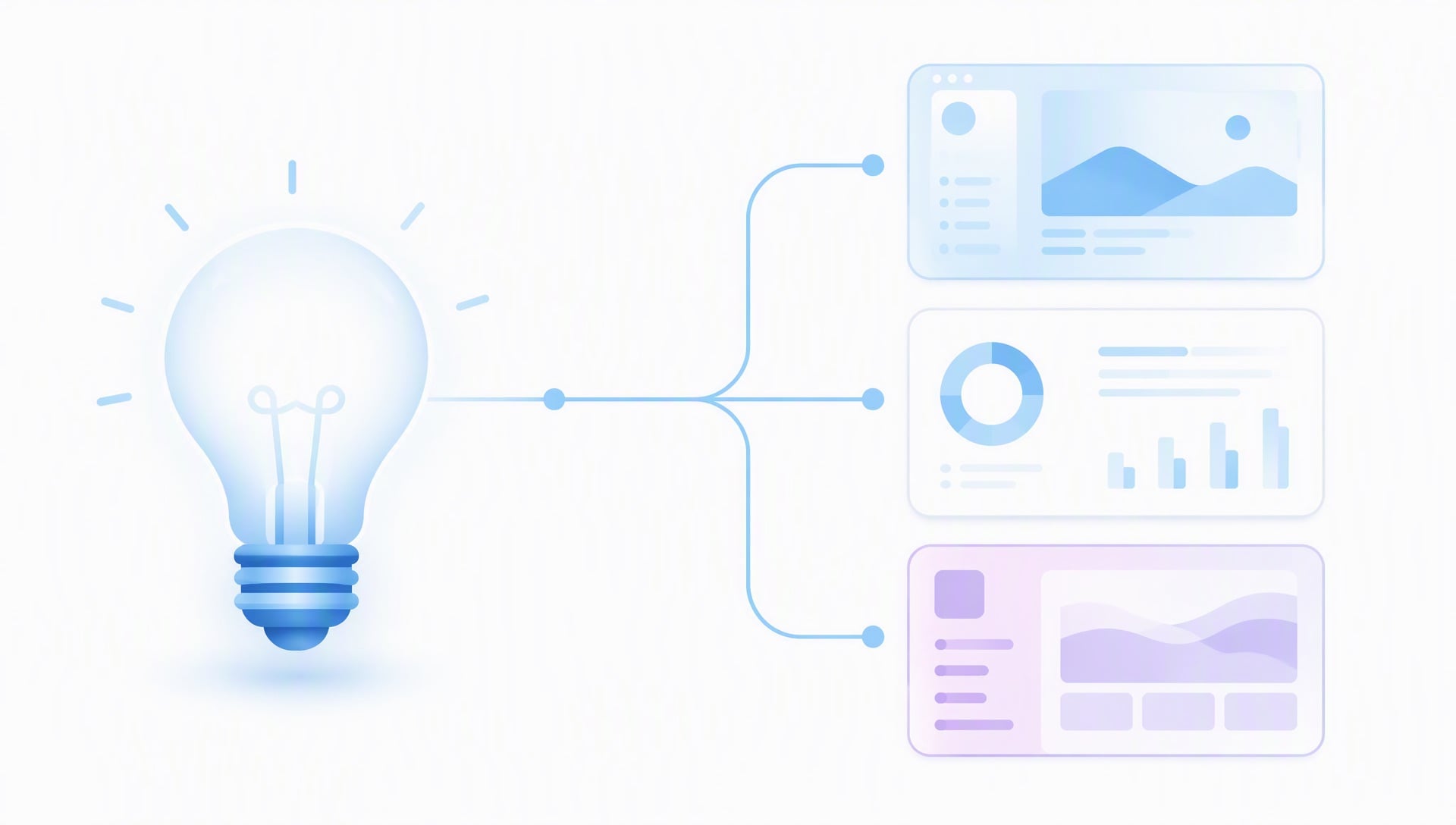
The tool stack that makes this fast
The generator is the core, but four supporting pieces complete the loop — and two are free.
- AI Video Prompt Generator (free): the vision-to-prompt step. A paragraph of the founder's pitch in, six-element prompts out — the difference between "we'll describe it eventually" and "we have a prompt for every slide."
- Felo AI Image (free): the same concept, as stills. The deck's hero image and the concept clip from one vision — one idea, both formats, both from text.
- Felo Agents with the video tool: for ventures that iterate the pitch weekly, the repeatable loop — brief → concept clip → three variants — can be bundled into a custom Agent that produces the batch on command. It's a five-minute setup; our guide on creating a video-generating Agent walks through it step by step.
- The multilingual platform: when the deck goes abroad — or the room speaks a different language — Felo generates and prompts in the language you think in, and Global Search covers 30+ languages for the market research that feeds the brief.
The stack turns "can we show this idea as a video?" from a no-until-we-build-it into a yes-in-ten-minutes. That's the founder's unlock: the pitch stops waiting on the product, and the product starts waiting on the pitch.
The same tool runs through every role in the series: creators cut concept clips into channel content on AI Video Generator for YouTube Creators, social teams test how the vision plays on the feed at AI Video Generator for TikTok & Social, marketing folds it into launch campaigns at AI Video Generator for Marketing Teams, and e-commerce sellers demo the product itself at AI Video Generator for E-commerce.
The workflow: brief, six elements, refine
The six-element structure — scene, subject, motion, camera, style, mood — is the series' spine, and for founders it doubles as a pitch diagnostic. A founder who can fill in six elements about their product has a clearer pitch than most founders who can't; a prompt that fails to come together usually reveals the weak spot in the pitch itself.
Felo's workflow mirrors the brief: describe the idea, add creative direction, generate — then refine by editing the prompt and regenerating. The founder's diagnosis table:
| What the room says | Likely weak element | Fix |
|---|---|---|
| "I can't see it" | Scene or subject | Show the outcome, not the interface — name the hero object |
| "Feels generic" | Style | Strengthen the world: setting, grade, time of day |
| "What's the scope?" | Subject | One hero object in sharp focus; everything else recedes |
| "That's not what we agreed" | Mood | Re-anchor the mood line to the brief's core promise |
One-element fixes cost the same as full regenerations — and for a founder, fixing the prompt is often the fastest way to fix the pitch.
A pitch-week plan
Concrete beats advice. One venture, one week of pre-product storytelling, all costs:
- Day 1: write the vision as a brief, generate three concept directions at 768P ($2.58). Pick the story the room believes.
- Day 2: ship the winner as a 2K concept film for the deck ($1.38).
- Day 3: one customer-validation variant at 768P for the ten-user test ($0.86), plus the deck's hero still via AI Image (free).
- Day 4: one alignment clip at 768P for the team kickoff doc ($0.86).
- Day 5: archive. The deck, the validation, and the kickoff all reference the same clip — the vision now has one canonical form.
Week total: about $5.68 — six clips covering the investor meeting, the customer test, and team alignment, for less than the founder's design-tool subscription. Run it every month the vision evolves, and the company always has a current, shared picture of what it's building.
What it actually costs
Felo credits run roughly 1,000 credits ≈ $1. Video is billed per second:
| Clip | 768P | 2K |
|---|---|---|
| 5 seconds | $0.43 | $0.69 |
| 10 seconds | $0.86 | $1.38 |
| 15 seconds | $1.29 | $2.07 |
Two rules for founders. Iterate at 768P, present at 2K — story tests and team clips at 768P; only what hits a big screen earns 2K. And budget in story-versions, not clips: $5.68 a week buys six versions of the vision — which is six opportunities for the room to say what they actually think.
How to judge a generation (and when to regenerate)
- Does it carry the vision? The clip should read as the future the company is building — not a product shot, a promise.
- Does it demo the outcome? If it would work as a still, it's not a concept film yet. The clip should move like the product's future.
- Does it hold in the room? On a conference-room screen and on a phone in a group chat — both are where the vision gets judged.
One practical rule: keep on-screen text out of prompts. Rendered text is the least reliable element, and in a pitch it reads as broken product. Render the world, add the words in the deck.
FAQ
Is the AI video generator free? Video generation is a Pro feature on Felo — there's no free tier. The per-second pricing above lets you estimate any clip before you make it. The prompt generator and AI Image are free, which is where a pre-revenue founder can start.
Can I use generated clips in fundraising materials? Yes — the generator is built for ads, e-commerce, and social content, and concept films for decks and pitches are squarely in scope. Just present them as what they are: concepts, not shipped product.
Can it show my actual product or UI? It renders scenes from text — and rendered text and interfaces are its least reliable output. For a pre-product concept film, that's a feature: it keeps the pitch focused on the outcome instead of the screens.
How long can a generated clip be? 4 to 15 seconds per clip — which matches how concept films actually work: one idea, one moment, cut together in the deck or the doc.
Do I need to write prompts in English? No. Felo is a multilingual platform — Global Search alone covers 30+ languages — and the generator responds to the description's clarity, not its language. Write the prompt in the language you think in, even when the room doesn't.
What if the concept clip doesn't match what we build later? That's the point of a concept — it's a test, not a commitment. The discipline is keeping the vision's shape (the hero object, the mood, the promise) stable across versions, while the details evolve with the build.
The investors, the team, and the first customers all need to see the product before it exists. For the price of a design subscription, a founder can give them the seeing tool — and find out which vision the room actually believes in, weeks before the build starts.
Try Felo AI for Free → and see your vision before the build starts.
This post is also available in 简体中文, 日本語, 한국어, 繁體中文, हिन्दी, Français, العربية, Русский, اردو, Bahasa Indonesia, Deutsch, Tiếng Việt, Türkçe, Italiano, ไทย, Español, বাংলা and Português.