AI Video Generator for TikTok & Social: Test 5 Hooks in One Afternoon

How social teams use AI video generators: five hook variants for one idea in an afternoon, trend clips in hours, daily test batches — real prompts and costs.
The trend window is three to seven days. By the time a shoot gets scheduled, lit, and edited, the sound has already peaked — which is why most social content arrives fashionably late. The feed doesn't punish quality first; it punishes timing and the first second.
An AI video generator compresses that timeline: you describe a shot in a sentence, and get a vertical 9:16 clip in minutes, no shoot, no edit session. The bottleneck for social content stops being production — it becomes deciding which of your ideas deserves the slot.
Here's how to put one to work — specifically Felo's AI Video Generator — the way social teams actually use it: five hooks for one idea in a single afternoon, trend-format clips in hours instead of days, and a daily test batch that turns the feed into a measuring instrument. With the prompts, the costs, and the acceptance criteria.
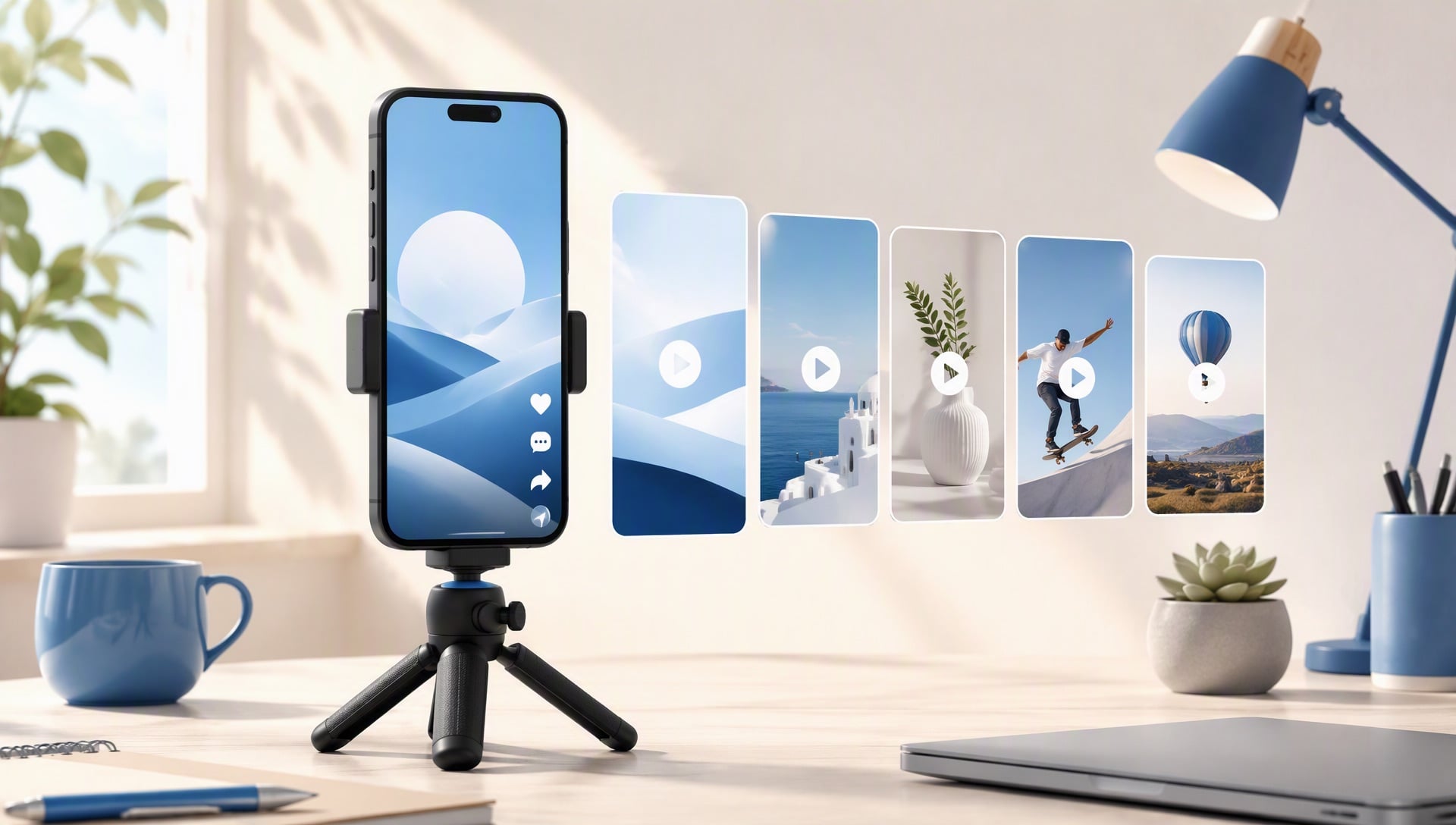
What a text-to-video generator does for a social feed
One sentence: it turns a written brief into a 4-to-15-second clip, up to 2K, vertical or horizontal. For a social feed, that is exactly the format TikTok already runs on — short, visual, sound-driven moments where the idea matters more than the production value. It won't shoot a vlog, and it shouldn't; the feed's highest-rotation content is the clip.
Two facts frame everything below. Clips run 4 to 15 seconds, and generation is billed per second: 2K costs about $0.14 per second, 768P about $0.09 (roughly 1,000 credits ≈ $1). A hook that flops costs $0.43 and three minutes. That low cost of failure is the entire reason testing five hooks in one afternoon is a sane strategy — it's the same bet as a thumbnail A/B test, but for the first second of a video. (For the generator's full feature set — reference images, opening frames, per-second billing — see the launch announcement.)
Scenario 1: Five hooks for one idea, in one afternoon
The feed is a first-second competition. Every view is won or lost before the viewer decides to stop scrolling, which means the hook isn't a creative flourish — it's the product. The winning practice is simple: don't guess which hook lands, test them.
Take a concrete idea — a travel channel's video on packing a week in one carry-on. The same idea, five different entrances, each a 5-second clip:
The question hook: "A half-open suitcase on a hotel bed, clothes drifting into it in slow motion, golden window light. Gentle slow push-in, shallow depth of field. Clean, warm color grade. Playful curiosity. 5 seconds, 768P."
The statement hook: "An overhead shot of a perfectly packed carry-on, every item in its place, one spare corner left. Slow orbit, crisp daylight, minimal styling. Confident, orderly mood. 5 seconds, 768P."
The visual-wow hook: "A T-shirt folding itself into a tight roll in one continuous take, macro lens, linen texture detail. Smooth lateral tracking, soft studio light. Satisfying, hypnotic mood. 5 seconds, 768P."
The transition hook: "A chaotic pile of clothes on a bed that snaps into a neatly packed suitcase in one cut. Quick whip-pan transition, handheld energy. Energetic, punchy mood. 5 seconds, 768P."
The curiosity-gap hook: "A hand zips a packed suitcase shut; the camera holds on the closed case for a beat, then cuts to black. Slow pull-back, moody side light. Anticipatory, secretive mood. 5 seconds, 768P."
Same video idea, five different promises. The question hook sells the fantasy, the statement hook sells the expertise, the transition hook sells the satisfaction — each one tests a different reason a viewer might stay. Post the strongest, and keep the other four in a hook bank for the next video on the same topic.
Cost: five 5-second clips at 768P cost about $2.15 total. The whole experiment — writing the five prompts, generating, reviewing — fits in one afternoon, and the five variants cost less than the platform's boost button. That's the point: the feed gets to vote before the budget does.
Common mistake: writing five variations of the same opening. If hooks 2 through 5 all start with the same shot and the same energy, you haven't tested anything — you've rendered one idea five times. The five types above disagree on entry point, energy, and promise; that disagreement is where the signal comes from.
Scenario 2: Trend-format clips in hours, not days
Trends are calendar events, and the calendar is short. A sound catches, saturates, and peaks within days — while a traditional shoot needs a day of scheduling, a crew, and an edit pass. Most creators solve this by watching the trend pass them by.
AI video removes the production week. The format of a trend — POV, challenge, sound-sync reveal — is usually a beat structure you can read from the trending videos themselves. What you need is a visual that lands on the beat; you generate that, and drop the trending audio on top in your editor.
Take a trending slow-pour sound. Generate three visual takes that could carry it:
(A) "An iced coffee being poured in extreme slow motion, caramel swirling into the glass. Macro camera, warm backlight. Luxurious, hypnotic mood. 5 seconds, 768P."
(B) "A match being struck in slow motion, sparks trailing in the dark. Black background, cinematic rim light. Dramatic, electric mood. 5 seconds, 768P."
(C) "City lights reflecting in a puddle as a shoe steps into frame in slow motion. Low angle, teal-and-orange grade. Moody, cinematic mood. 5 seconds, 768P."
Sync the winner to the sound's drop in your editor — the clip's rhythm is already there, you're just locking it to the beat. A trend window that used to close before you could shoot is now covered the same day it opens.
Cost: three takes at 768P cost about $1.29. One trend, three possible beats, covered in an afternoon — versus a missed window, which is the actual cost of the traditional pipeline.
Common mistake: chasing a trend after its peak. If the sound has been saturating the feed for a week, the window is closing and the marginal views are gone — spend the $1.29 on the next trend instead. The cheap part of AI video isn't just the money; it's that missing the call on trend A doesn't stop you from being ready for trend B.
Scenario 3: The daily test batch, then commit to production
TikTok rewards posting frequency, but frequency without selection just burns content. The habit that works is the daily test batch: each morning, generate three hooks on the day's idea — $1.29 at 5 seconds, 768P — post the strongest, archive the rest. Selection is the job; the batch exists so you have something to be selective about.
Then the weekly promotion step: at the end of the week, the pool of winning hooks earns the production budget. The one idea that survived five days of feed feedback gets the 2K treatment — a 10-second hero clip at 2K costs about $1.38 — and gets posted at the feed's best hour with the best audio. The feed told you what to commit to; you didn't guess.
Weekly math: Monday's five-hook afternoon ($2.15), three morning batches ($3.87), one 2K hero ($1.38) — about $7.40 a week, roughly $30 a month. That's less than most channels spend on a single ad boost, and it funds a full testing loop: 14 hooks tested, three trends covered, one hero shipped, every week.
Common mistake: posting every draft. The batch's purpose is to be selective — if you post all three hooks, you've deleted the information they exist to produce. The loser hooks are not waste; they're the data that tells you which winner to promote.
The tool stack that makes this fast
The generator is the core, but three supporting tools make the loop faster — and two are free.
- AI Video Prompt Generator (free): the idea-to-hooks step. One idea in, five hook variants out — it distills your brief into the six elements the generator needs, which is exactly the scenario-1 workflow above at typing speed instead of drafting speed.
- Felo AI Image (free): the same concept, as the static versions. A winning hook earns a matching thumbnail or post image from the same idea — one concept, vertical video and still card, both from text.
- Felo Agents with the video tool: for teams running morning batches daily, the repeatable loop — idea → three hooks → folder of results — can be bundled into a custom Agent that produces the batch on command. It's a five-minute setup; our guide on creating a video-generating Agent walks through it step by step.
The stack turns "should we test this hook?" from a production decision into a yes-that-takes-ten-minutes. That's the whole shift: social content becomes a testable loop, not a gamble.
And the loop is the same one the rest of the series runs on. If your game is YouTube Shorts and long-form retention, the trailer-and-B-roll playbook lives in AI Video Generator for YouTube Creators; if you're testing hooks for campaign concepts instead of the feed, AI Video Generator for Marketing Teams runs the identical batch-testing habit with a product launch attached to it.
The workflow: brief, six elements, refine
The same six-element structure powers every prompt in this series: scene, subject, motion, camera, style, mood. Scene sets the world, subject is the hero, motion and camera are the direction, style is the feed's look, mood is the promise — and in a 5-second clip, mood and motion are the hook.
Felo's workflow mirrors the brief: describe the idea, add creative direction, generate — then refine by editing the prompt and regenerating. For social, the diagnosis table gets one extra column — the first second:
| What looks wrong | Likely weak element | Fix |
|---|---|---|
| Doesn't stop the scroll | Motion or camera | Open bigger: faster move, wider start |
| Wrong vibe for the sound | Style | Match the palette to the audio's energy |
| First second reads flat | Scene or subject | Start on the subject, not the scenery |
| Doesn't feel native to the feed | Mood | Strengthen the mood line to the trend's tone |
One-element fixes cost the same as full regenerations — but they preserve the hook you already signed off on.
A one-week testing plan
Concrete beats advice. A realistic week on the feed, with costs:
- Monday: five-hook afternoon on the week's main idea at 768P ($2.15). Post the winner.
- Tuesday: morning batch of three hooks on a trend format ($1.29). Post the strongest.
- Wednesday: morning batch, second idea ($1.29). Same drill.
- Thursday: morning batch on the next trend you're watching ($1.29).
- Friday: promote the week's winners — one 10-second 2K hero clip ($1.38). Post it at the feed's best hour.
Week total: about $7.40 — 14 hooks tested, three trend windows covered, one hero shipped. Run that cadence and a month of feed testing costs roughly $30, which is the budget most accounts spend to boost a single video that never got tested in the first place.
What it actually costs
Felo credits run roughly 1,000 credits ≈ $1. Video is billed per second:
| Clip | 768P | 2K |
|---|---|---|
| 5 seconds | $0.43 | $0.69 |
| 10 seconds | $0.86 | $1.38 |
| 15 seconds | $1.29 | $2.07 |
Two rules for social. Hooks test at 768P, heroes earn 2K — the first-second fight is decided on phones at feed size, where 768P and 2K look identical. And budget in clip-seconds, not clips: $30 a month buys roughly 350 seconds of 768P — which is about 70 testable 5-second hooks. That's not a content budget, that's an instrument budget.
How to judge a generation (and when to regenerate)
- Does it hold in the first second? Watch it on mute, at feed size. If the hook doesn't read instantly, it loses the slot.
- Does it invite a replay? A loopable ending — the last frame feeding back into the first — buys the extra view that pushes the algorithm's lever.
- Does it fit the sound? The visual should match the audio's energy; a frantic clip over a calm sound reads as a mistake.
One practical rule: keep on-screen text out of prompts. Words in generated scenes are the least reliable element — render the scene, add captions and text in your editor, where they're updateable when the trend turns.
FAQ
Is the AI video generator free? Video generation is a Pro feature on Felo — there's no free tier. The per-second pricing above lets you estimate any clip before you make it. The prompt generator and AI Image are free, which is where a no-budget account can start.
Can I use generated clips in TikTok ads? Yes — the generator is explicitly built for ads, e-commerce, and social content, so paid placements are squarely in scope.
Does the generator make vertical videos? Yes — 9:16 is one of the output formats, along with horizontal. The feed's native aspect ratio is covered.
Do the clips come with the trending audio? The generator produces the visual layer; the sound — the trending audio, the voiceover — goes on in your editor. That's the right division anyway: trend audio changes fast, and keeping the sound in the editor means your clip stays re-syncable when the trend turns.
How long can a generated clip be? 4 to 15 seconds per clip. For anything longer, cut multiple clips together — which is what feed-native content usually is anyway: a sequence of 5-second beats.
Do I need to write prompts in English? No. Felo is a multilingual platform — Global Search alone covers 30+ languages — and the generator responds to the description's clarity, not its language. Write the prompt in the language you think in.
The accounts that grow on the feed aren't the ones with better ideas — they're the ones that test faster. Five hooks, one afternoon, $2.15. The trend that used to close before you could shoot closes next week instead — and this week you're posting the winner.
Try Felo AI for Free → and see what your feed looks like when every post is a test.
This post is also available in 简体中文, 日本語, 한국어, 繁體中文, हिन्दी, Français, العربية, Русский, اردو, Bahasa Indonesia, Deutsch, Tiếng Việt, Türkçe, Italiano, ไทย, Español, বাংলা and Português.