The Best AI Answer Engines in 2027: 14 Online Search Tools & 17 Agent Search APIs

Data-backed 2027 guide to the 31 best AI answer engines: 14 online AI search tools for humans and 17 search APIs for Claude Code, Codex CLI & OpenClaw.
When we published our 2025 roundup of AI answer engines, the goal was simple: find a tool that could read ten web pages and summarize them without hallucinating. Two years later, "answering a question in a chat box" is only half the story—and some early darlings from the 2025 list (like Phind) have even wound down or pivoted as the market matured.
In 2027, search has split into two distinct tracks.
On one side, human researchers use online AI answer engines that don't just summarize the web, but cross language barriers, verify peer-reviewed papers, and turn research directly into slide decks or collaborative reports. On the other side, autonomous AI agents—tools like Claude Code, Codex CLI, pi coding agent, OpenClaw, and Hermes Agent—are now the heaviest consumers of search on the internet. Agents can't use a cluttered browser UI or solve CAPTCHAs; they need fast, token-efficient JSON, full-page markdown extraction, and MCP-ready tool endpoints.
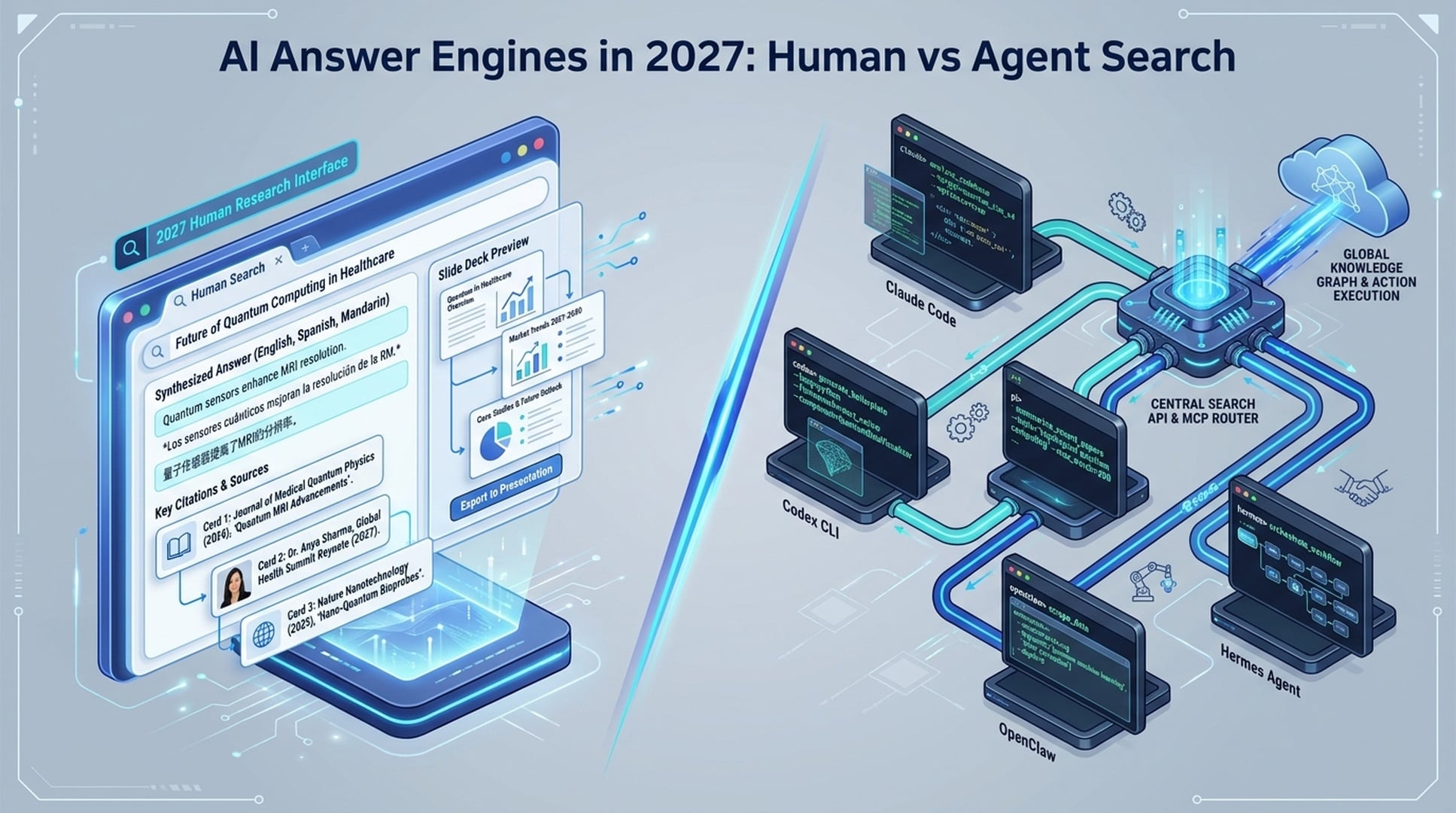
To make sure this 2027 guide reflects what people and developers actually use today, we combined Ahrefs organic search & brand demand data (US + Global) with live X (Twitter) developer adoption benchmarks. Part 1 covers the 14 best online AI answer engines for humans, while Part 2 compares the 17 best search engine services and APIs built for AI agents.
Part 1: The 14 Best Online AI Answer Engines for Humans (Web, Academic & Privacy)
If you are sitting at a keyboard researching a market, verifying a medical or scientific claim, or comparing vendors, you want an answer engine that cites its sources, pulls live community discussions, and helps you move from raw facts to a finished deliverable.
1. Felo AI Search: Best for Multilingual Deep Research & Instant Deliverables
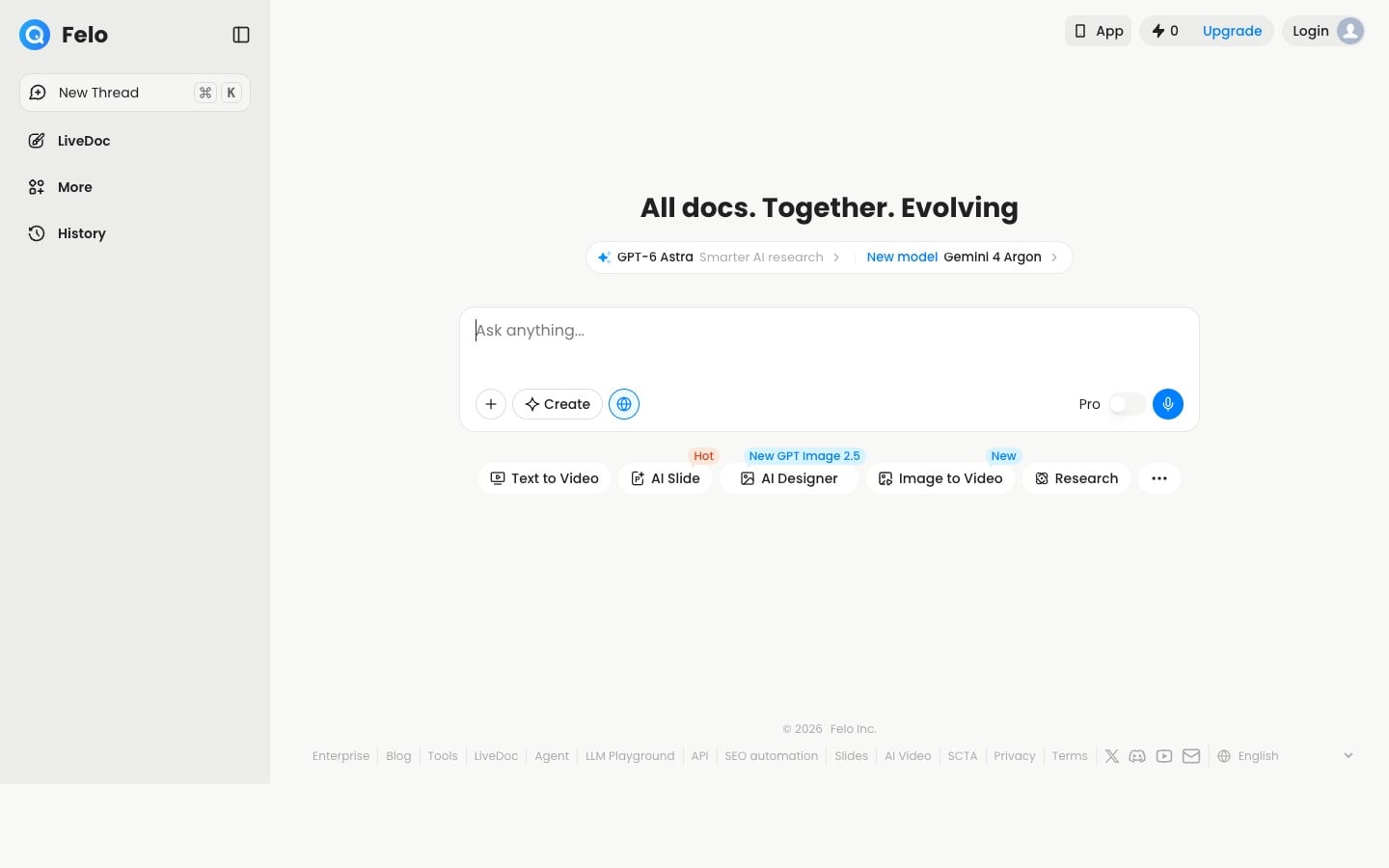
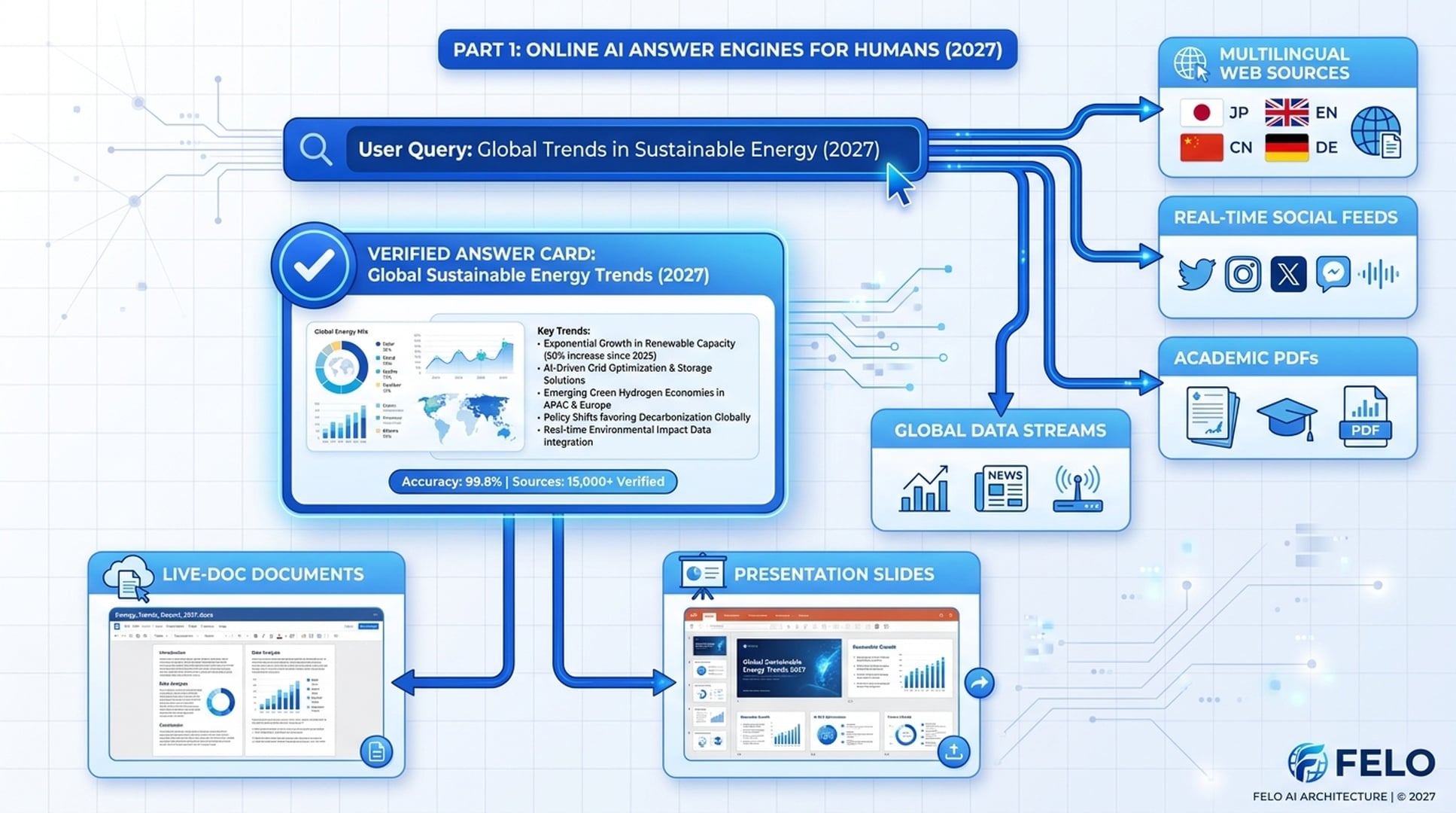
Most AI answer engines still trap you inside an English-only echo chamber—and once they give you an answer, you still have to copy-paste it into Google Docs or PowerPoint to do anything useful with it. Launched in Tokyo and now used globally, Felo AI Search solves both problems in a single workspace.
When you ask a question in your native language, Felo's cross-language retrieval engine searches native sources across Japanese, English, Chinese, German, Korean, and dozens of other languages, then synthesizes the findings back into your language with clickable citations. Even better, search is only the first step: Felo connects directly to Felo LiveDoc (a collaborative AI document workspace) and Felo Slides (one-click presentation generation).
Key Highlights:
- Cross-Language Deep Search: Query in one language, pull primary data and regulatory filings from local-language sources worldwide, and read a unified summary.
- Real-Time Social & Community Signals: Live indexing of Reddit threads, X (Twitter) discussions, and YouTube transcripts alongside traditional web pages and academic PDFs.
- Search-to-Deliverable Pipeline: Turn any research thread directly into a themed PowerPoint deck (Felo Slides), mindmap, or shared LiveDoc report without leaving the page.
- Custom Research Agents: Build repeatable research workflows with Felo Agent and connect external data via MCP servers.
Best for: Global teams, analysts, marketers, and students who want verifiable answers that turn directly into presentations and documents.
2. Perplexity AI: Best for Fast Fact-Checking & Academic Citations
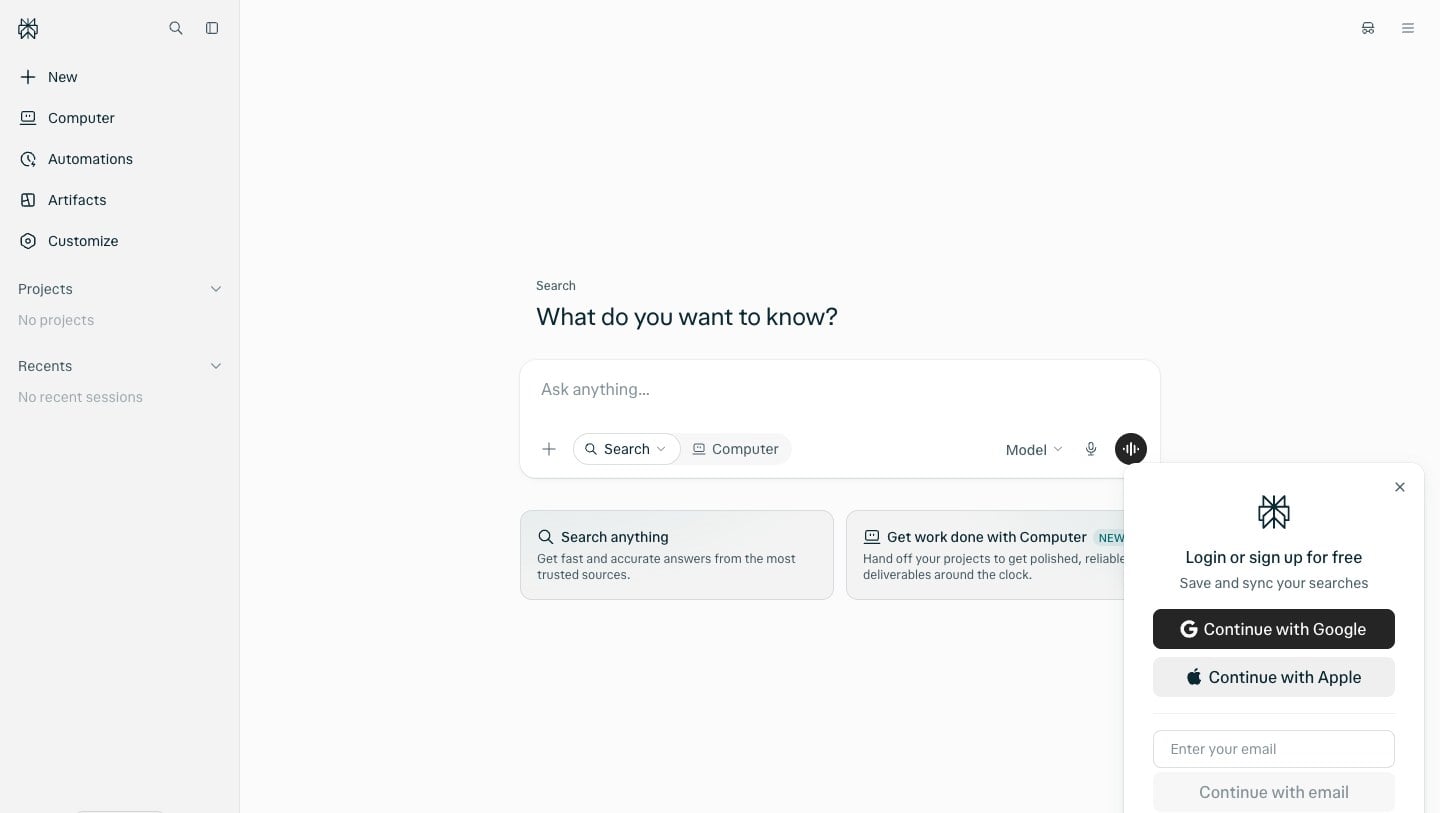
Perplexity remains the benchmark for rapid, citation-first lookup. Its interface strips away conversational fluff in favor of numbered footnotes, source cards, and quick follow-up questions. With Pro Search and Deep Research modes, Perplexity plans multi-step queries, asks clarifying questions when your prompt is ambiguous, and compiles structured briefs from dozens of sources.
Key Highlights:
- Inline Source Verification: Every claim is tied to a clickable citation card so you can audit the original article in one click.
- Focus Modes: Filter searches specifically to academic papers, SEC filings, Reddit discussions, YouTube videos, or WolframAlpha calculations.
- Model Flexibility: Paid subscribers can toggle between frontier reasoning models from Anthropic, OpenAI, and Perplexity's own Sonar models.
Best for: Journalists, academic researchers, and anyone who needs fast, footnoted fact-checking.
3. ChatGPT Search: Best All-in-One Conversational Assistant
OpenAI folded real-time web browsing directly into ChatGPT's main prompt bar, eliminating the awkward "browse with Bing" toggle of earlier years. ChatGPT Search shines when your search query is really the middle step of a longer creative or analytical session—like pulling live competitor pricing and immediately asking the model to write a positioning memo or Python pricing simulation in Canvas.
Key Highlights:
- Zero-Friction Intent Detection: Automatically triggers live web search when you ask about current events, documentation updates, or live prices, while staying in conversational mode for reasoning tasks.
- Deep Research Agent: Can spend 5 to 20 minutes autonomously browsing hundreds of pages to compile an analyst-grade report.
- Canvas & Code Interpreter Integration: Pipe live search results directly into Python data visualizations or side-by-side document editing.
Best for: Everyday knowledge workers who already live inside ChatGPT for writing, coding, and brainstorming.
4. Google Gemini & Google AI Mode: Best for Google Workspace Users
Google's answer engine strategy now runs on two fronts: Google AI Mode inside traditional search, and the standalone Gemini app powered by Google's multimodal model family. While Google's classic search results page still balances organic links and ads, AI Mode gives users a dedicated conversational canvas backed by Google's massive real-time index, Google Maps data, and YouTube's full video catalog.
Key Highlights:
- Native Workspace Grounding: Cross-reference live web answers with your own Gmail threads, Google Docs, Drive PDFs, and Google Sheets.
- Unmatched Local & Commerce Graph: Pulls real-time store inventory, flight pricing, and Google Maps reviews that third-party indexes can't easily replicate.
- Multimodal Understanding: Drop a long video, audio recording, or 500-page PDF into the prompt and verify its claims against Google's live index.
Best for: Teams standardized on Google Workspace and users who rely heavily on local, shopping, and YouTube data.
5. Microsoft Copilot Search: Best for Enterprise M365 Environments
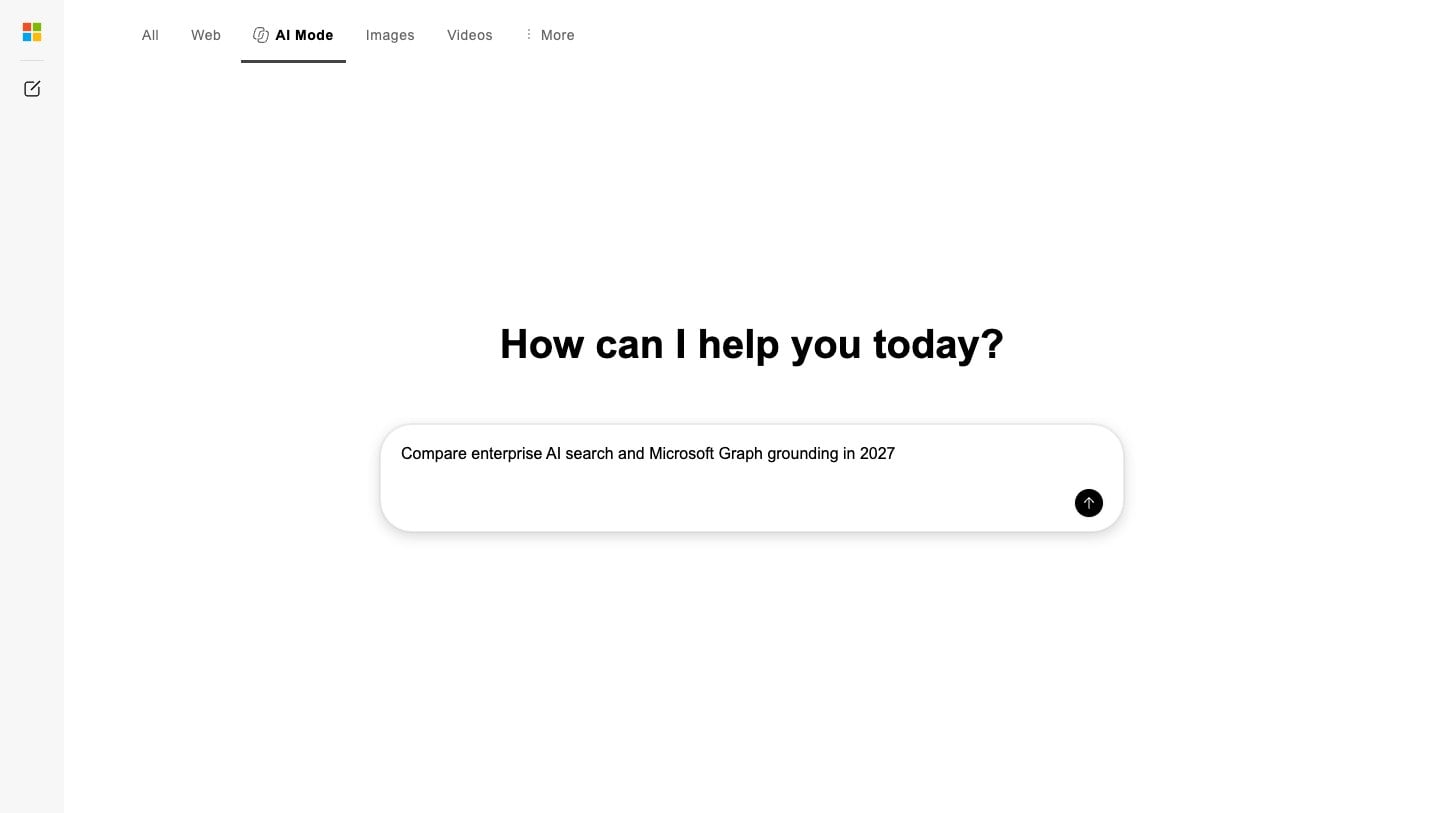
For organizations running on Microsoft 365, Microsoft Copilot bridges public web search (via Bing's index) and internal company knowledge (via Microsoft Graph). Instead of switching between an external answer engine and your company intranet, Copilot answers questions using both live industry news and your internal SharePoint decks, Teams chats, and Outlook emails.
Key Highlights:
- Enterprise Data Protection: Commercial queries aren't used to train public models, and internal permissions are strictly enforced via Microsoft Graph.
- In-App Office Grounding: Pull web research directly into Word, Excel, or PowerPoint without leaving the Office suite.
Best for: Enterprise teams deeply embedded in Microsoft 365, SharePoint, and Teams.
6. Brave Search (Answer with AI): Best Independent Privacy Index
With nearly 1.94 million monthly global searches (brave search via Ahrefs), Brave is the undisputed leader in privacy-preserving search. Unlike meta-search tools that quietly rent Google or Bing results in the background, Brave Search operates its own independent index of over 30 billion pages. Its Answer with AI engine synthesizes instant answers, comparison tables, and forum insights while profiling zero user data and serving zero tracking ads.
Best for: Privacy-first users who want an independent search index outside the Google and Microsoft duopoly.
7. Grok Search (xAI): Best for Real-Time X (Twitter) Pulse & Breaking News
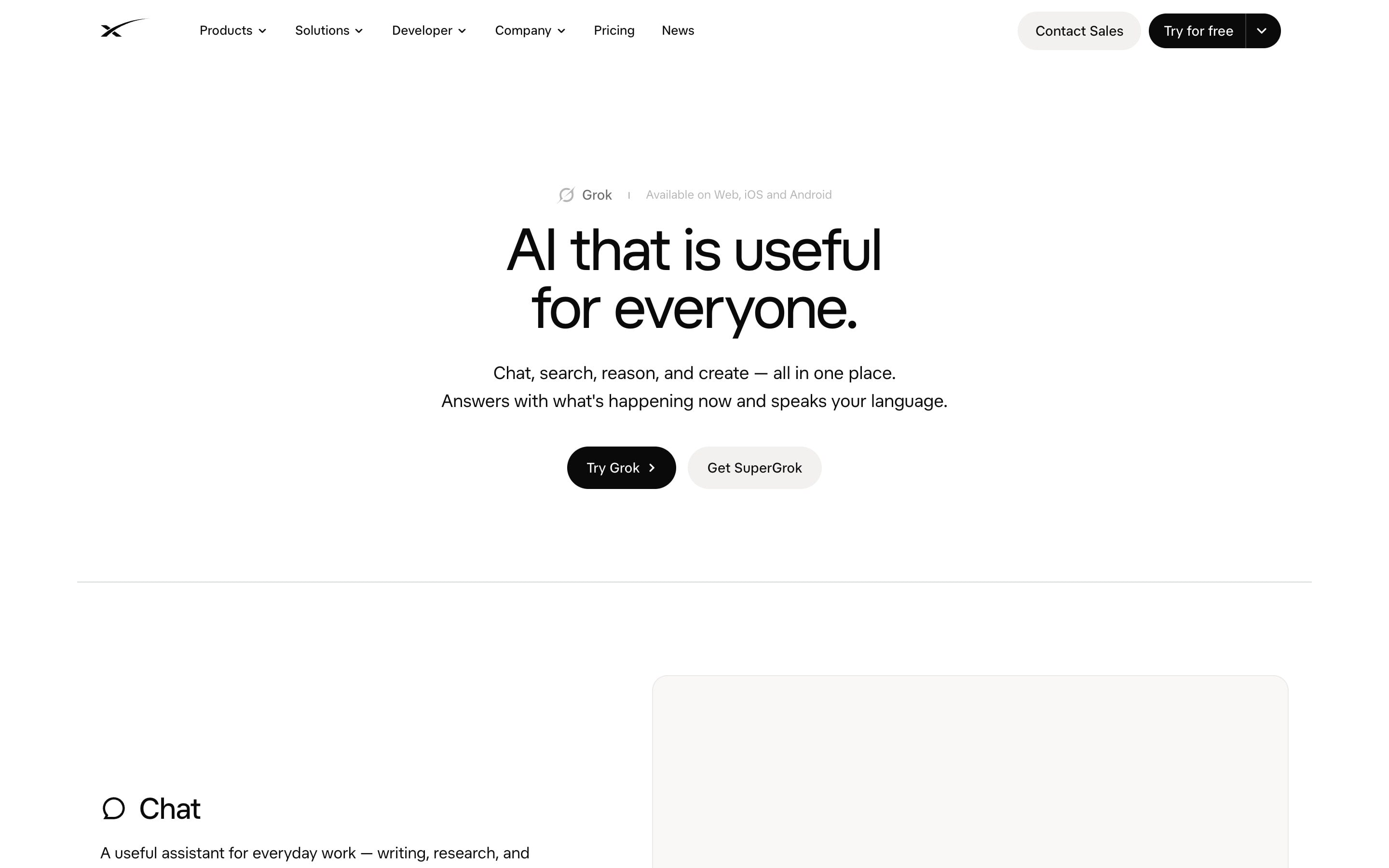
Generating over 8.03 million monthly global searches (2.07M in the US alone), Grok by xAI is where users go when a cloud outage, breaking geopolitical event, or open-source model release happened five minutes ago. While traditional web crawlers lag behind breaking events, Grok taps directly into the real-time X (Twitter) firehose alongside live web search, making it the fastest pulse check for developer sentiment and live news.
Best for: Tracking breaking news, crypto/market sentiment, and real-time developer reactions on X.
8. Consensus: Best AI Answer Engine for Peer-Reviewed Scientific Papers
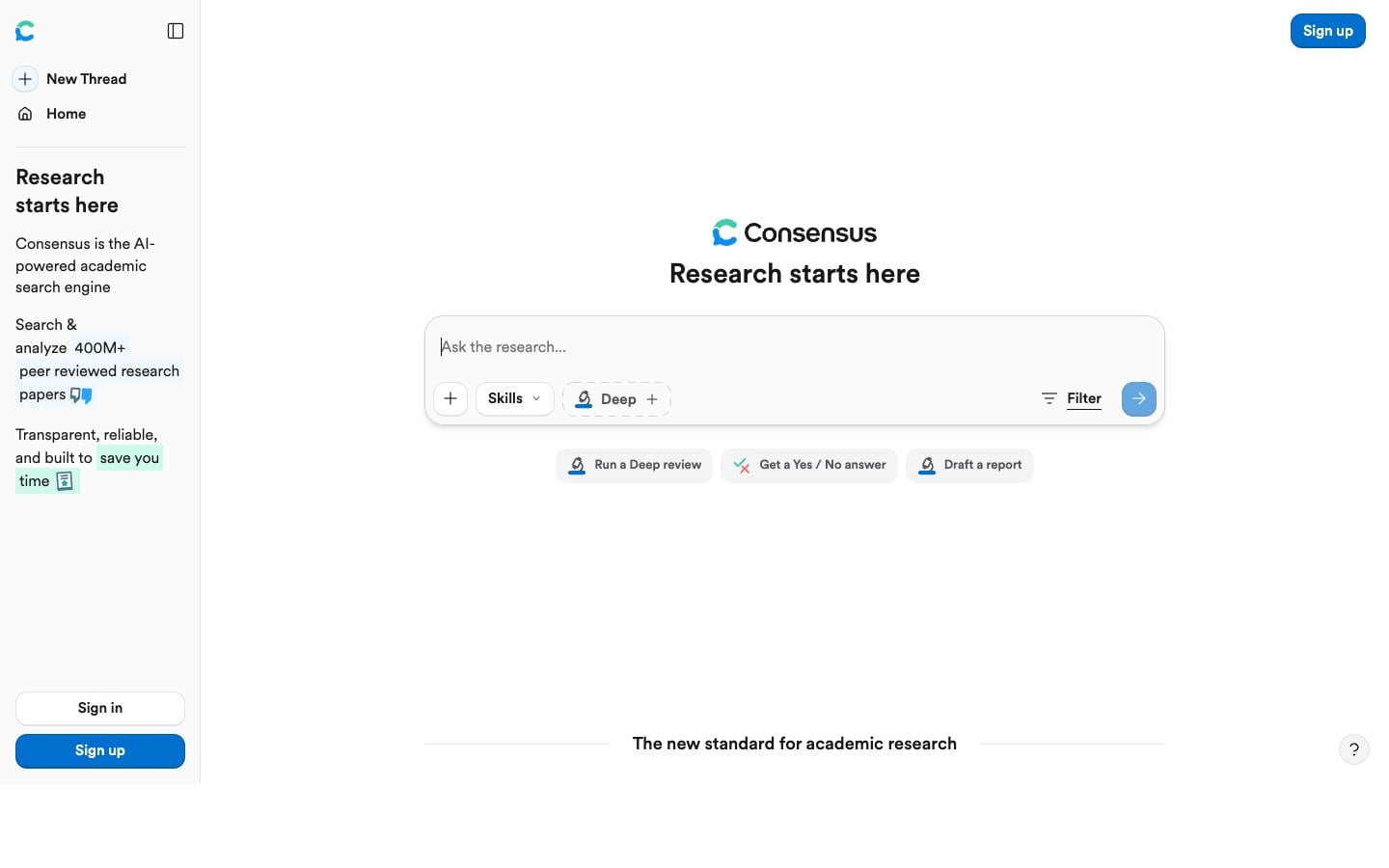
General web answer engines often mix peer-reviewed clinical trials with random SEO blog posts. Backed by over 200 million academic papers and drawing 135,000 global monthly brand searches (consensus ai, DR 80), Consensus restricts its answers strictly to published scientific literature. Its signature Consensus Meter visually shows whether the scientific community agrees ("Yes", "No", or "Possibly") on a given medical, economic, or psychology question.
Best for: Doctors, clinicians, PhD students, and science writers who only trust peer-reviewed citations.
9. Elicit: Best for Systematic Literature Reviews & Data Extraction Tables
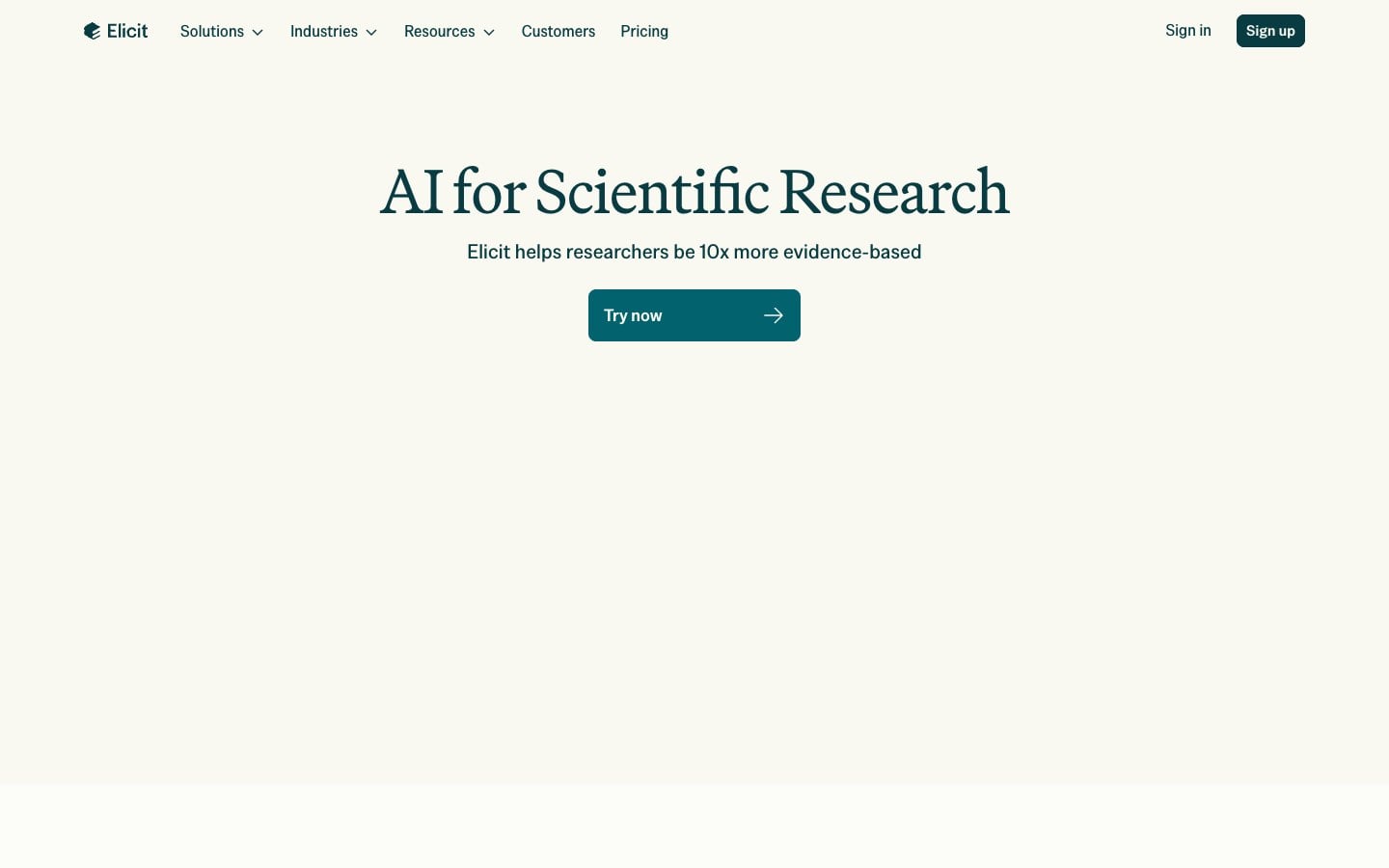
With 143,000 global monthly searches (48,000 in the US, DR 76), Elicit goes deeper than single-question academic Q&A. When you ask a research question, Elicit finds relevant papers and builds a structured extraction matrix—automatically pulling sample sizes, methodology, intervention types, and key findings across dozens of PDFs into a sortable table.
Best for: R&D teams, biotech analysts, and academics running formal systematic literature reviews.
10. Liner AI: Best Research Copilot for Students & Academic Highlighting
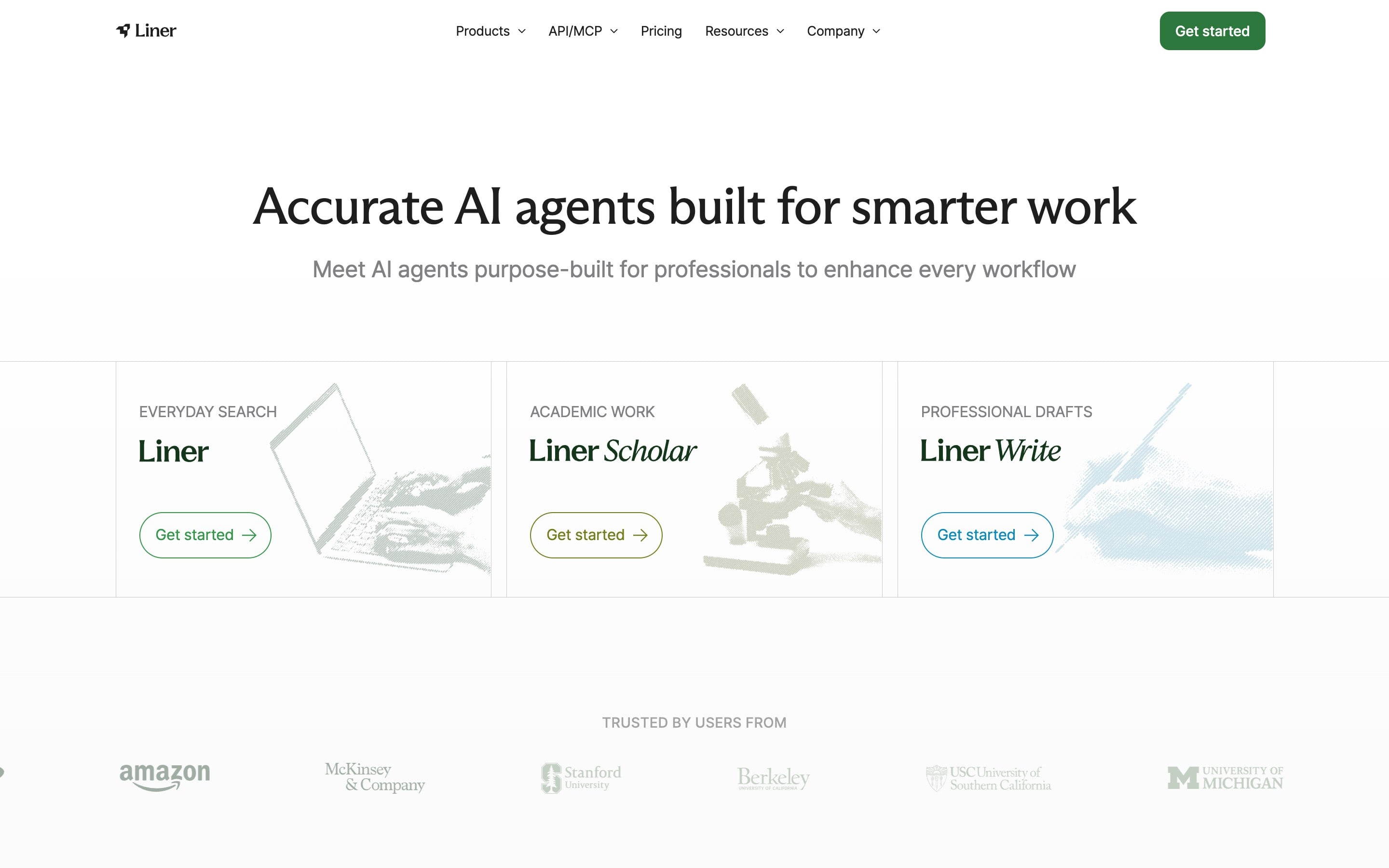
Generating 14,000 monthly brand searches (liner ai) with massive adoption across universities in the US and Asia, Liner combines an academic-grade AI answer engine with a web/PDF highlighter and writing workspace. Every sentence in Liner's answer links directly to the exact highlighted passage in the source paper or web page, making it easy to collect quotes and build a bibliography.
Best for: University students, graduate researchers, and long-form essay writers.
11. Kagi Search: Best Ad-Free Premium Search Engine for Power Users & Engineers
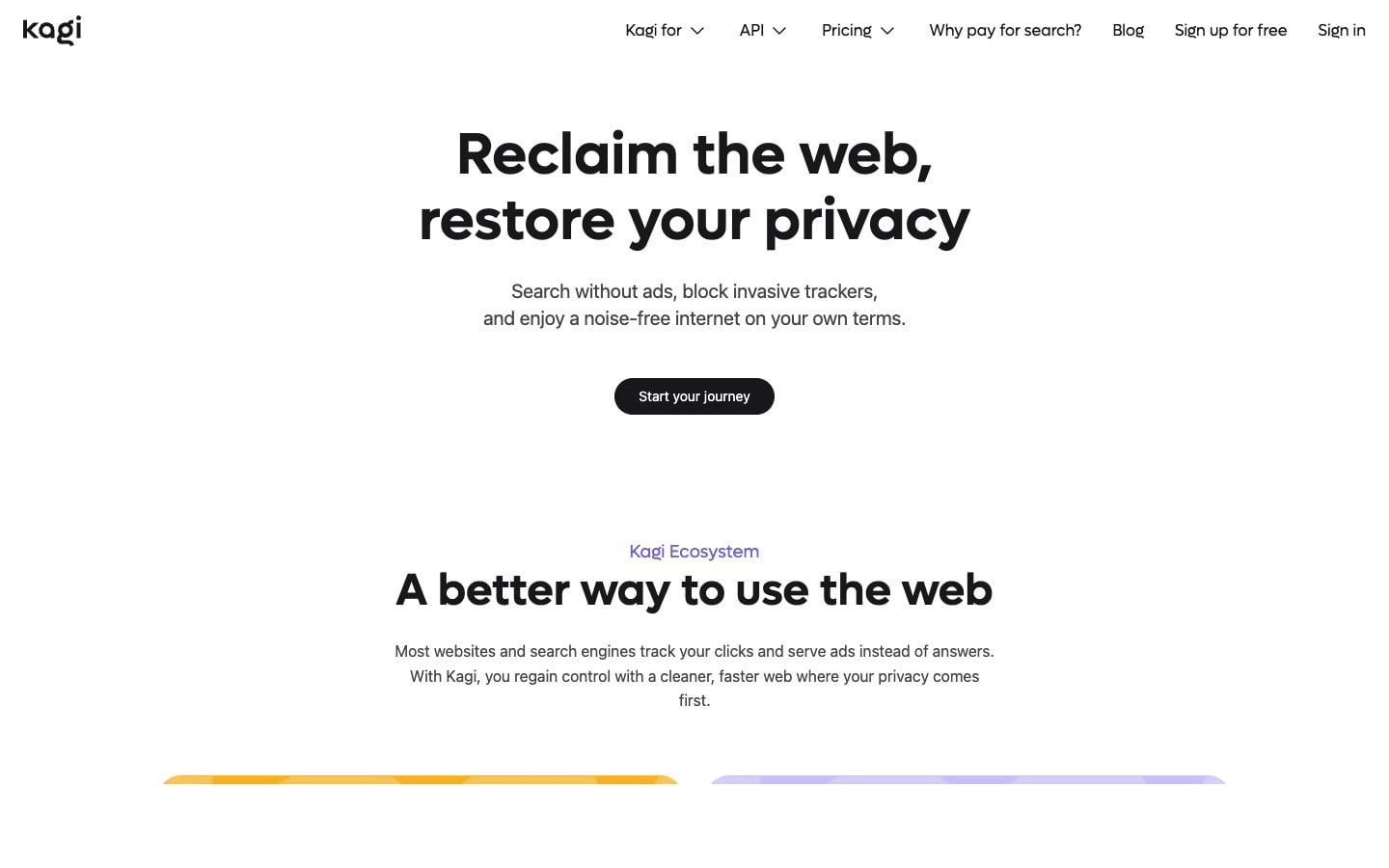
On Hacker News and developer X threads, Kagi Search (DR 79, 7,100 monthly searches for kagi search) has earned a cult following because of a simple business model: you pay a monthly subscription, and Kagi serves zero ads, zero telemetry, and zero SEO spam. Users can pin trusted domains (like GitHub or MDN), block content farms entirely, and trigger Quick Answer AI syntheses or Kagi Assistant with full control over underlying frontier models.
Best for: Software engineers and power searchers willing to pay for a customizable, spam-free web index.
12. iAsk.Ai: Best Free High-Volume Question & Homework Answer Engine
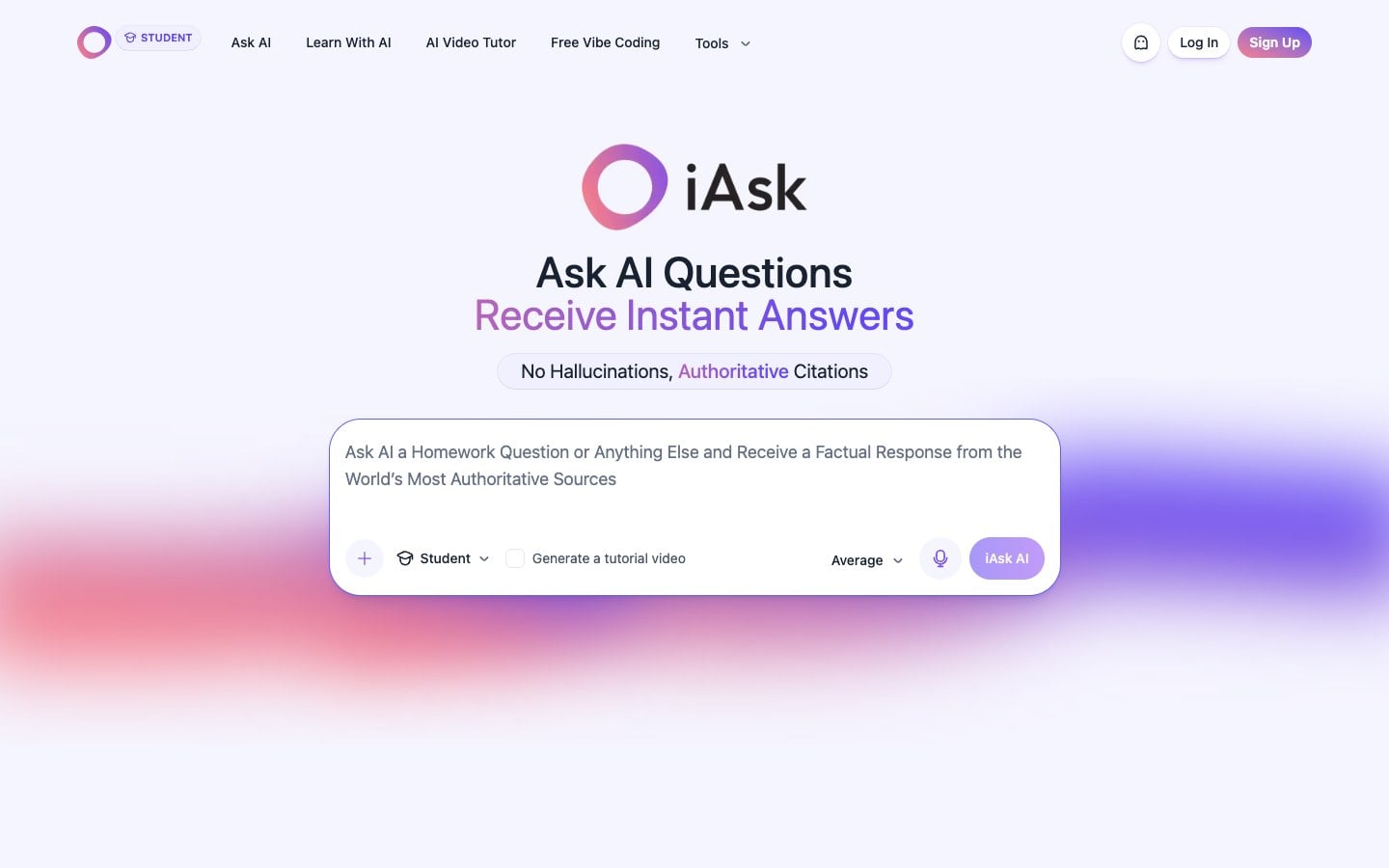
Featured in our original 2025 roundup, iAsk.Ai remains a massive traffic powerhouse in 2027—pulling over 216,000 monthly organic US visits in Ahrefs (DR 70) and 18,000 monthly brand searches. It offers a fast, no-login-required interface where users can ask factual, academic, or homework questions and toggle between general web search, academic mode, and instant document summarization.
Best for: Students and casual users looking for a fast, free, no-signup answer engine.
13. DuckDuckGo (Duck.ai & AI-Assisted Search): Best Anonymous Everyday Search
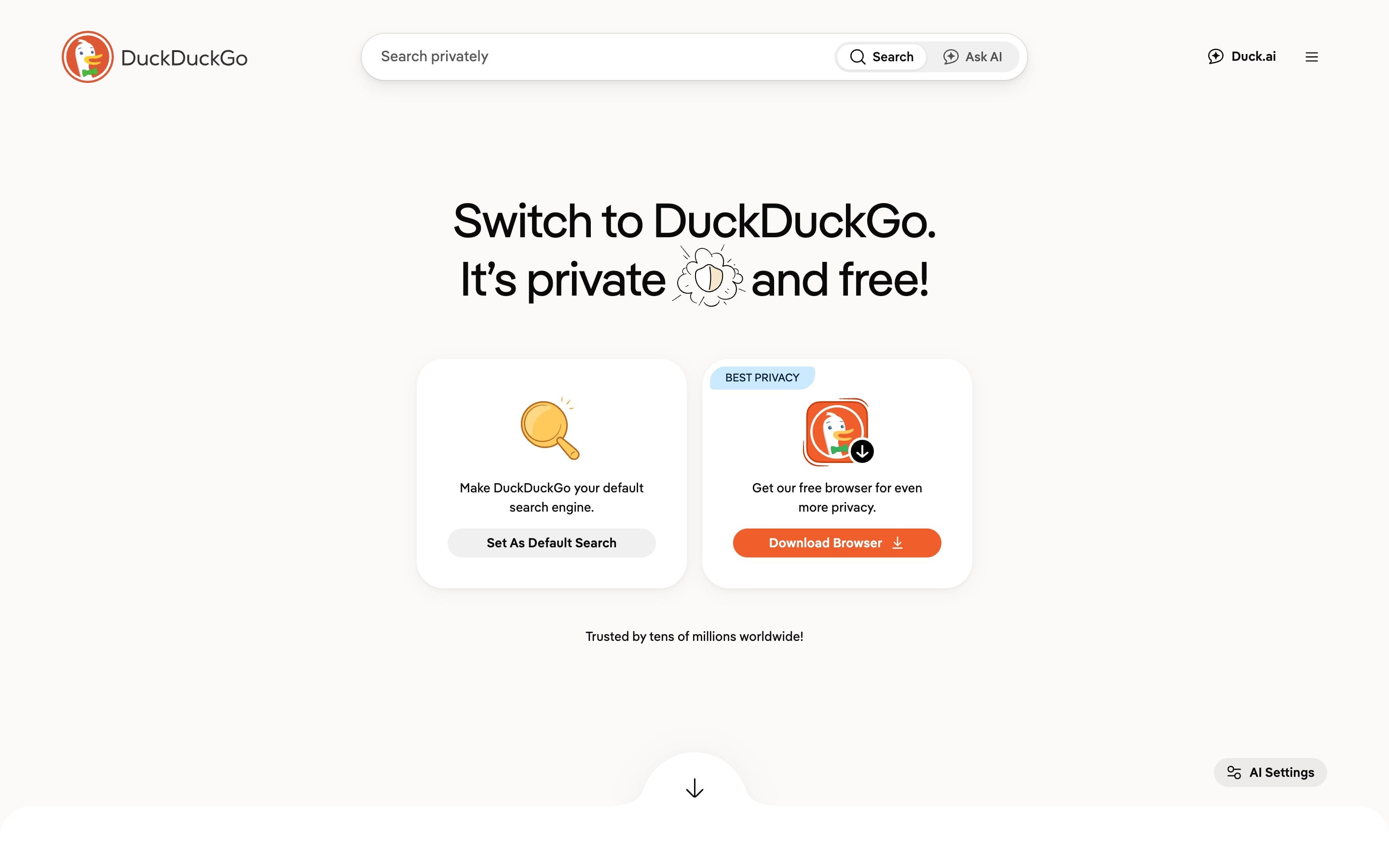
With 42,000 global monthly searches specifically for duckduckgo ai (on top of DuckDuckGo's tens of millions of core users), DuckDuckGo gives privacy-conscious users two ways to use AI without being tracked: AI-Assisted Search summaries right at the top of search results (which can be toggled off anytime), and Duck.ai, an anonymized proxy to chat with models from OpenAI, Anthropic, Meta, and Mistral with IP addresses stripped.
Best for: Everyday users who want optional AI answers and private chat without creating an account.
14. You.com (ARI & Custom Research Agents): Best for Enterprise Financial & Multi-Step Research
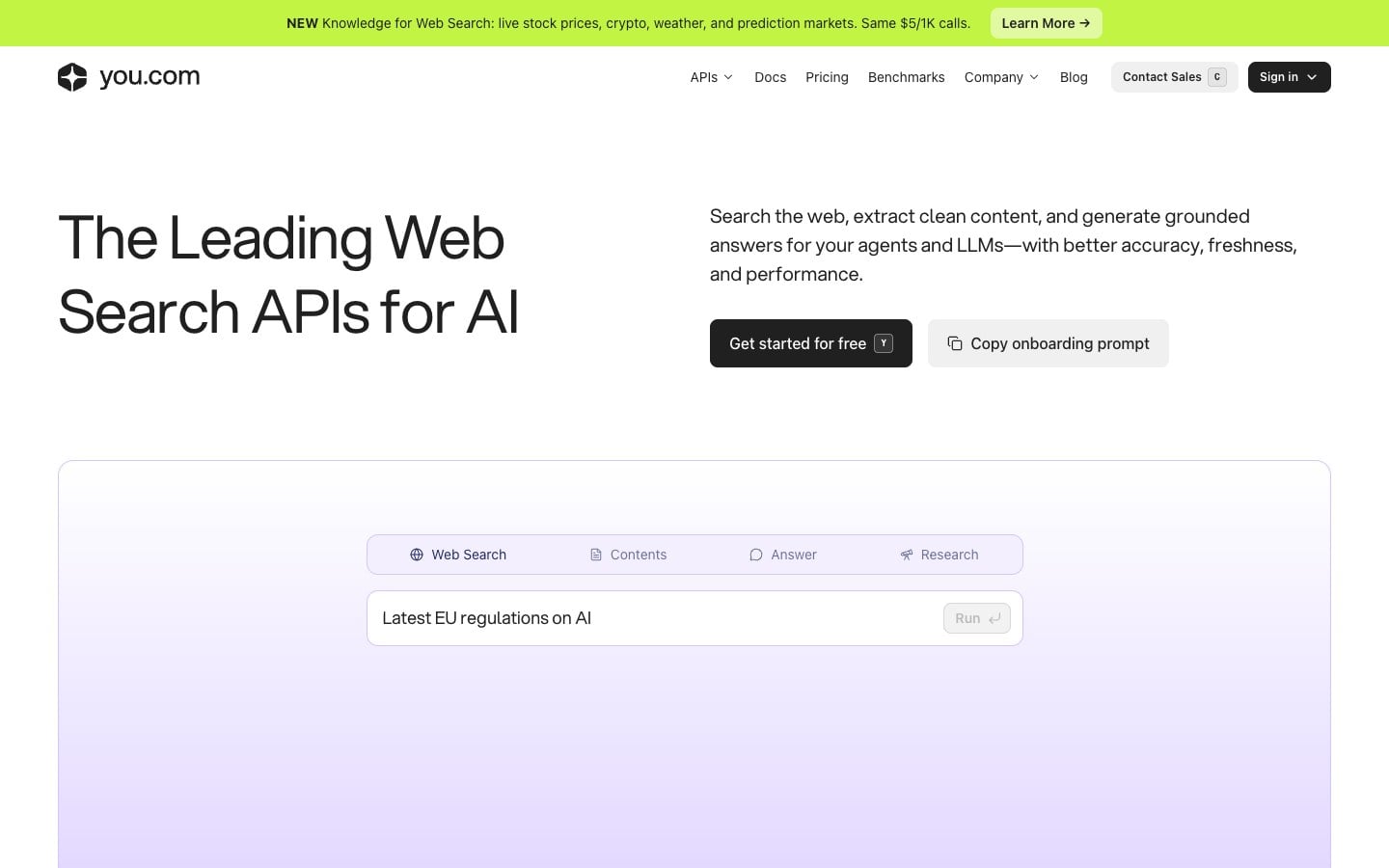
Rounding out Part 1 with 25,000 global monthly brand searches (you.com, DR 79), You.com has evolved from a consumer meta-search engine into a serious enterprise research platform. Powered by its ARI (Advanced Research & Insights) engine, You.com reads hundreds of primary sources simultaneously and is now heavily used by financial services, consulting firms, and enterprise teams—while also offering a dedicated web search API for AI workflows.
Best for: Financial analysts and enterprise teams building custom, multi-source research workflows.
Quick Comparison: Top 14 Online AI Answer Engines (2027 Data)
| # | Engine | Primary Strength | Ahrefs Demand / Footprint | Built-in Deliverables |
|---|---|---|---|---|
| 1 | Felo AI Search | Cross-language deep search + one-click Slides & LiveDoc | DR 63 · 66.5K US org traffic · Global multilingual reach | ✅ Felo Slides (PPT), LiveDoc, Mindmap |
| 2 | Perplexity AI | Fast footnoted fact-checking & Pro Search | DR 91 · 3.08M global brand vol | Pages (text reports) |
| 3 | ChatGPT Search | Unified chat, coding, and Deep Research | 100M+ active users · Native OpenAI search | Canvas (text & code) |
| 4 | Google Gemini / AI Mode | Google Workspace + Maps, Shopping & YouTube | 174K global vol (google ai mode) | Export to Google Docs/Slides |
| 5 | Microsoft Copilot | Enterprise Microsoft 365 Graph + Bing | Built into Windows & M365 Enterprise | Export to Word/Excel/PPT |
| 6 | Brave Search AI | Independent 30B+ page index & zero tracking | 1.94M global vol (brave search) | Answer cards & tables |
| 7 | Grok Search (xAI) | Live X (Twitter) firehose + breaking news | 8.03M global vol (grok) | Thread & post synthesis |
| 8 | Consensus | Peer-reviewed scientific consensus meter | DR 80 · 135K global vol (consensus ai) | Citation lists & study snapshots |
| 9 | Elicit | Systematic literature reviews & data tables | DR 76 · 143K global vol (elicit) | Multi-paper extraction matrix |
| 10 | Liner AI | Passage-level academic highlighting & citations | 14K global vol (liner ai) | Essay & bibliography drafts |
| 11 | Kagi Search | Paid, zero-ad, customizable index for engineers | DR 79 · 7.1K global vol (kagi search) | Clean summaries & domain ranking |
| 12 | iAsk.Ai | Free, high-speed Q&A and homework answers | DR 70 · 216K US org traffic | Instant text summaries |
| 13 | DuckDuckGo AI | Anonymous AI-assisted search & Duck.ai | 42K global vol (duckduckgo ai) | Private answer snippets |
| 14 | You.com | Enterprise ARI deep research & custom agents | DR 79 · 25K global vol (you.com) | Deep research reports |
Part 2: The 17 Best Search Engine Services & APIs for AI Agents (2027)
When you move from a browser tab to an autonomous agent, the rules of search change completely.
Today's most popular agent harnesses—including Claude Code, Codex CLI, pi coding agent, OpenClaw, and Hermes Agent—execute dozens of tool calls inside a single task loop. If you feed a coding or research agent raw HTML from a traditional scraper, you will blow out its context window with navigation menus, cookie banners, and inline JavaScript, while burning dollars on wasted input tokens.
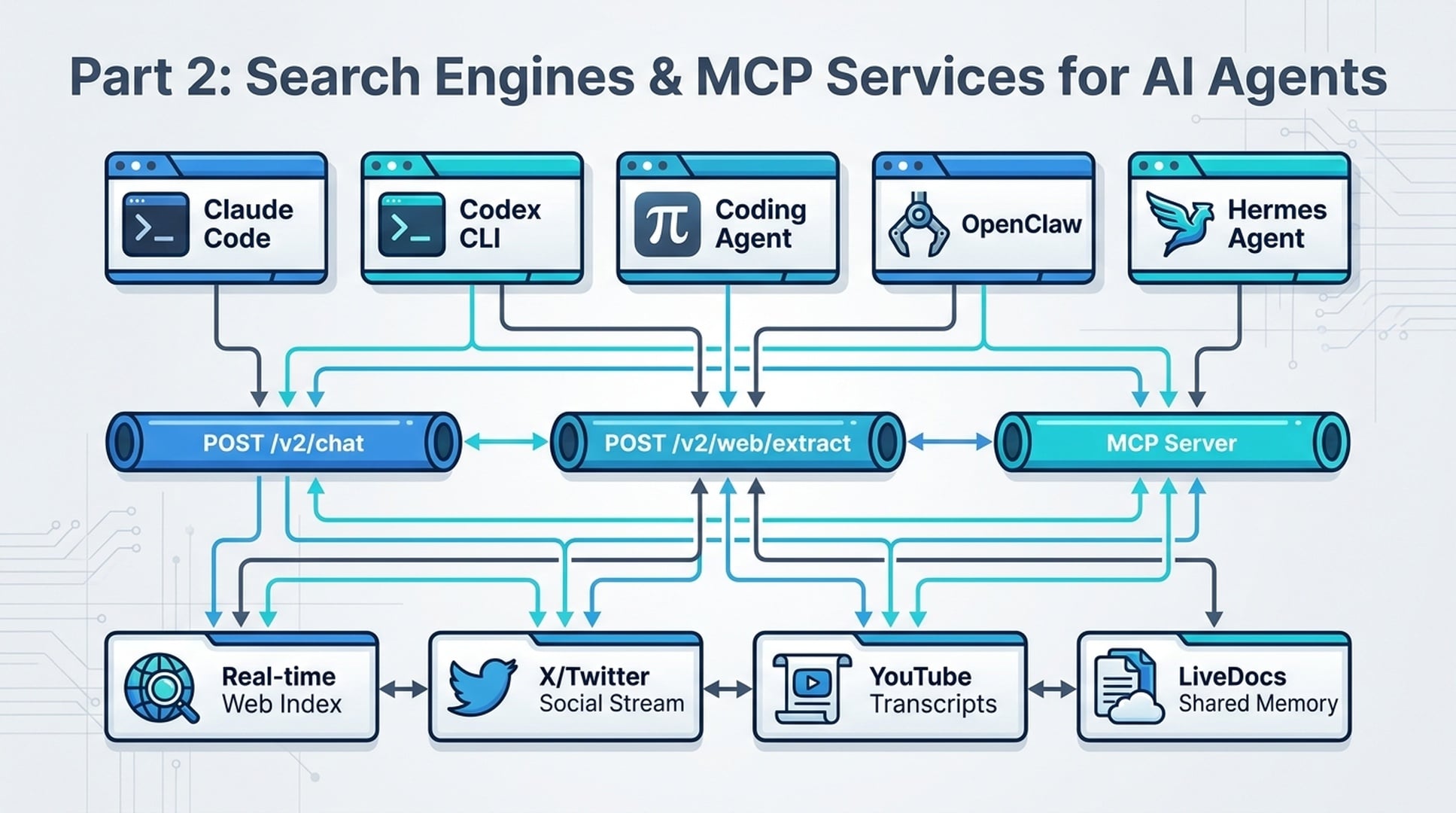
How Developers Choose Agent Search in 2027 (Data from X & Ahrefs)
Based on Ahrefs search volume and live developer benchmarks on X (Twitter), the 2027 agent search landscape falls into four distinct layers:
- Unified Agent Tool & Deliverable Stacks (Felo OpenAPI, plus direct vendor-free access to Anthropic Web Search API and OpenAI Web Search API): Search + Web Fetch + X/YouTube + LiveDocs Memory + PPT/Page outputs under one API key.
- Agent-Native Search & Grounding APIs (Tavily, Exa, Parallel Web Systems, Brave Search API, Perplexity Sonar, Linkup, DeepSeek Search & Fetch): Built specifically to return LLM-ready chunks, highlights, or grounded answers at $0.75–$8 per 1,000 calls.
- Markdown Extraction & Agentic Crawlers (Firecrawl, Jina Reader, Crawl4AI): Turn complex JS-heavy documentation sites into clean Markdown.
- Raw SERP & Enterprise Web Infrastructure (SerpApi, Serper.dev, Apify, Bright Data): High-volume Google SERP JSON, proxy unlocking, and ready-made MCP scraping actors.
Here are the 17 best search engine services for AI agents in 2027, complete with official interfaces and real-world developer trade-offs.
1. Felo OpenAPI & MCP Search Stack: Best All-in-One Search, Extraction, Social & Deliverable Layer for Agents
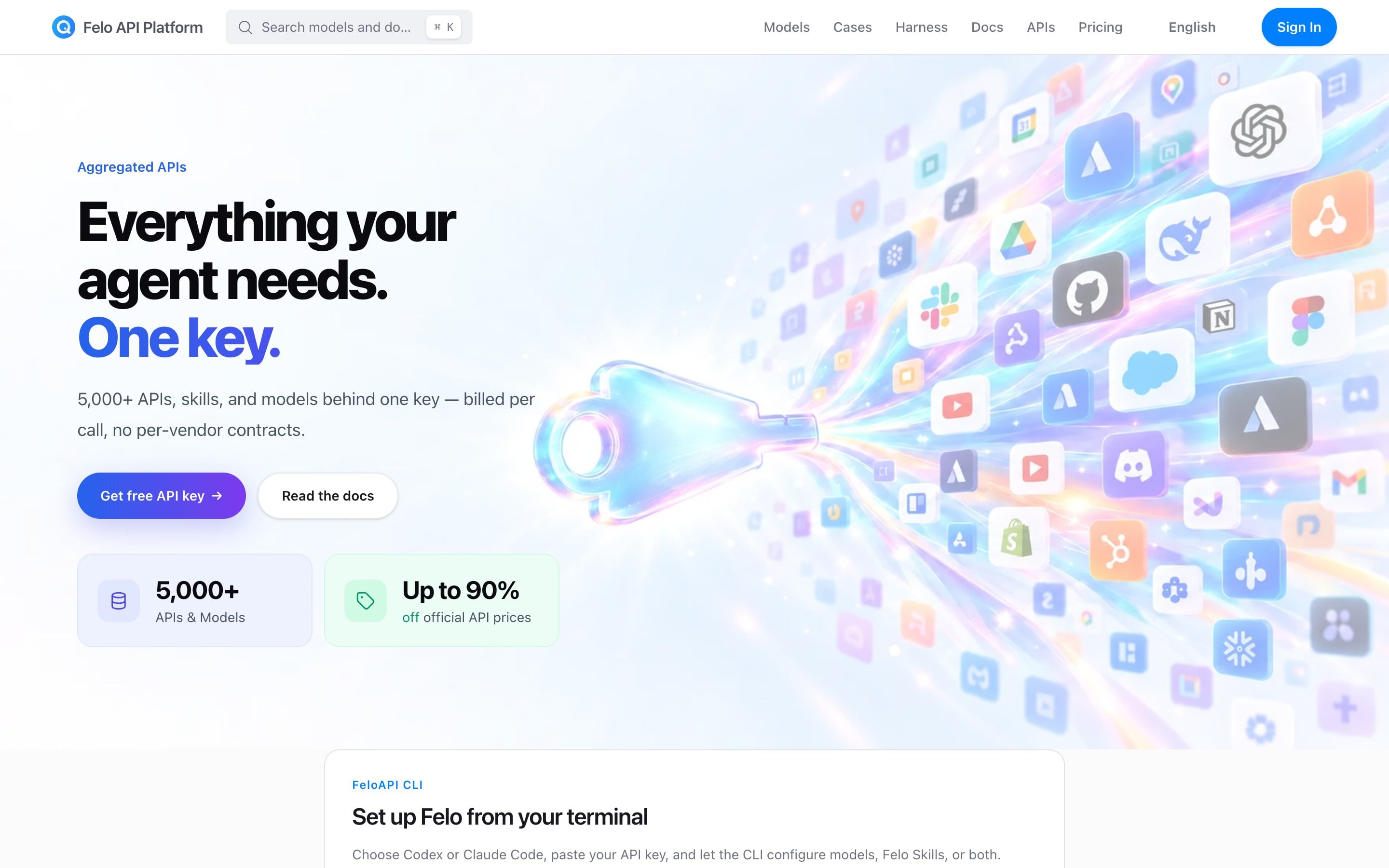
Most search APIs stop the moment they return ten snippets. Felo OpenAPI was designed specifically for agent harnesses like Claude Code, Codex CLI, pi, OpenClaw, and Hermes Agent that need to search, read, remember, and produce actual work under one API key and one base URL.
Instead of stitching together Tavily for search, Jina for page reading, a separate Twitter scraper, and a separate slide generator, Felo exposes a multi-layer agent search and tool stack:
- AI Search (
POST /v2/chat): Conversational, real-time answer engine API that returns synthesized answers and optimized query analysis ready for agent reasoning. - Web Fetch / Extraction (
POST /v2/web/extract): Extracts clean, structured content from any target URL so your agent can verify primary documentation without context bloat. - X (Twitter) Search (
POST /v2/x/tweet/search&/v2/x/user/tweets): Lets agents query live developer discussions, product launches, and social sentiment directly. - YouTube Subtitles (
GET /v2/youtube/subtitling): Pulls full video transcripts so agents can extract insights from conference talks, tutorials, and demos without watching video. - LiveDocs Memory & Output APIs (
POST /v2/ppts,/v2/mindmap,/v2/landing_page): Agents can store research findings in shared semantic memory (LiveDocs) and turn their research into finished PowerPoint decks or landing pages—plus call frontier LLMs (Claude, GPT, Grok) through OpenAI- and Anthropic-compatible endpoints.
Why Agent Builders Choose It:
- Dedicated setup guides and skills for Claude Code, Codex CLI, OpenClaw, pi, and Hermes Agent.
- Replaces 4–5 separate API subscriptions with one unified key (
openapi.felo.ai).
2. Anthropic Web Search API (via Felo OpenAPI): Best Claude-Grounded Citation Search Without a Separate Vendor Account
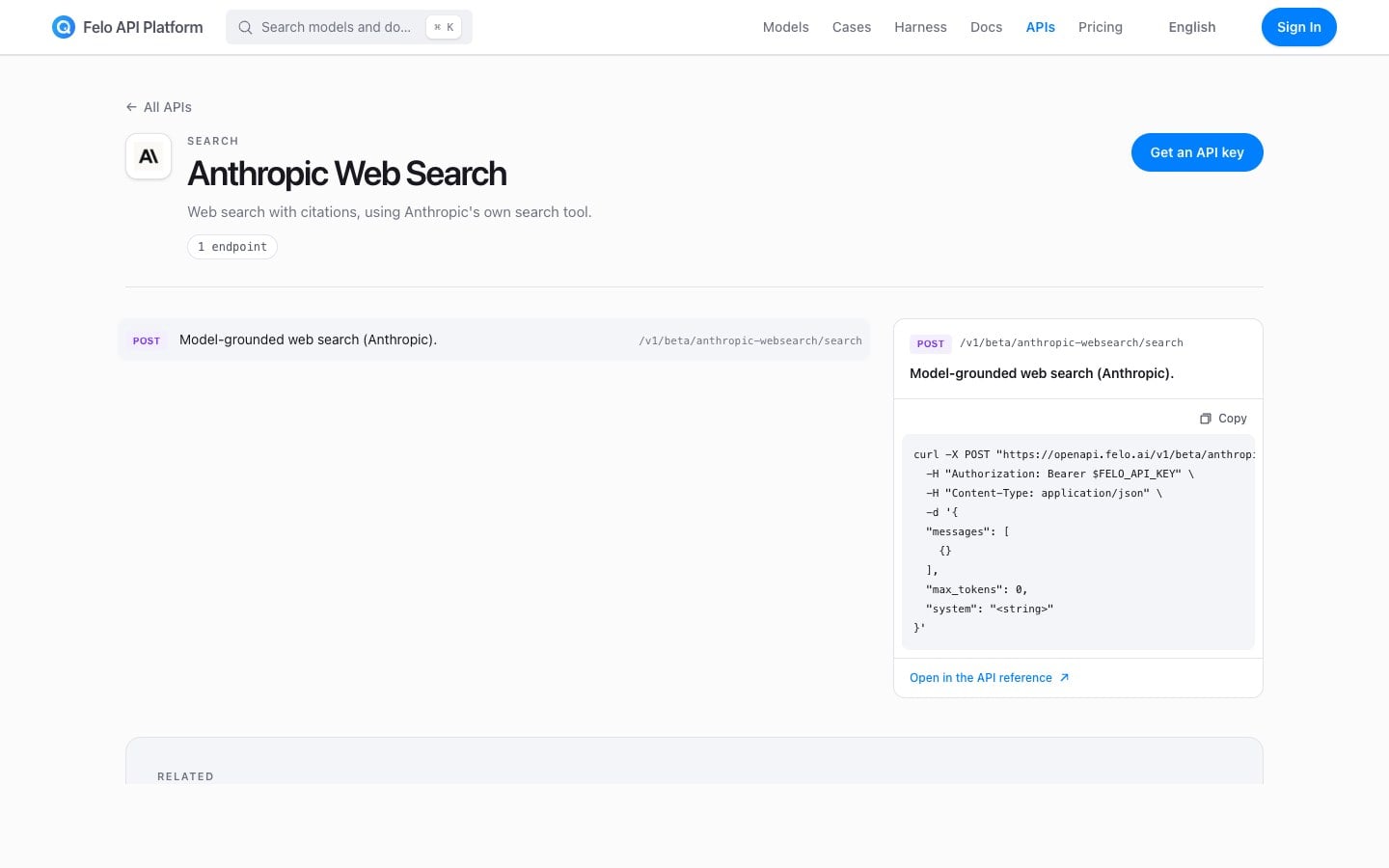
Many developers building on Claude Code, pi, or custom Anthropic tool loops want Anthropic's native model-grounded web search with inline citations—without managing separate Anthropic tier limits, regional billing hurdles, or extra vendor keys. Through Anthropic Web Search on Felo OpenAPI (POST /v1/beta/anthropic-websearch/search), your agent can invoke Anthropic's own search tool directly using your existing $FELO_API_KEY.
Strengths:
- Native Claude-grounded web search with structured citations via a single endpoint (
https://openapi.felo.ai/v1/beta/anthropic-websearch/search). - No separate vendor account required: Accepts standard
messages,max_tokens, andsystemparameters under unified Felo billing.
Limitations: Focused specifically on Claude-grounded search synthesis; pair it with Felo's /v2/web/extract or /v2/x/tweet/search when your agent needs raw full-page scraping or social feeds.
3. OpenAI Web Search API (via Felo OpenAPI): Best OpenAI Model-Grounded Search for Codex & Responses Workflows
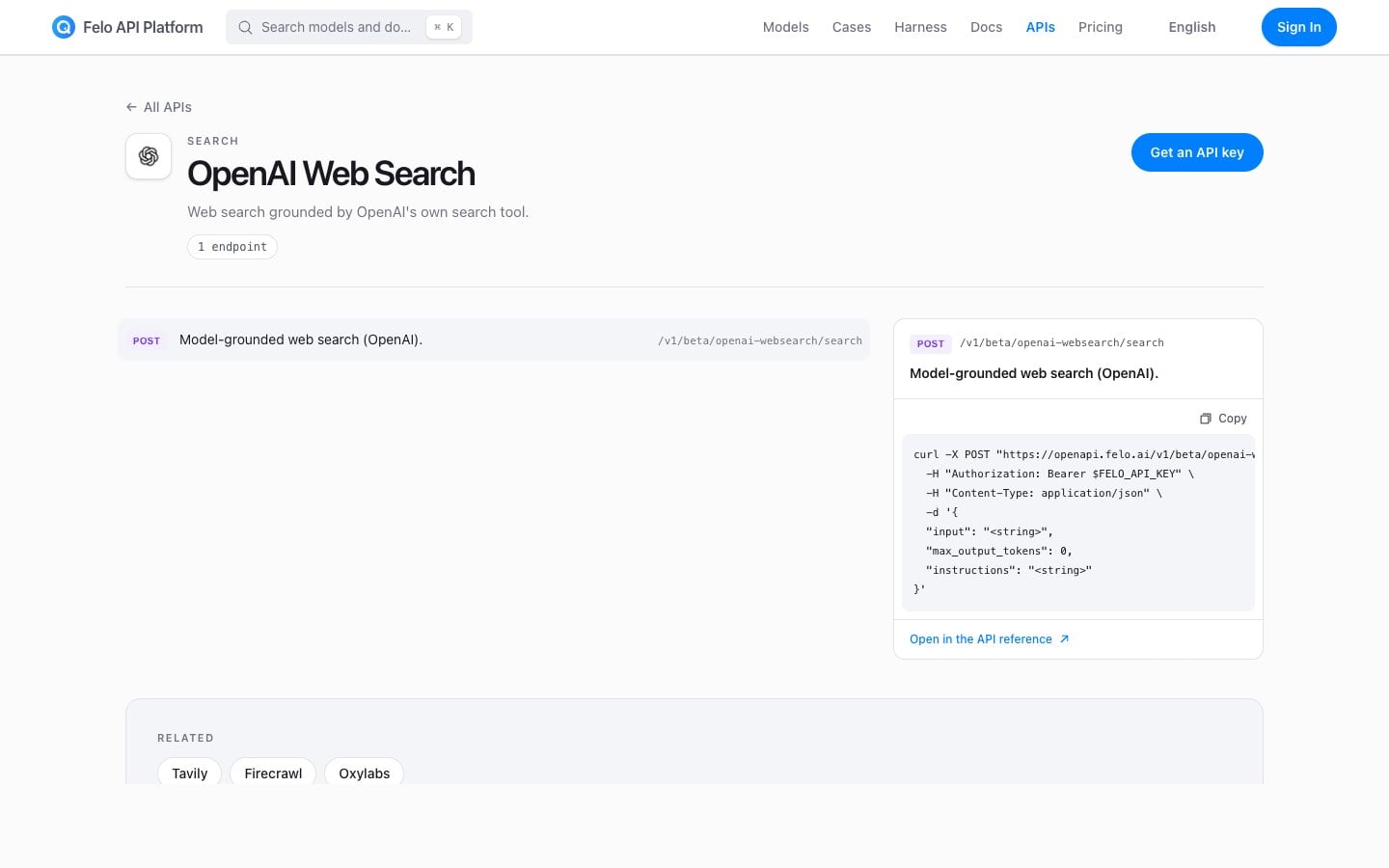
Similarly, if your agent uses OpenAI's Responses-style schema (input, instructions, max_output_tokens) or runs inside Codex CLI, OpenAI Web Search on Felo OpenAPI (POST /v1/beta/openai-websearch/search) gives you direct access to web search grounded by OpenAI's own search tool—again with zero separate OpenAI vendor account required.
Strengths:
- Uses OpenAI's native search grounding tool via
https://openapi.felo.ai/v1/beta/openai-websearch/search. - Ideal for teams running Codex CLI or hybrid multi-model agents who want both Anthropic Web Search and OpenAI Web Search under one
$FELO_API_KEY.
Limitations: Designed for model-grounded search responses rather than multi-page site crawling.
4. Tavily Search API: Best Purpose-Built RAG Search for LangChain & LangGraph
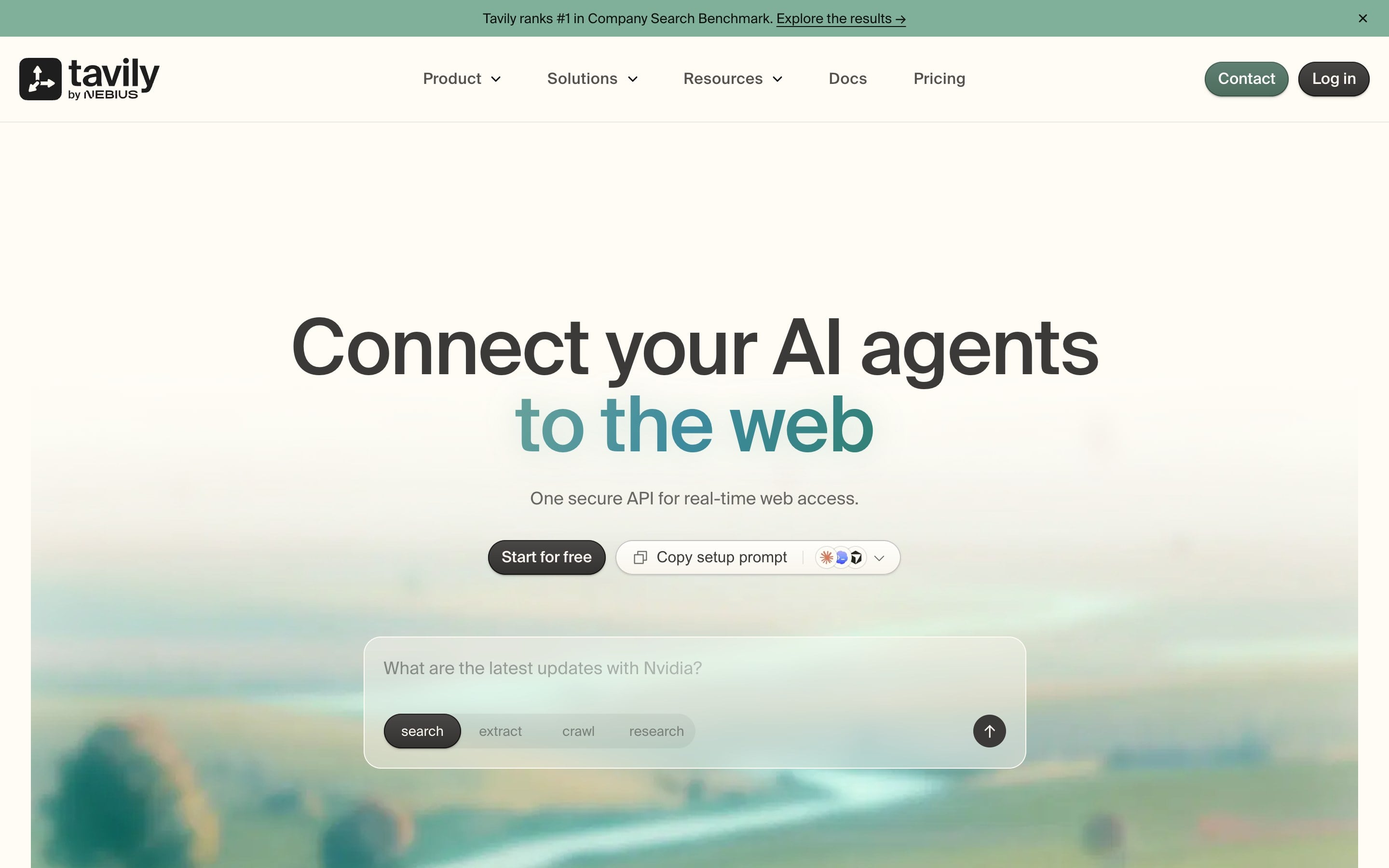
With 32,000 global monthly searches (tavily, DR 79, $4.50 CPC in Ahrefs), Tavily was one of the earliest APIs built specifically for LLM agents rather than human SEO analysts, and it remains the default recommendation inside LangChain and LangGraph templates. A single API call searches multiple sources, scores relevance against the agent's prompt, and returns concise content chunks alongside an optional short answer.
Strengths:
- Clean
searchandextractendpoints with tunable search depth (basicvs.advanced). - Deep native integrations across LangChain, LlamaIndex, and CrewAI.
Limitations: Focused strictly on web search and extraction—no native X/social search, YouTube transcript extraction, persistent workspace memory, or deliverable generation.
5. Exa (formerly Metaphor): Best Neural & Semantic Search for Technical Discovery
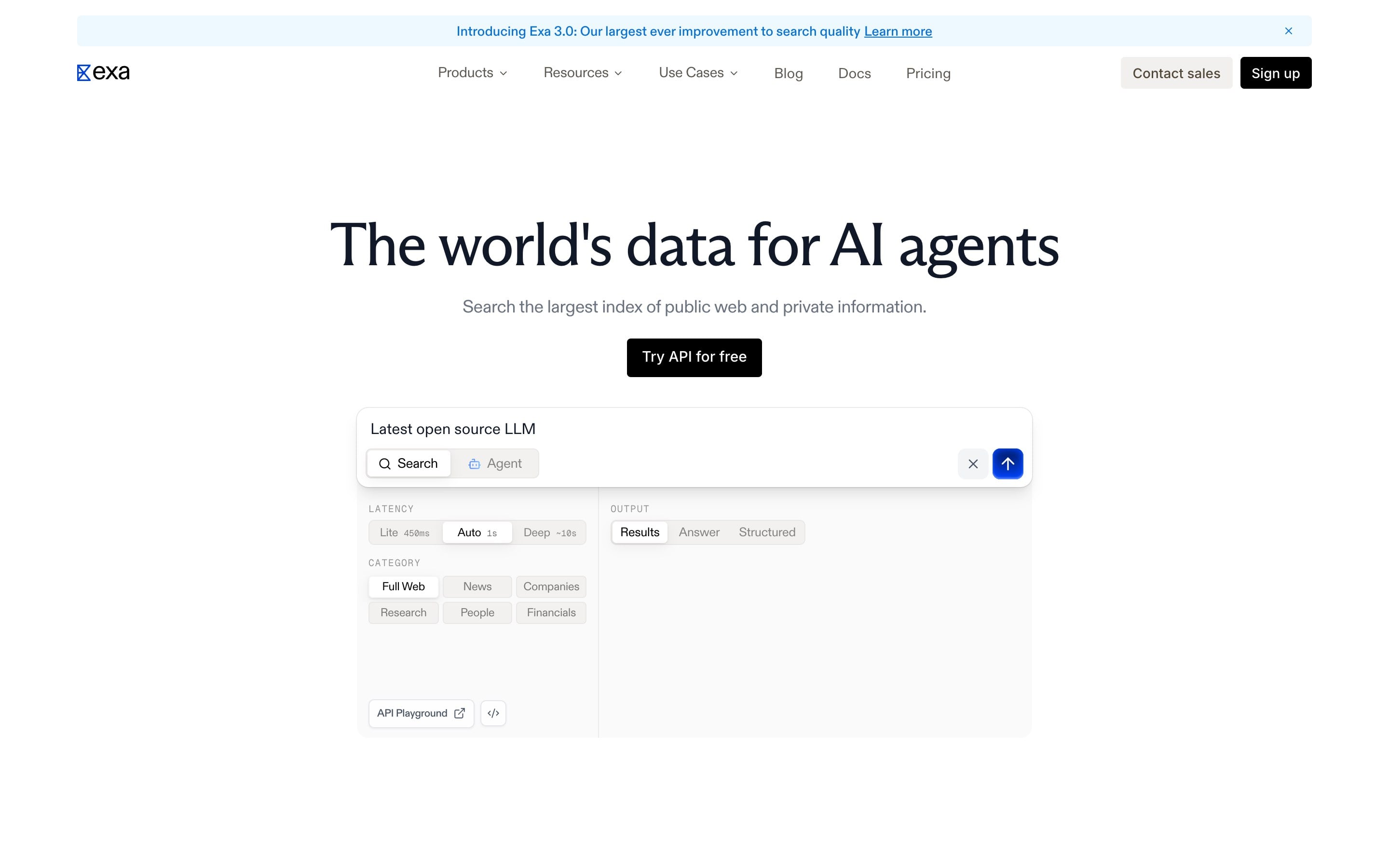
Drawing 23,100+ monthly US organic visits and 16,000 global brand searches (exa ai, DR 79), Exa uses neural embeddings to search by meaning and link structure rather than simple keyword matching. On X, agent builders consistently rank Exa at the top when an agent needs to find "early-stage open-source Rust vector databases" or "academic paper benchmarks on KV-cache compression" where exact keyword matching fails.
Strengths:
- Neural search + category filters (papers, GitHub repos, company pages, news, tweets, people).
- Token-efficient highlights mode and a widely adopted MCP server used across pi coding agent and Claude Code setups.
Limitations: Less suited for exact-match navigational queries or multi-format office output workflows.
6. Parallel Web Systems (parallel.ai): Best Pareto-Optimal Fast Search & Extraction for Deep Research Agents
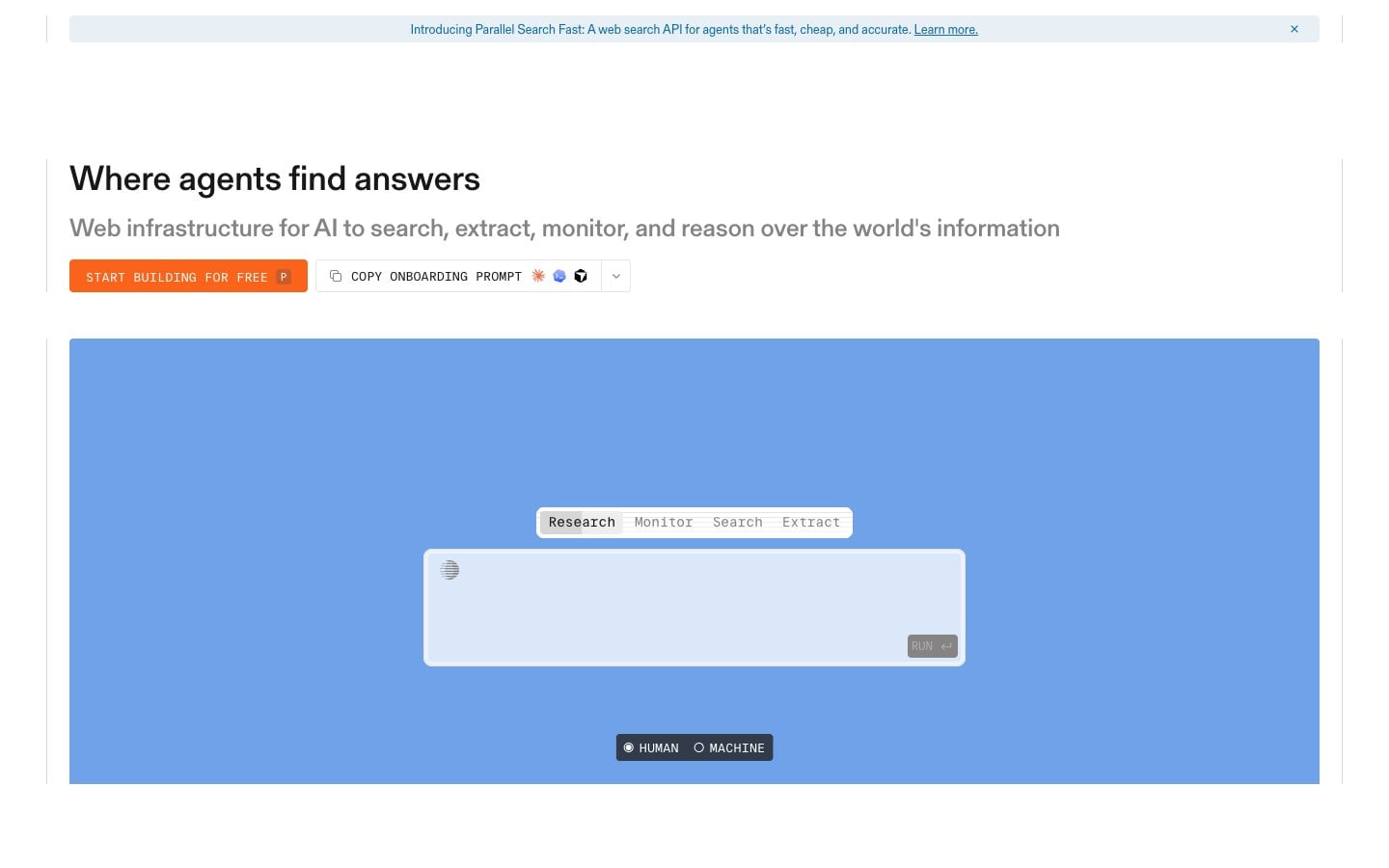
One of the hottest agent infrastructure breakthroughs on X in 2026–2027 (DR 77, 18,000+ US monthly organic visits, 6,800 global searches for parallel web systems), Parallel built a web search and extraction engine from the ground up specifically for AI agents. In independent benchmarks shared across X, Parallel hits the Pareto frontier across accuracy, latency, and cost (~$1 per 1,000 pages read), offering dedicated Search, Extract, and Deep Research Task APIs plus an official Parallel MCP server.
Strengths:
- Designed specifically around declarative agent objectives rather than legacy human keyword queries.
- Sub-second latency for real-time voice/chat agents, scaling up to multi-hop asynchronous deep research.
Limitations: Focused purely on web intelligence—does not provide slide/document generation or multi-provider LLM chat routing.
7. Brave Search API (with LLM Context): Best Independent Web Index for High-Volume Agent Queries
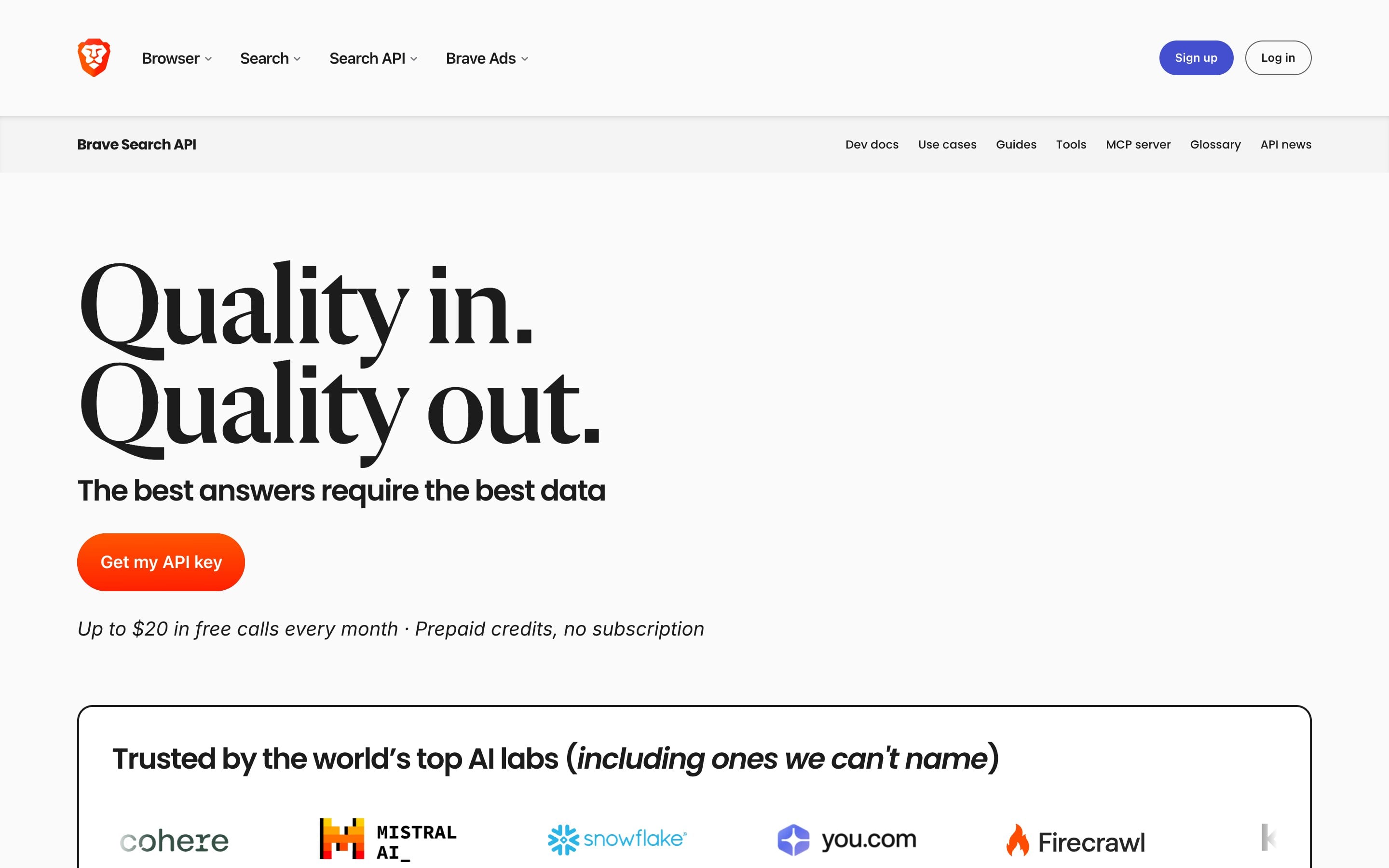
With 30,000 global monthly searches specifically for brave search api, Brave Search API has become the go-to independent index for developers who want raw, unbiased web results at scale without Google or Bing rate limits. It is a first-class built-in provider in OpenClaw, pi coding agent, and official MCP server repositories, and now offers an LLM Context endpoint tailored for grounding models.
Strengths:
- Backed by Brave's independent 30B+ page index (updated 100M+ times daily).
- Predictable pricing (~$3–$5 per 1,000 queries) and ultra-low latency.
Limitations: Primarily returns SERP snippets and grounding context; complex full-site crawling still requires a dedicated reader tool.
8. Firecrawl: Best Managed Web Scraper, Crawler & Structured Extractor for Agents
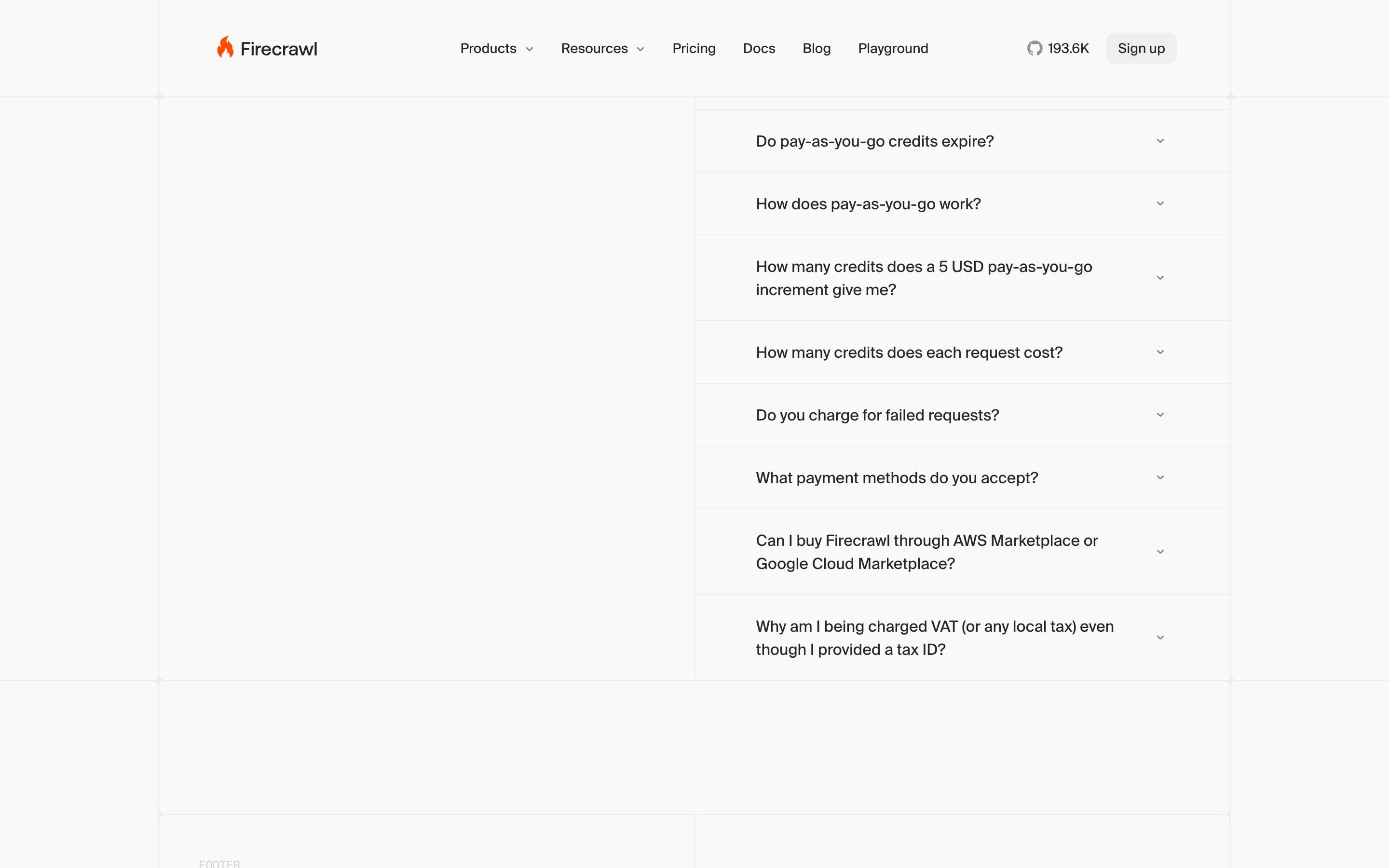
Generating 105,000 global monthly searches (30,000 in the US, DR 80, 44.6K US organic traffic in Ahrefs), Firecrawl is the industry standard when an agent needs to crawl an entire documentation site (docs.example.com/*), render dynamic client-side JavaScript, and convert every subpage into clean Markdown or structured JSON. In late 2026, Firecrawl also added a 270M+ profile People Data endpoint for sales and recruiting agents.
Strengths:
- Combines
/search,/scrape,/crawl, and schema-driven/extract, plus hosted MCP tools for Claude Code and Cursor. - Handles headless browser rendering, anti-bot rotation, and PDF parsing automatically.
Limitations: Credit consumption scales up on multi-page crawls; separate tools are still needed for YouTube transcripts or slide generation.
9. Jina Reader API (r.jina.ai & s.jina.ai): Best Zero-Setup URL-to-Markdown Pipeline
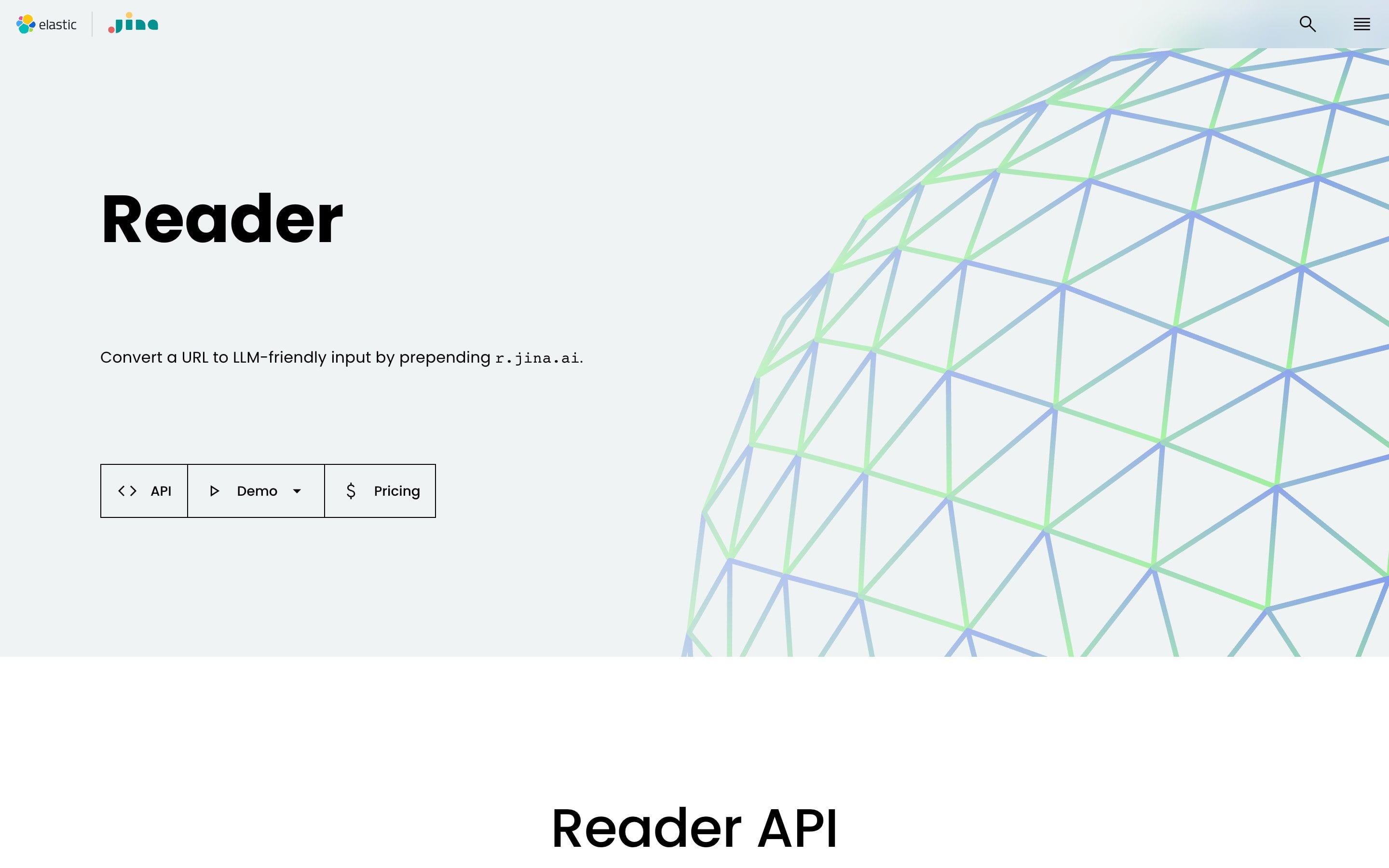
Backed by Jina AI (DR 77, $4.50 CPC), Jina Reader became famous among agent developers for its dead-simple developer experience: prepend https://r.jina.ai/ to any URL to get clean, LLM-ready Markdown, or prepend https://s.jina.ai/ to a search query to fetch top web results converted into Markdown.
Strengths:
- Zero SDK required—works with a plain
curlorfetchcall inside any bash-capable agent. - Supported by Jina's specialized ReaderLM small language models for HTML-to-Markdown cleaning.
Limitations: Rate-limited without paid API tokens; doesn't include social/X search or persistent workspace memory.
10. Crawl4AI: Best Open-Source & Self-Hosted Web Crawler for AI Agents
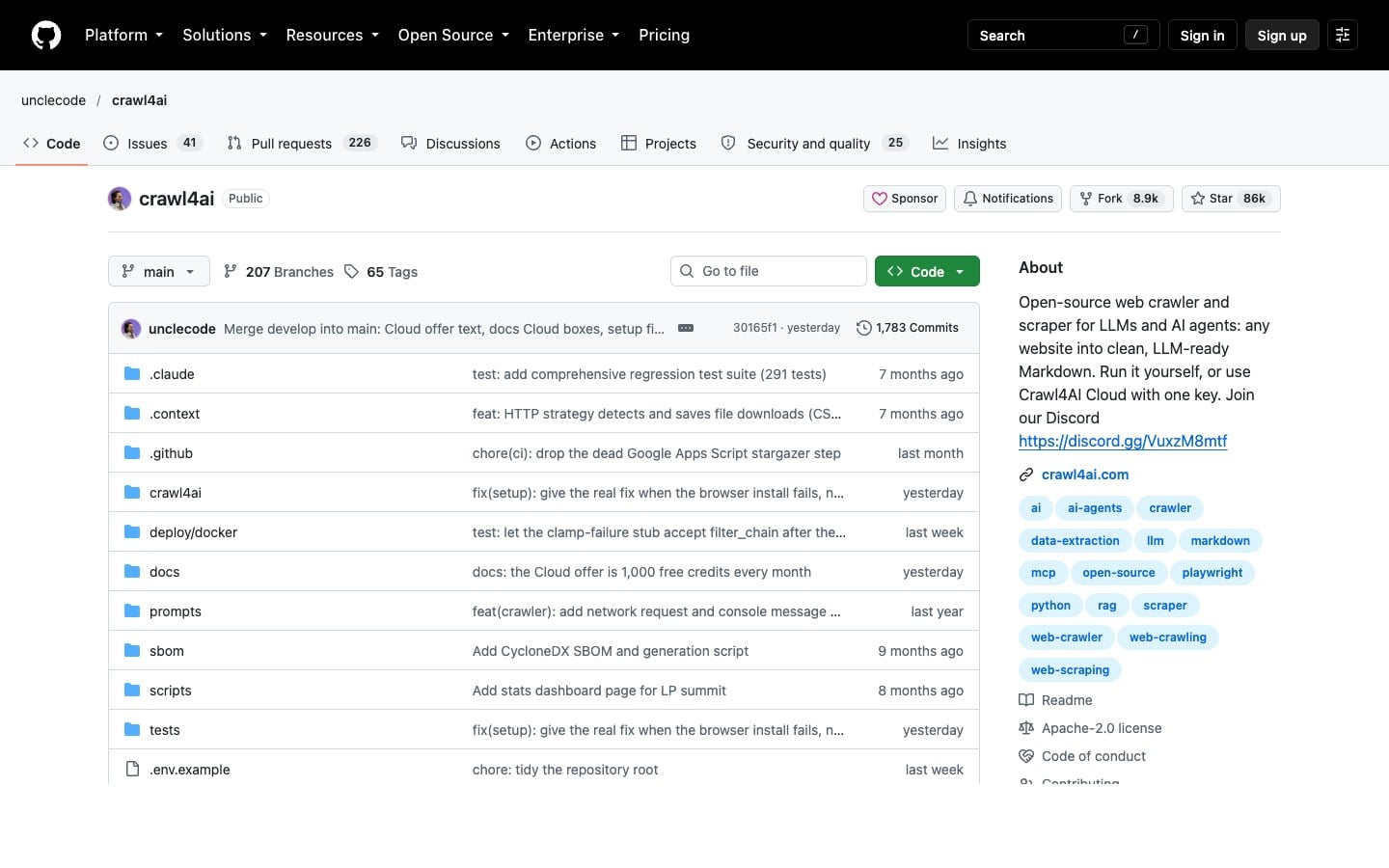
With 17,000 global monthly searches (crawl4ai) and over 50,000 GitHub stars, Crawl4AI is the #1 open-source alternative to Firecrawl. When engineering teams on X want zero per-page API bills—or need to run web extraction entirely inside their own VPC—they deploy Crawl4AI locally via Docker or Python, or connect to Crawl4AI Cloud.
Strengths:
- 100% open-source, self-hostable, and outputs clean Markdown with heuristic noise removal (
fit_markdown). - Supports persistent browser sessions, custom JavaScript hooks, and local LLM extraction.
Limitations: Self-hosting requires managing your own Playwright browsers, memory, and proxy rotation when targets block datacenter IPs.
11. Perplexity Sonar API: Best for Drop-In Cited Prose Answers
With 2,500 monthly searches specifically for perplexity sonar, Perplexity Sonar API is the fastest option when you don't want your agent to orchestrate a multi-step search-and-scrape loop, and instead just want a single OpenAI-compatible Chat Completions call that returns a grounded answer with an array of citation URLs.
Strengths:
- Drop-in OpenAI SDK compatibility (
sonar,sonar-pro, andsonar-deep-researchmodels). - High factual accuracy on single-turn Q&A benchmarks.
Limitations: Token costs plus per-request search fees add up quickly when an agent runs 30+ iterative sub-queries; offers no raw page extraction endpoint.
12. Linkup (linkup.so): Best for Verifiable Enterprise Grounding & Premium Publisher Data
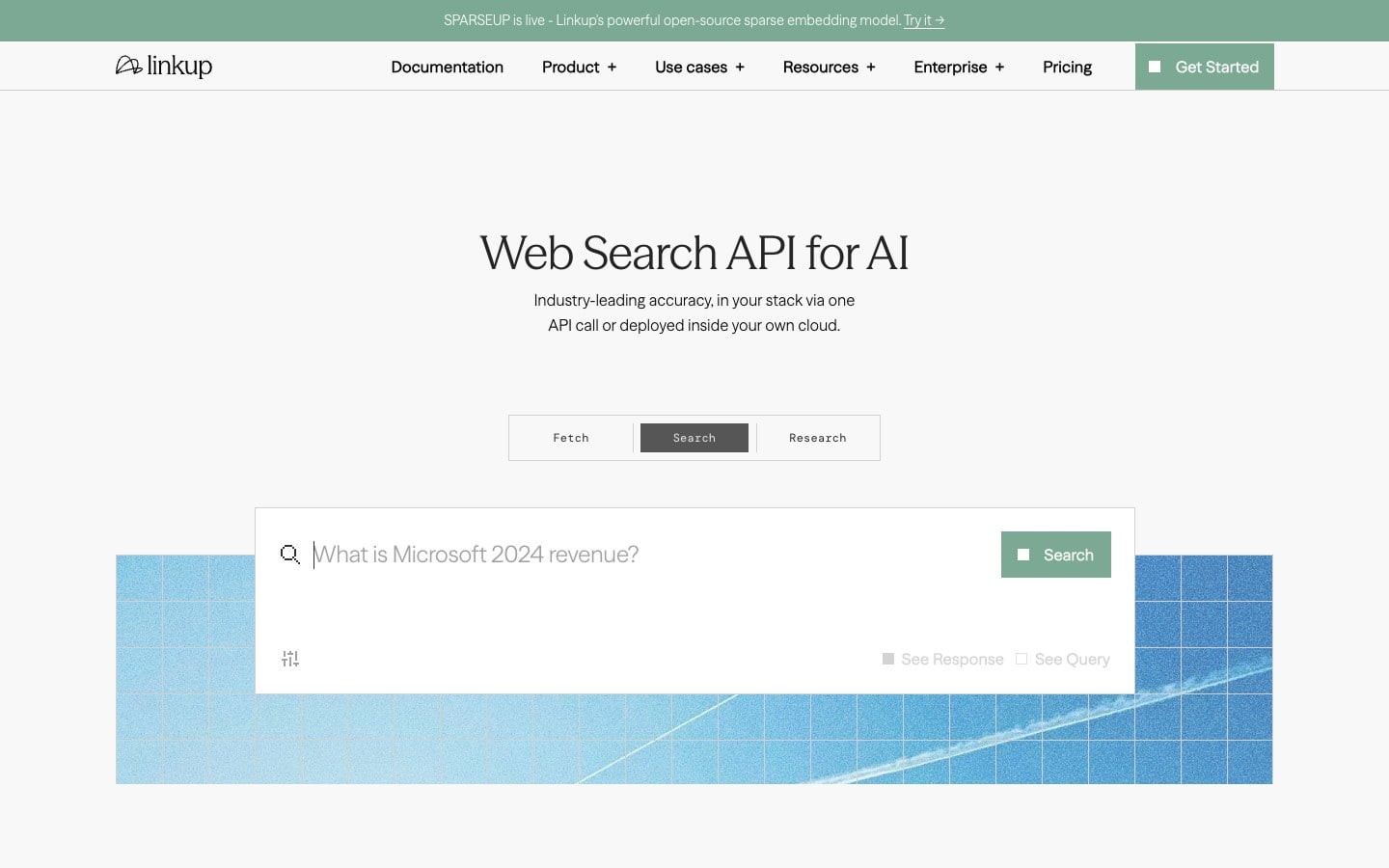
Pulling 6,100 global monthly searches (linkup, DR 65, $6.00 CPC in Ahrefs), Linkup is a fast-rising European and US agent search API that focuses on verifiable, compliance-safe grounding. In addition to fast web search and extraction endpoints (/search and /fetch), Linkup partners directly with premium publishers and data providers so enterprise agents can access licensed facts without copyright grey areas.
Strengths:
- Strong performance on SimpleQA benchmarks with low-latency
standardand multi-hopdeepsearch modes. - Official MCP server and integrations with LangChain, LlamaIndex, and Claude Desktop.
Limitations: Smaller ecosystem of creative/output tools compared to all-in-one agent workspaces.
13. SerpApi: Best for Multi-Engine Structured SERP JSON (Google, Scholar, Maps, News)
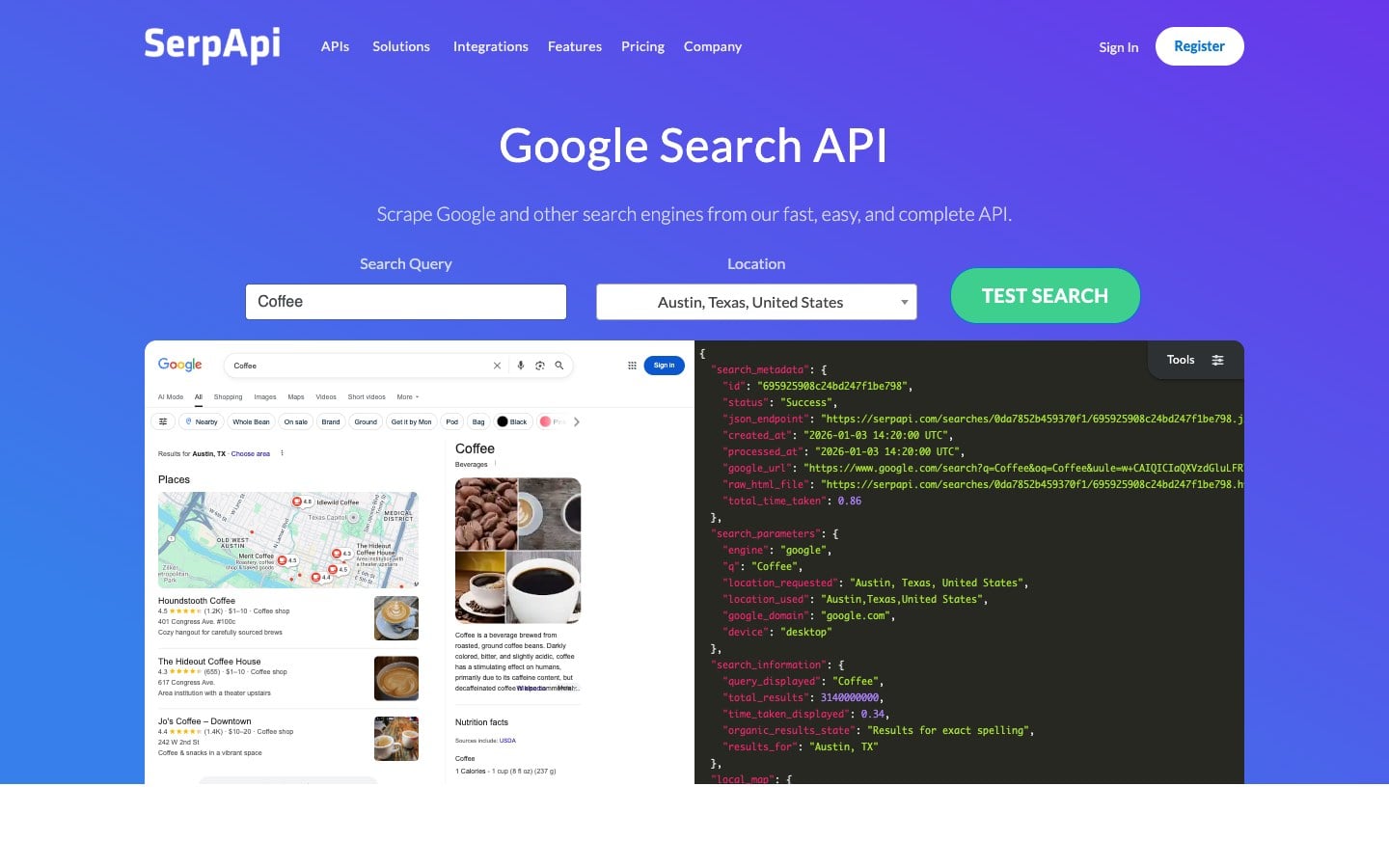
With 63,000 global monthly searches (20,000 in the US) and 34,700+ US monthly organic visits (DR 79), SerpApi is the battle-tested veteran of search scraping. While it wasn't originally built for LLMs, agents rely heavily on SerpApi whenever they need exact structured data from specialized Google verticals—like Google Scholar, Google Patents, Google Flights, Google Maps local packs, or Google Shopping.
Strengths:
- Covers 40+ search engines and specialized verticals with guaranteed CAPTCHA solving and geo-targeting down to the city level.
- Legal US shield protection for enterprise compliance teams.
Limitations: Expensive at scale (~$10–$15 per 1,000 searches) and returns massive raw SERP JSON that requires post-processing before feeding into an LLM context window.
14. Serper (serper.dev): Best Low-Cost, High-Speed Raw Google SERP API
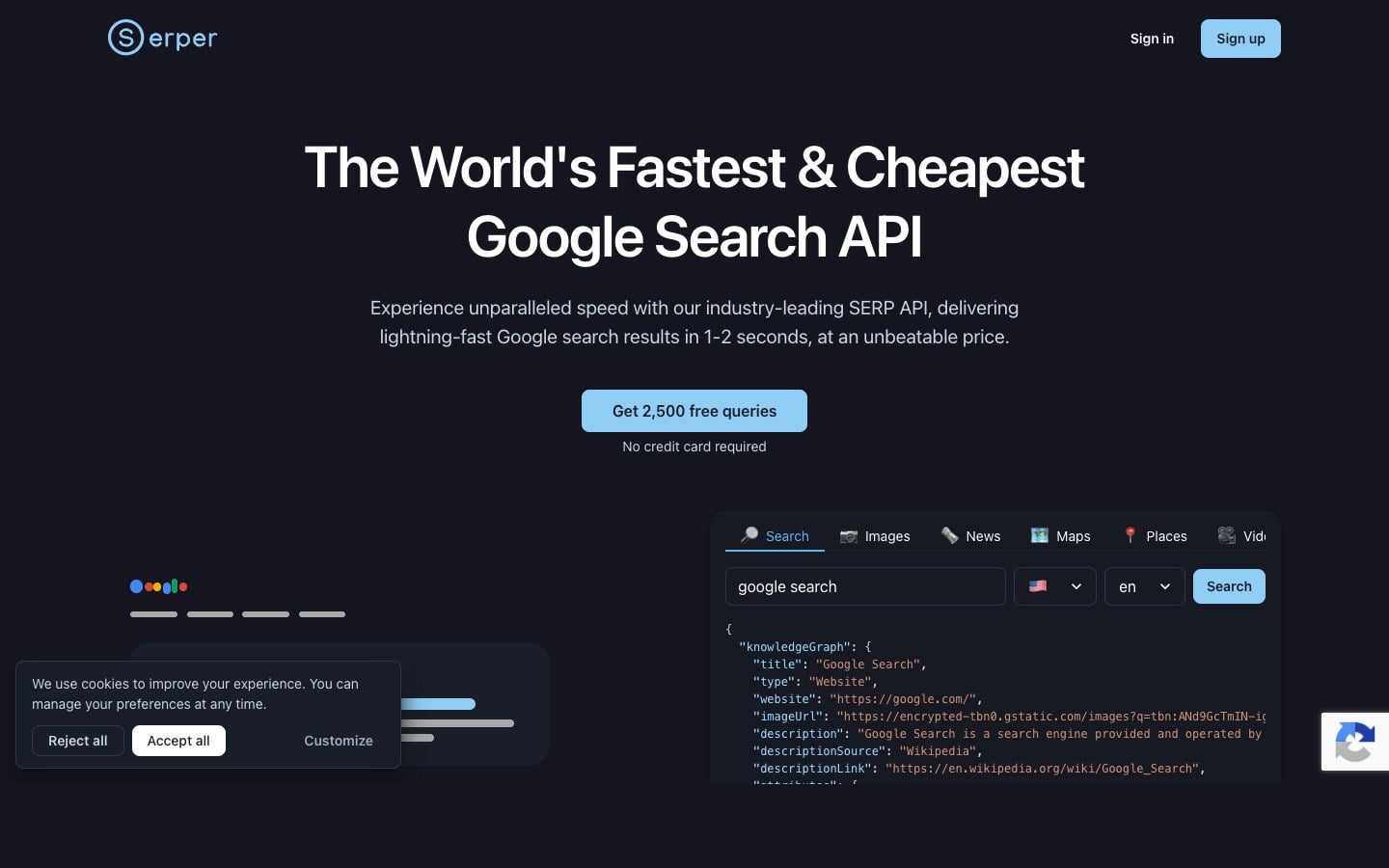
Generating 11,000 global monthly searches (serper, DR 74), Serper.dev is the developer favorite on X whenever an agent simply needs raw Google organic results, news, or images in 1–2 seconds at roughly $0.30 to $1.00 per 1,000 queries—a fraction of SerpApi's price.
Strengths:
- Extremely fast response time (~1s) and the most cost-effective way to get real-time Google SERP snippets into custom agent pipelines.
- Built-in support across pi coding agent, CrewAI, and AutoGPT.
Limitations: Only returns SERP metadata and short snippets—you still have to pair Serper with an extraction API (like Felo /v2/web/extract, Firecrawl, or Jina) to read full web pages.
15. Apify (Actors & MCP Server): Best Marketplace of 90,000+ Ready-Made Web Scrapers for Agents
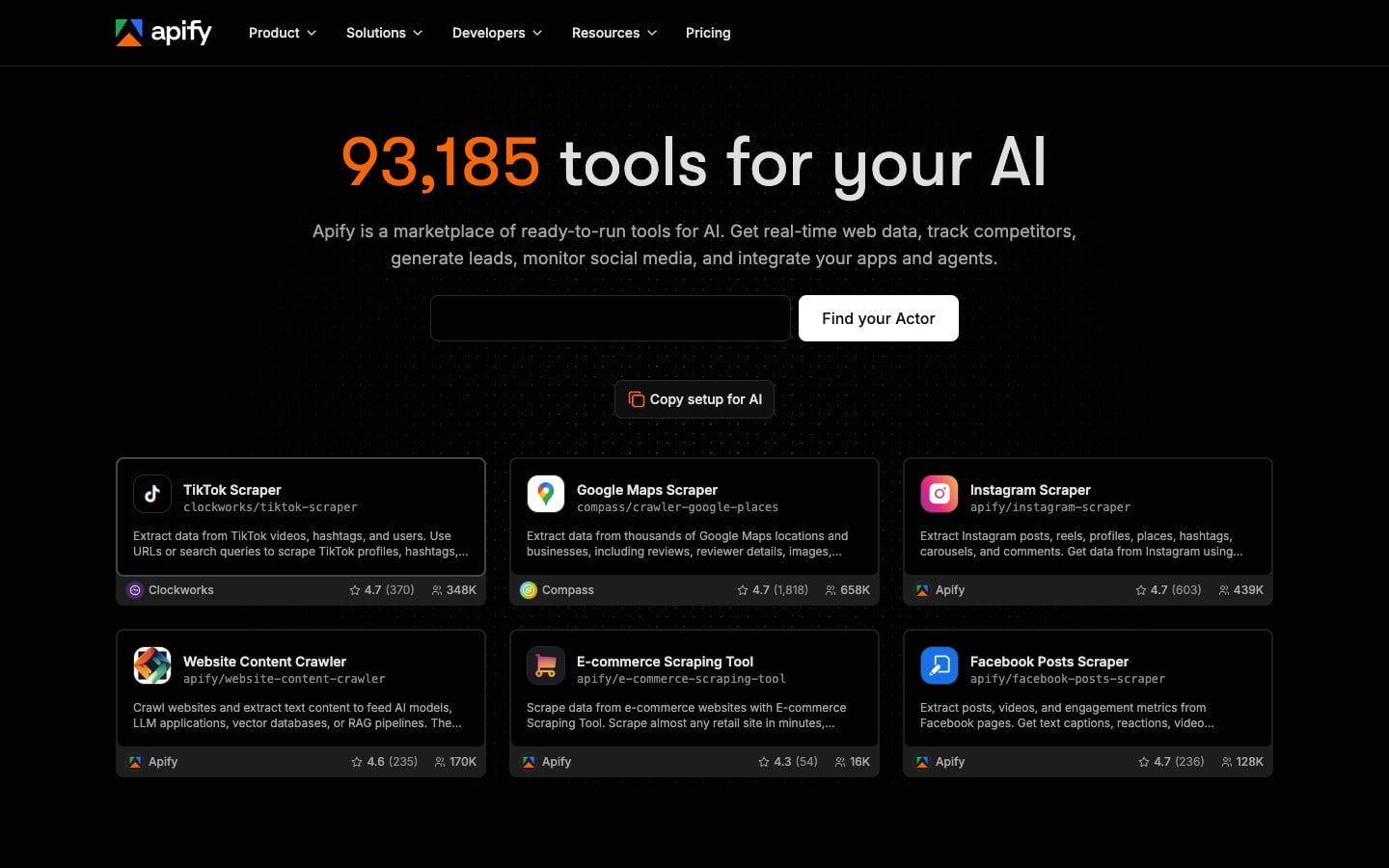
With a massive 273,000 global monthly search volume (50,000 in the US, DR 82, 96.9K US organic visits), Apify has pivoted aggressively into AI agent infrastructure. Through Apify's RAG Web Browser and the official Apify MCP Server, an AI agent can dynamically call over 90,000 pre-built cloud "Actors" to search Google, scrape Instagram/TikTok/LinkedIn profiles, extract Amazon reviews, or crawl documentation into Markdown.
Strengths:
- Unmatched catalog of site-specific scrapers (social media, e-commerce, maps, job boards) exposed via a single MCP gateway.
Limitations: Actor startup times and compute-unit pricing can be slower and more complex than a lightweight REST search call.
16. Bright Data (AI Web Access & SERP API): Best Enterprise Proxy & Anti-Bot Unlocker for Agents
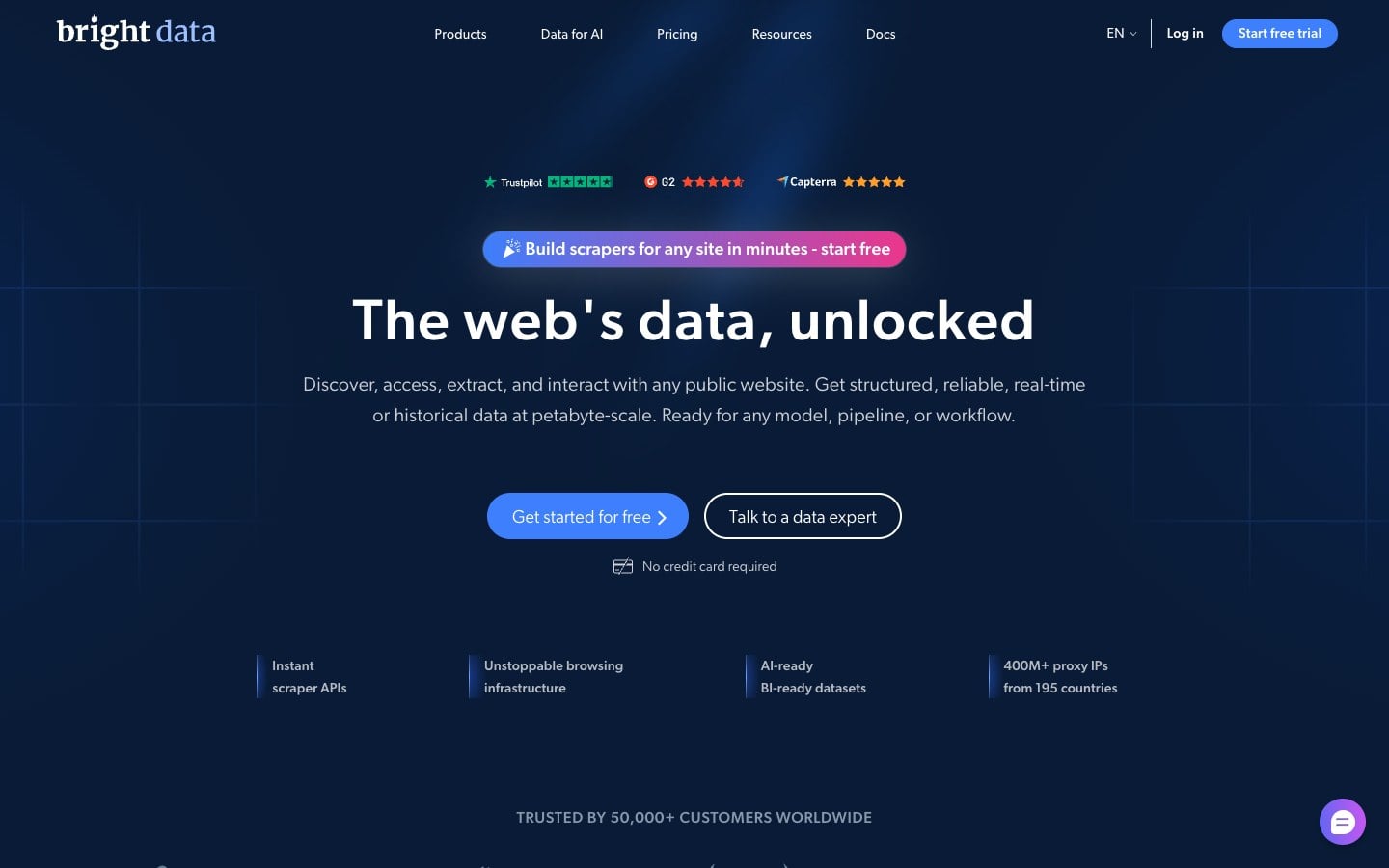
Generating 27,000 global monthly searches (bright data, DR 79, 31.7K US organic visits), Bright Data powers the underlying web access layer for many fortune-500 AI teams. When an agent needs to read pages protected by strict enterprise Cloudflare/DataDome firewalls, Bright Data's Web Unlocker, SERP API, and Remote Browser for AI Agents route requests through a 150M+ residential IP network and return clean Markdown.
Strengths:
- Highest success rate on heavily protected e-commerce, travel, and financial portals, plus a hosted MCP server for agents.
Limitations: Enterprise-oriented billing and configuration; overkill if your agent mainly researches developer docs, news, and tech blogs.
17. DeepSeek Search & Fetch API: Best Ultra-Low-Cost Native Search for Coding & Research Harnesses
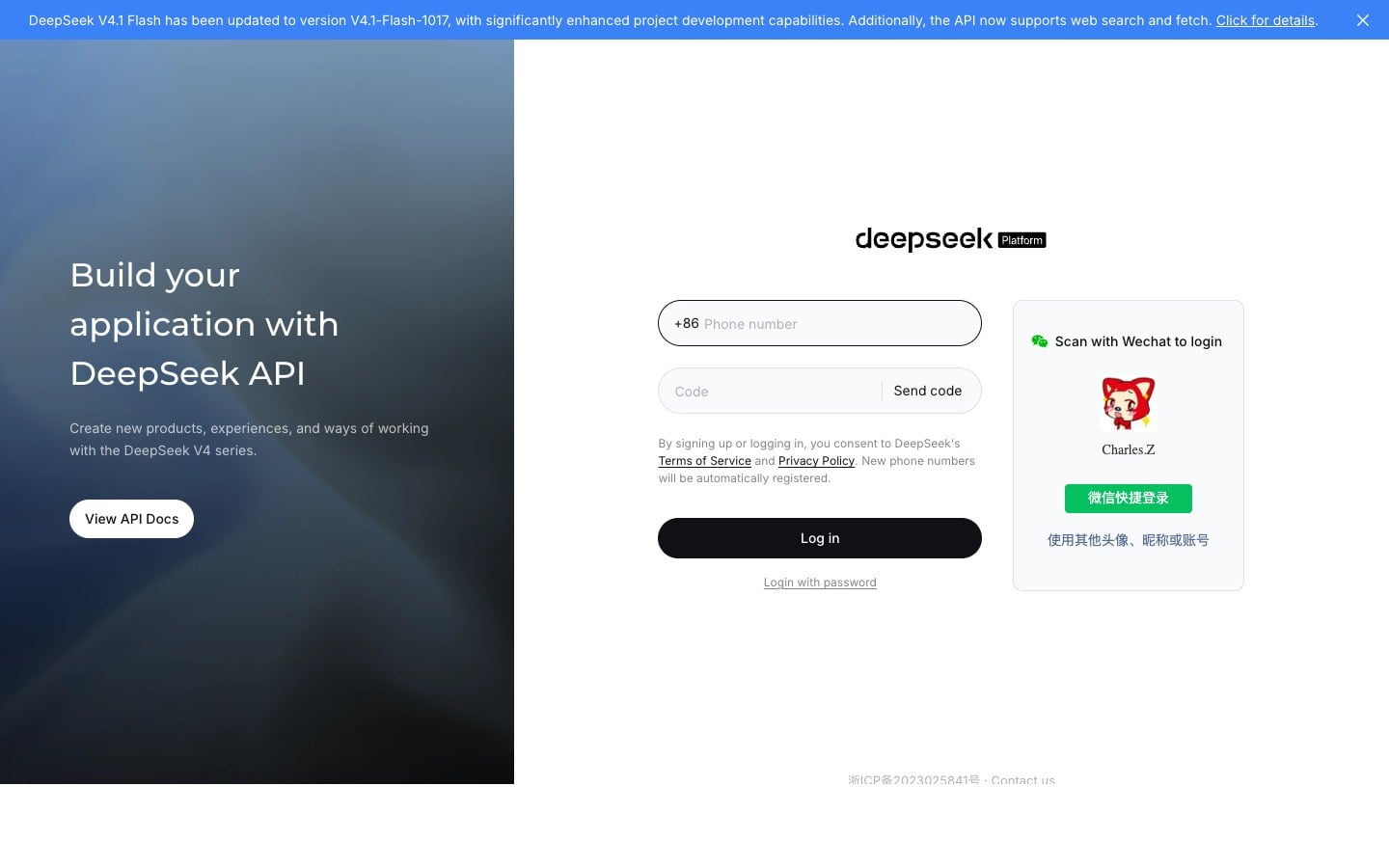
In October 2026, DeepSeek shook up the agent tool ecosystem on X by rolling out its official Search & Fetch APIs—delivering raw web search results and cleaned page content at roughly $0.75 per 1,000 calls (with promotional free tiers for Claude Code and Codex users). Within 24 hours of launch, open-source maintainers wired DeepSeek Search & Fetch directly into Hermes Agent and pi ecosystem extensions (web-deepseek) as a high-speed, low-cost alternative to Exa and Parallel.
Strengths:
- Aggressive pricing ($0.75 / 1K calls) with both search and clean page-fetch primitives built for coding agents.
Limitations: Newer ecosystem with fewer vertical-specific endpoints (no native YouTube subtitle extraction, X user timeline endpoints, or PPT/LiveDoc generation).
Master Comparison Table: 17 Search Engine Services for AI Agents (2027)
| # | Service | Category | AI Answer | Full-Page Extract | X / YouTube Data | Deliverables & Memory | Typical Pricing / Footprint |
|---|---|---|---|---|---|---|---|
| 1 | Felo OpenAPI | All-in-One Agent Stack | ✅ /v2/chat | ✅ /v2/web/extract | ✅ X + YouTube | ✅ LiveDocs + PPT/Mindmap | Unified key (openapi.felo.ai) |
| 2 | Anthropic Web Search API | Claude-Grounded Search | ✅ (/v1/beta/anthropic-websearch/search) | Via Felo Extract | ❌ | Via Felo OpenAPI | No Anthropic vendor account needed |
| 3 | OpenAI Web Search API | OpenAI-Grounded Search | ✅ (/v1/beta/openai-websearch/search) | Via Felo Extract | ❌ | Via Felo OpenAPI | No OpenAI vendor account needed |
| 4 | Tavily | Agent RAG Search | ✅ | ✅ | ❌ | ❌ | DR 79 · 32K global vol · ~$5–$8/1K |
| 5 | Exa | Neural Semantic Search | ✅ | ✅ | Partial (Tweets) | ❌ | DR 79 · 16K global vol · ~$5/1K |
| 6 | Parallel (parallel.ai) | Fast Agent Web Infrastructure | ✅ | ✅ | ❌ | ❌ | DR 77 · 18K US org traffic · ~$1/1K |
| 7 | Brave Search API | Independent Web Index | ✅ (LLM Context) | ❌ | ❌ | ❌ | 30K global vol · ~$3–$5/1K |
| 8 | Firecrawl | Managed Crawl & Extract | ❌ | ✅ (Deep crawl) | ❌ | ❌ | DR 80 · 105K global vol |
| 9 | Jina Reader | URL-to-Markdown | ❌ | ✅ (r.jina.ai) | ❌ | ❌ | DR 77 · Instant prefix API |
| 10 | Crawl4AI | Open-Source Crawler | ❌ | ✅ (Self-hosted) | ❌ | ❌ | 17K global vol · 50K+ GitHub stars |
| 11 | Perplexity Sonar | Cited Chat Completions | ✅ (Core focus) | ❌ | ❌ | ❌ | 2.5K global vol · Token + request fee |
| 12 | Linkup (linkup.so) | Enterprise Grounding | ✅ | ✅ | ❌ | ❌ | DR 65 · 6.1K global vol · €5/1K |
| 13 | SerpApi | Multi-Vertical SERP JSON | ❌ | ❌ | YouTube metadata | ❌ | DR 79 · 63K global vol · ~$10–$15/1K |
| 14 | Serper.dev | Fast Raw Google SERP | ❌ | ❌ | ❌ | ❌ | DR 74 · 11K global vol · ~$0.30–$1/1K |
| 15 | Apify | 90K+ Scraper Actors & MCP | Via Actors | ✅ | ✅ (Via Actors) | ❌ | DR 82 · 273K global vol |
| 16 | Bright Data | Enterprise Unlocker & SERP | ❌ | ✅ (Markdown) | ✅ (Datasets) | ❌ | DR 79 · 27K global vol |
| 17 | DeepSeek Search/Fetch | Low-Cost Search & Fetch | ❌ | ✅ | ❌ | ❌ | ~$0.75/1K calls · Claude/Codex ready |
How Popular AI Agents Connect to Search in 2027
If you are running an AI agent locally in your terminal or deploying a team workflow, here is how the leading agent harnesses wire into search services today:
1. Claude Code
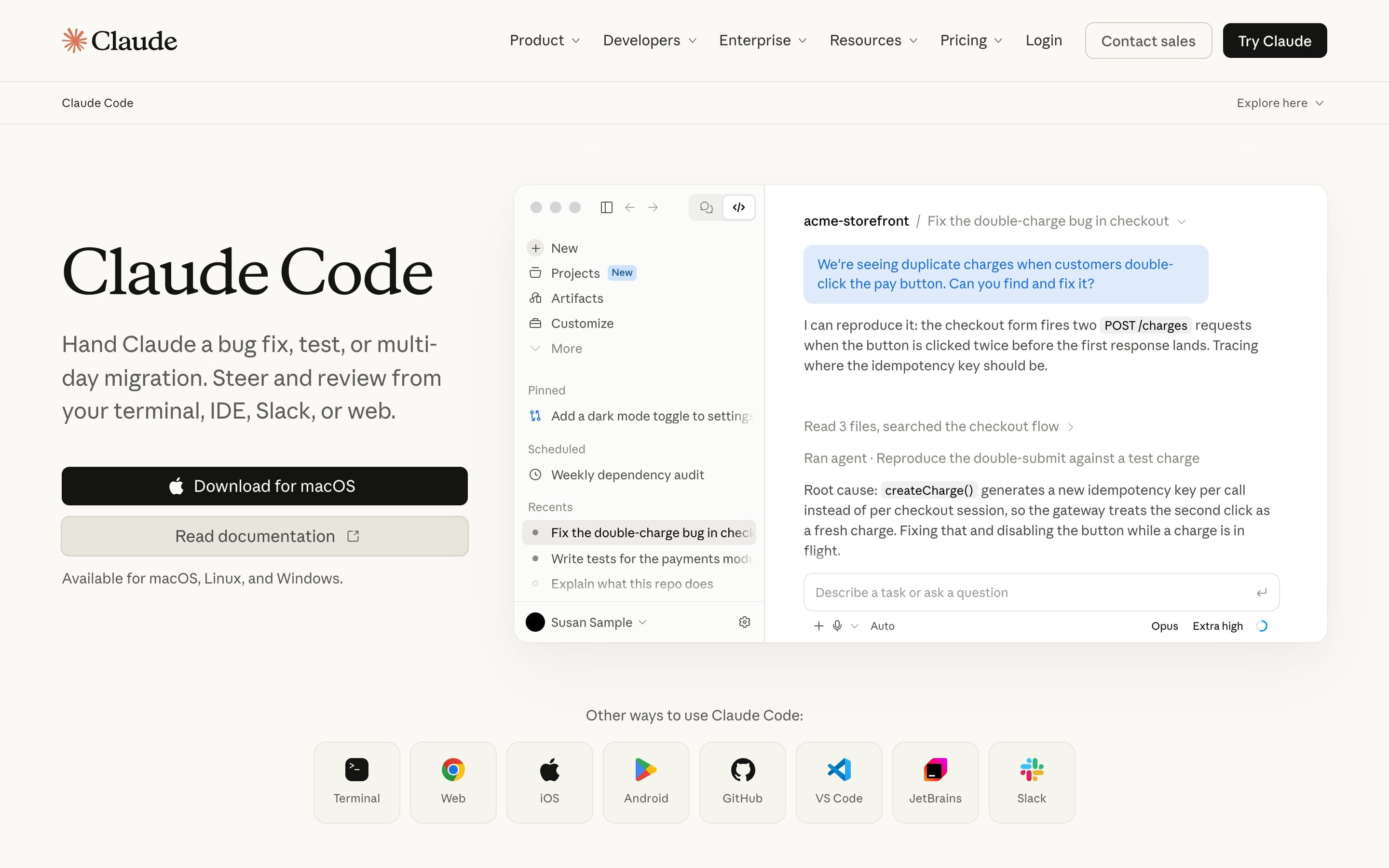
Out of the box, Claude Code excels at repository-wide code reasoning, bash execution, and file edits—but its built-in web tools are limited when you need social signals, video transcripts, or office outputs. By connecting Claude Code to Felo OpenAPI (via CLI skills or MCP servers), Claude Code can search live documentation (POST /v2/chat), extract full reference pages (POST /v2/web/extract), check X for library breaking-change reports, and even generate an architecture review slide deck (POST /v2/ppts).
2. Codex CLI
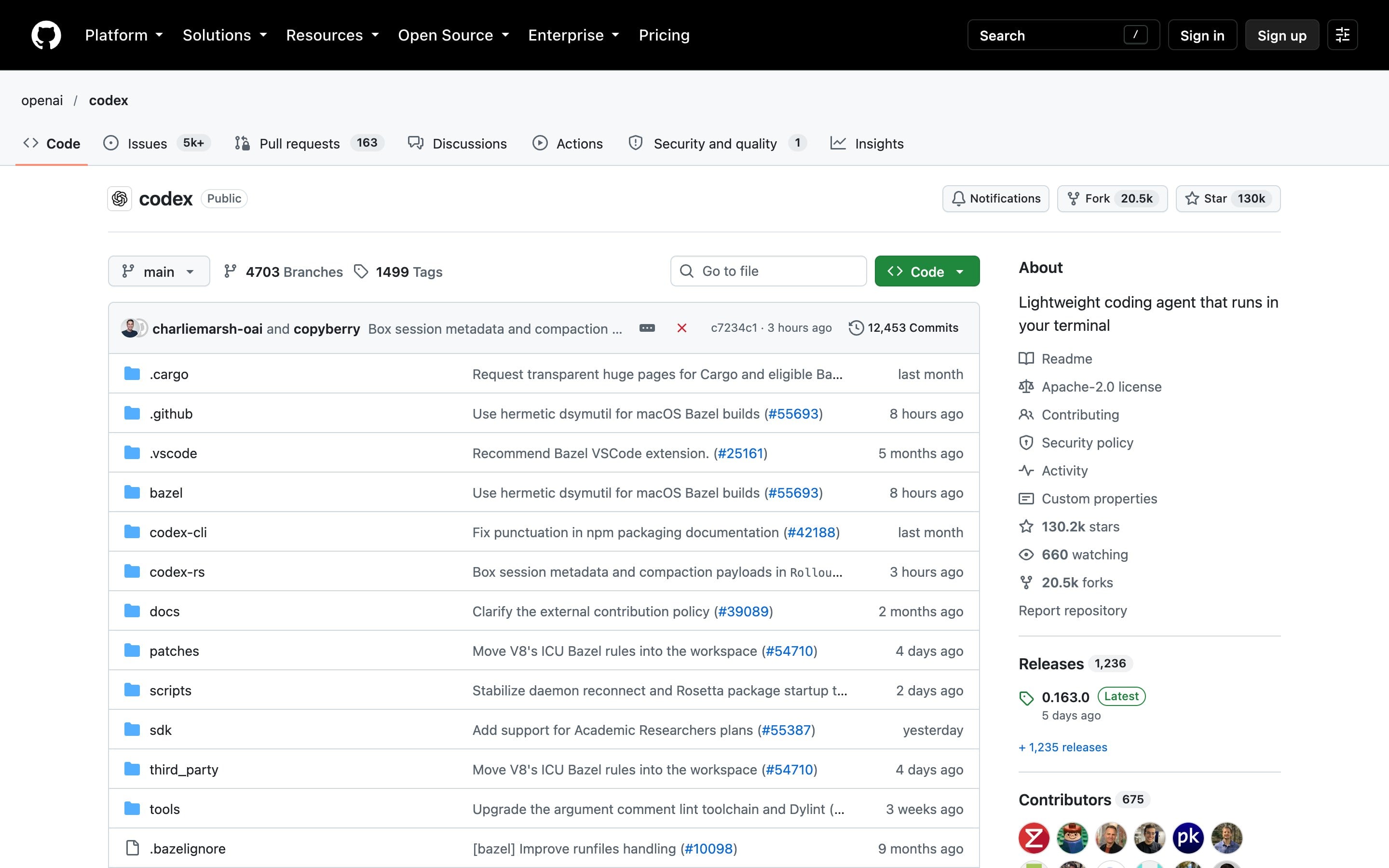
OpenAI's Codex CLI ships with a default cached web snapshot mode, which means out-of-the-box searches can miss documentation or CVEs published hours ago. Developers extending Codex via config.toml, MCP servers, or Felo's Codex integration unlock real-time web search, URL extraction, and lower-cost multi-model routing under a single API key.
3. pi Coding Agent
Built for speed, extensibility, and clean context management, the pi coding agent harness treats search as a first-class composable tool. In pi, developers combine native web_search and fetch_content tools (supporting multi-angle concurrent queries across providers like Exa, Brave, Tavily, Firecrawl, and Jina) with skill-based CLI tools like felo-search (~/.agents/skills/felo-search/scripts/search.sh) and felo-x-search—allowing pi subagents to research, verify claims, and write code in parallel without polluting the main context window.
4. OpenClaw
OpenClaw is a favorite for autonomous research and multi-step operating workflows, but without external APIs it has no persistent memory or live social pulse. Wiring OpenClaw to Felo OpenAPI gives it live web search, X sentiment tracking, YouTube transcript extraction, and LiveDocs semantic memory so your agent remembers last week's research in today's session.
5. Hermes Agent & Custom MCP Harnesses
For teams orchestrating multi-agent pipelines in Hermes Agent or custom MCP clients, protocol consistency is everything. Using Felo OpenAPI's REST and SuperAgent SSE endpoints alongside standard MCP servers (which you can discover on directories like mcpmeasure.com) lets Hermes agents chain search → extraction → LiveDocs memory → PPT/Landing Page generation without writing brittle glue code for five different vendors.
Quick Example: Calling Felo Search & Web Extraction from Any Agent
Because Felo OpenAPI uses clean REST endpoints with Bearer token authentication, any agent with bash or HTTP tool access can call it in seconds:
# 1. Real-time AI Answer Search (POST /v2/chat)
curl -s -X POST "https://openapi.felo.ai/v2/chat" \
  -H "Authorization: Bearer $FELO_API_KEY" \
  -H "Content-Type: application/json" \
  -d '{
    "query": "Compare MCP server authentication changes in the 2026-2027 spec"
  }'

# 2. Anthropic Model-Grounded Web Search (no separate Anthropic vendor account needed)
curl -s -X POST "https://openapi.felo.ai/v1/beta/anthropic-websearch/search" \
  -H "Authorization: Bearer $FELO_API_KEY" \
  -H "Content-Type: application/json" \
  -d '{
    "messages": [{"role": "user", "content": "Latest stable release of Claude Code and key MCP updates"}],
    "max_tokens": 1024
  }'

# 3. OpenAI Model-Grounded Web Search (no separate OpenAI vendor account needed)
curl -s -X POST "https://openapi.felo.ai/v1/beta/openai-websearch/search" \
  -H "Authorization: Bearer $FELO_API_KEY" \
  -H "Content-Type: application/json" \
  -d '{
    "input": "Compare Codex CLI web search configuration options",
    "max_output_tokens": 1024
  }'

# 4. Extract Clean Content from a Specific URL (POST /v2/web/extract)
curl -s -X POST "https://openapi.felo.ai/v2/web/extract" \
  -H "Authorization: Bearer $FELO_API_KEY" \
  -H "Content-Type: application/json" \
  -d '{
    "url": "https://modelcontextprotocol.io/specification"
  }'
Your agent gets back structured JSON with a synthesized answer, query_analysis terms, and extracted page content—ready to feed straight into its next reasoning step or save into LiveDocs.
Frequently Asked Questions (FAQ)
What is the difference between an online AI answer engine and an agent search API?
An online AI answer engine (like Felo AI Search, Perplexity, or ChatGPT Search) is built for humans—it provides a visual UI, clickable source cards, and interactive document or slide creation. An agent search API (like Felo OpenAPI, Tavily, or Exa) is built for software agents like Claude Code or OpenClaw—it returns machine-readable JSON, clean Markdown extraction, and low-latency endpoints without UI overhead.
Which AI answer engine is best for multilingual research in 2027?
Felo AI Search leads for cross-language research. It translates your intent into native queries across target languages (such as Japanese, Chinese, Korean, English, and European languages), retrieves primary local sources, and synthesizes the answer back into your preferred language.
What is the best search API for Claude Code, Codex CLI, pi, and OpenClaw?
If you want a single API key that covers web search, full-page extraction, X (Twitter) search, YouTube transcripts, shared memory (LiveDocs), and deliverable generation (PPTs, mindmaps, landing pages), Felo OpenAPI is the most complete choice. If you only need raw independent SERP snippets, Brave Search API is great; for semantic vector discovery, Exa is a strong specialized option.
Why shouldn't I just let my AI agent scrape Google directly?
Raw web scraping triggers CAPTCHAs, breaks whenever site layouts change, and dumps tens of thousands of tokens of noisy HTML/JavaScript into your agent's context window. Purpose-built agent search APIs return pre-cleaned Markdown and synthesized answers at a fraction of the token cost and latency.
Conclusion: Choose the Right Engine for Humans—and for Your Agents
In 2025, switching from ten blue links to an AI answer engine felt like a superpower. In 2027, the smartest teams upgrade both sides of their workflow:
- For your own daily research: Use Felo AI Search to break language barriers, pull real-time web and social evidence, and turn answers into LiveDocs and Felo Slides in one click.
- For your AI agents (Claude Code, Codex CLI, pi, OpenClaw, Hermes Agent): Connect Felo OpenAPI so your agents can search the live web, read full pages, track X and YouTube, remember context, and ship real deliverables—all through one API key.
Try Felo AI Search for Free → | Get Your Free Felo OpenAPI Key for Agents →
This post is also available in 简体中文, 日本語, 한국어, 繁體中文, हिन्दी, Français, العربية, Русский, اردو, Bahasa Indonesia, Deutsch, Tiếng Việt, Türkçe, Italiano, ไทย, Español, বাংলা and Português.