Felo Landing Page: Turn Text Prompts Into Live Hosted Pages for Google Antigravity

Discover how Felo Landing Page skill gives Google Antigravity agents the power to generate live, hosted landing pages from simple text prompts.
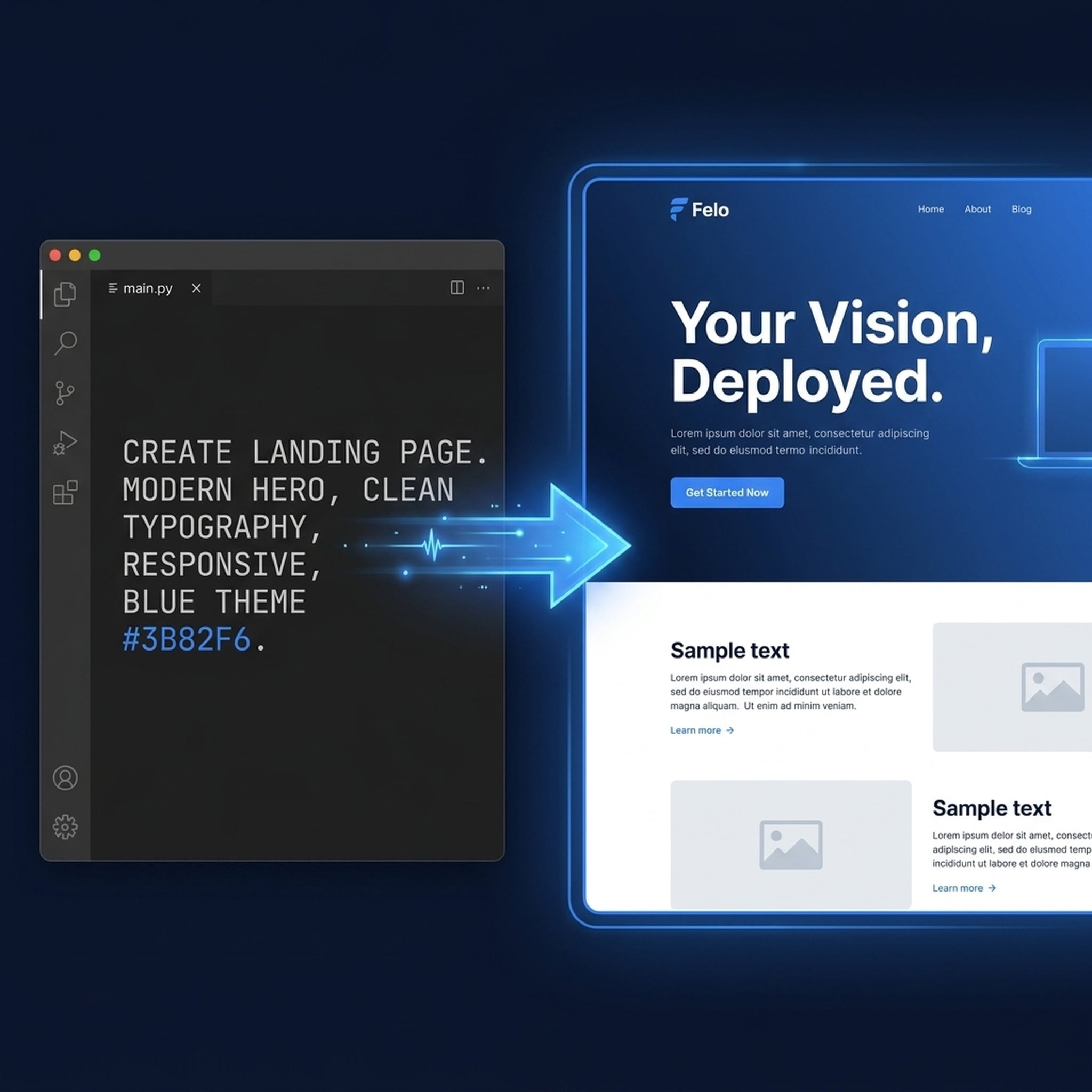
Google Antigravity's Agent Manager is a powerful planning engine. It can break down complex tasks, orchestrate multi-step workflows, and reason through problems using Gemini 3's capabilities. But there is a persistent gap that every Antigravity team eventually encounters: what happens after the plan is complete?
Gemini 3 can summarize research, draft outlines, and propose strategies. It cannot produce a finished, shareable deliverable that lives on the web. That is where the Felo Landing Page skill changes the game.
The Output Gap in Antigravity
If you have been using Google Antigravity's Agent Manager, you know the pattern well. An agent receives a task, researches the topic, organizes findings into a structured summary, and hands you a markdown document. The research is solid. The analysis is thorough. But the output sits in a text file — not a living page you can share with a client, stakeholder, or team member.
This is what we call the output gap. Gemini 3 has no rendering layer. It cannot generate HTML, deploy pages, or return a live URL. The Agent Manager plans brilliantly but delivers nothing you can send in a link.
The Felo Landing Page skill closes that gap completely. Drop it into your .agent/skills/ folder, commit to Git, and suddenly every Antigravity agent on your team can transform research outputs into polished, hosted landing pages — with a shareable URL returned in seconds.
What Felo Landing Page Does
The concept is straightforward, and that is exactly what makes it powerful:
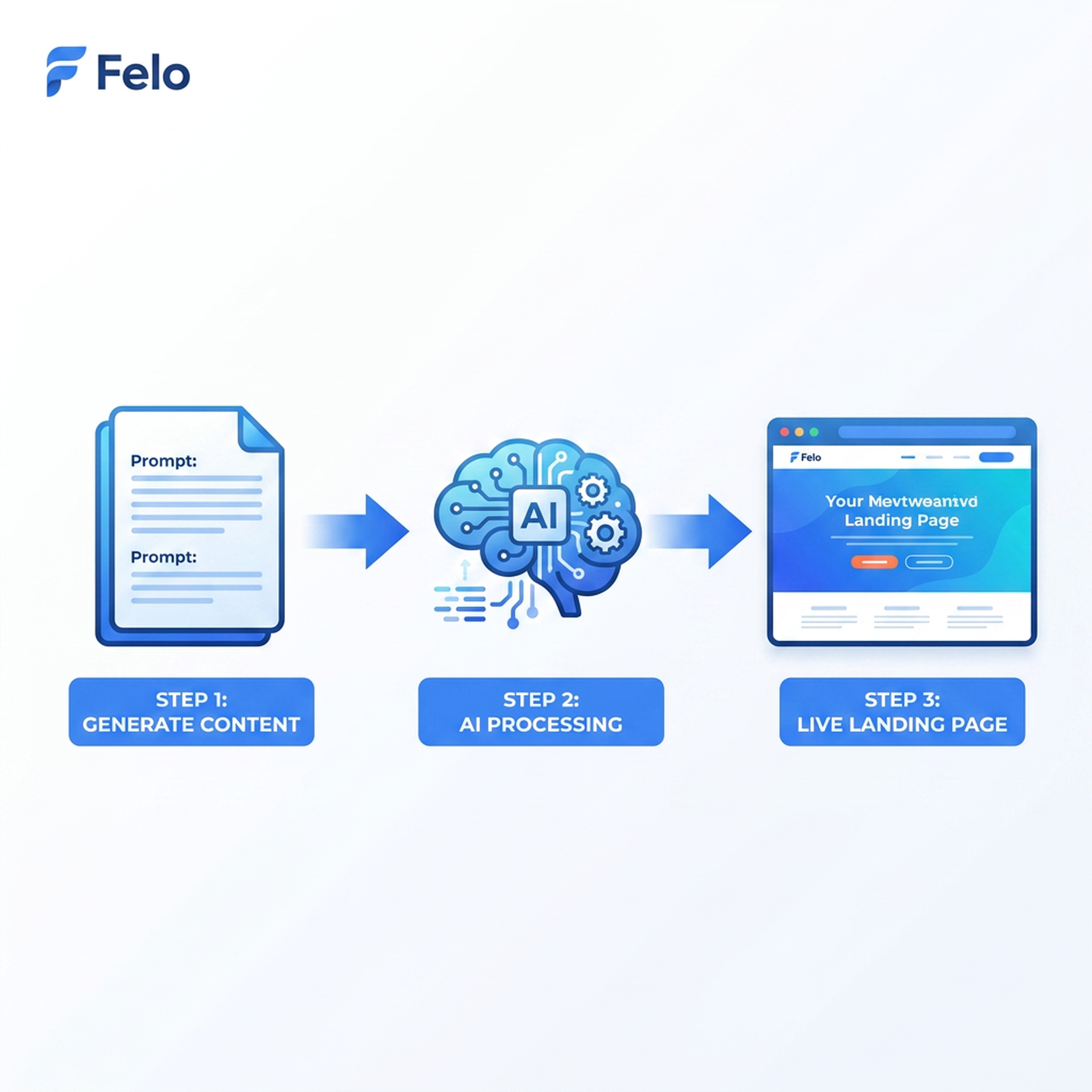
You give the agent a text prompt describing the page you want. The agent returns a live, hosted URL.
No manual HTML editing. No deployment configuration. No infrastructure to manage. The skill handles everything from page generation to hosting, and your agent workflow continues uninterrupted.
Prompt-to-Page in One Step
Consider a typical Antigravity workflow. Your agent has just completed competitive research on three SaaS products. It has gathered pricing data, feature comparisons, and market positioning. Without the Felo Landing Page skill, this research ends as a markdown summary. With the skill installed, the Agent Manager can route the research directly into page generation:
- The agent completes the research phase using
felo-searchor other data skills. - The task description calls for a deliverable page — a comparison landing page, a product overview, or a campaign microsite.
SKILL.mdsemantic matching triggers the Felo Landing Page skill automatically.- The skill generates a fully hosted page and returns a live URL.
- The agent includes that URL in its final output.
The entire flow happens within the agent task. You do not switch tools. You do not open a browser. You get a link you can share immediately.
No Infrastructure Required
This is not a tool that requires you to spin up servers, configure domains, or manage hosting. The skill produces pages on Felo's hosting infrastructure. Every generated page is immediately accessible at a public URL. There is nothing to deploy, nothing to scale, and nothing to maintain.
For teams that need to produce landing pages as part of regular agent workflows — campaign pages, product comparison sheets, event registrations, or internal documentation portals — this eliminates an entire category of operational overhead.
How It Fits Into the Antigravity Skills Ecosystem
The Felo Landing Page skill is part of a broader ecosystem designed to extend what Antigravity's Agent Manager can accomplish. Most teams layer skills in three stages:
First, the live data layer. Teams install felo-search and felo-web-fetch to give agents access to current information that Gemini 3's training cutoff does not cover — pricing, release notes, documentation updates, and market signals.
Second, the knowledge layer. Teams add felo-livedoc to index internal runbooks, architecture docs, and API references into a persistent knowledge base that agents can query across sessions.
Third, the output layer. This is where Felo Landing Page, along with felo-slides and felo-content-to-slides, transforms agent research into finished deliverables — live hosted pages and .pptx decks.
The landing page skill occupies the output layer. It is the final step that turns agent research into something you can actually share with people outside the IDE.
Installation: Two Minutes, Zero Configuration
Installing the Felo Landing Page skill for Google Antigravity follows the same pattern as every other Felo skill:
# Clone the Felo skills repository
git clone https://github.com/Felo-Inc/felo-skills.git

# Copy the skill to your Antigravity skills folder
cp -r felo-skills/felo-landingpage ~/.gemini/antigravity/skills/
That is it. Copy the folder, commit .agent/skills/ to your team's Git repository, and every developer's Antigravity instance picks up the capability on the next pull. There is no per-user configuration, no API key setup for the skill itself, and no environment variables to manage.
Team-Wide Deployment
The recommended approach is to place the skill in .agent/skills/ within your project repository and commit it to Git. Every developer who pulls the repository automatically gains the landing page generation capability. This eliminates configuration drift and ensures consistent behavior across the team.
For personal use — experimentation or projects that should not affect the wider team — you can install to ~/.gemini/antigravity/skills/ instead.
What Happens When the Agent Generates a Page
Understanding the mechanics helps you design better agent tasks. Here is what happens under the hood when the Felo Landing Page skill activates:
Content synthesis. The skill takes the structured output from your agent's research phase and synthesizes it into page-appropriate content. Headlines, body copy, call-to-action elements, and layout structure are all generated based on the task context.
Page rendering. The content is rendered into a complete HTML page with responsive design, proper typography, and clean visual hierarchy. The page is designed to look professional on both desktop and mobile devices.
Hosting and URL generation. The rendered page is deployed to Felo's hosting infrastructure and a public URL is generated. This URL is returned to the agent, which can then include it in its task output.
Immediate shareability. The URL is live the moment it is returned. You can paste it into a Slack message, an email, or a project management tool and anyone with the link can view the page.
Practical Use Cases
The landing page skill is not limited to one type of content. Any agent task that produces research, analysis, or structured information can benefit from page generation. Here are some of the most common use cases Antigravity teams have adopted:
Competitive Analysis Pages
An agent researches five competitors in a market segment, gathering pricing, features, and positioning data. Instead of outputting a markdown table, the agent generates a comparison landing page that stakeholders can review in a browser. The page includes structured sections for each competitor, visual comparisons, and summary recommendations.
Product Launch Microsites
Your team is launching a new feature. The agent researches the market context, drafts the value proposition, and generates a landing page that can serve as an internal preview or a soft-launch page for early users. The entire workflow — research, copywriting, page generation — happens within one agent task.
Event and Webinar Registration Pages
An agent is tasked with preparing materials for an upcoming industry event. It researches the event, identifies key talking points, and generates a registration landing page with event details, speaker information, and a call to action.
Internal Documentation Portals
Teams use the skill to generate landing pages for internal projects — onboarding guides, API documentation overviews, or architecture decision records. The generated pages provide a clean, readable format that is more accessible than raw markdown files.
Campaign Landing Pages
Marketing teams running agent-assisted campaigns use the skill to quickly generate campaign-specific landing pages. The agent researches the target audience, crafts messaging, and produces a page that can be reviewed, iterated on, and shared before the campaign goes live.
Why This Matters for Antigravity Teams
The significance of the Felo Landing Page skill goes beyond convenience. It changes the nature of what an Antigravity agent can accomplish.
Without output skills, agents are planners and researchers. They gather information, organize it, and present it in text form. That is valuable, but it is only half the workflow. The other half — turning that work into something others can see, review, and act on — has always required a human to switch contexts and use different tools.
With the landing page skill, the agent completes the full workflow. Research becomes a page. Analysis becomes a shareable deliverable. The agent stops being a research assistant and becomes a production tool.
This matters particularly for teams that operate at scale. If your organization runs dozens of agent tasks per day, and each task ends with research that needs to be shared, the friction of converting markdown to pages adds up. Eliminating that conversion step saves time, reduces errors, and keeps the workflow contained within the agent environment where it belongs.
The Bigger Picture: Skills as Capability Extensions
The Felo Landing Page skill exemplifies a broader principle that is reshaping how teams use AI agents. Rather than building monolithic models that attempt to do everything, the skills approach adds targeted capabilities on demand. Each skill addresses a specific gap in what the base model can do.
Gemini 3 cannot browse the live web. felo-search fixes that. Gemini 3 cannot remember your team's internal documentation across sessions. felo-livedoc fixes that. Gemini 3 cannot produce hosted web pages. felo-landingpage fixes that.
The result is a system where the base model handles reasoning and planning, and skills handle everything the model cannot do on its own. This modular approach means teams can adopt exactly the capabilities they need, install them in minutes, and share them across the organization through Git.
Getting Started
If you are already using Google Antigravity's Agent Manager, adding the Felo Landing Page skill takes minutes and requires no configuration changes. If you are new to Antigravity, the Felo skills ecosystem provides a structured way to extend your agents from day one — starting with live data, moving to persistent knowledge, and finishing with production-ready outputs.
The landing page skill is available at https://felo.ai/skills/antigravity, where you can explore the full catalog of Antigravity-compatible skills and see how each one closes a specific gap in what Gemini 3 can accomplish alone.
Learn more about Felo AI and the broader platform at https://felo.ai.
Conclusion
The gap between agent research and shareable deliverable has always been a manual step. Felo Landing Page eliminates it entirely. By giving Antigravity agents the ability to generate live, hosted pages from text prompts, it transforms the Agent Manager from a planning tool into a production system — one that delivers finished outputs, not just summaries.
Install the skill, commit it to your team's repository, and let your agents do what they do best: complete the entire workflow, from research to deliverable, without you leaving the IDE.
This post is also available in 简体中文, 日本語, 한국어, 繁體中文, हिन्दी, Français, العربية, Русский, اردو, Bahasa Indonesia, Deutsch, Tiếng Việt, Türkçe, Italiano, ไทย, Español, বাংলা and Português.