Build a Knowledge Base Your AI Employee Can Use — Felo LiveDoc for Google Antigravity

Turn docs, PDFs, files, and URLs into a searchable knowledge layer so recurring office work stops depending on scattered context. Learn how Felo LiveDoc plugs into Google Antigravity's Agent Manager.
Why Antigravity Agents Keep Asking the Same Questions
Google Antigravity's Agent Manager is a capable planner. Give it a task, and it breaks it down, calls the right tools, and ships a result. But there's a gap that no amount of prompt engineering closes: the agent doesn't remember what your team already knows.
Every time an agent starts a new session, it begins from zero. Your runbooks, internal API docs, architecture decisions, HR policies, and process guides live somewhere — probably in a dozen Google Docs, a Confluence wiki, and a shared drive nobody trusts anymore. The agent can't reach them. Gemini 3's training certainly doesn't include them. And even if you paste the relevant doc into the context window, that context disappears when the session ends.
The result is the same conversation repeated over and over:
"How do I deploy to staging?" "What's the approval process for vendor invoices?" "Which version of the payments API are we on?"
A human employee learns these answers once. An AI agent forgets them every time.
That's exactly what Felo LiveDoc was built to fix.
What Is Felo LiveDoc?
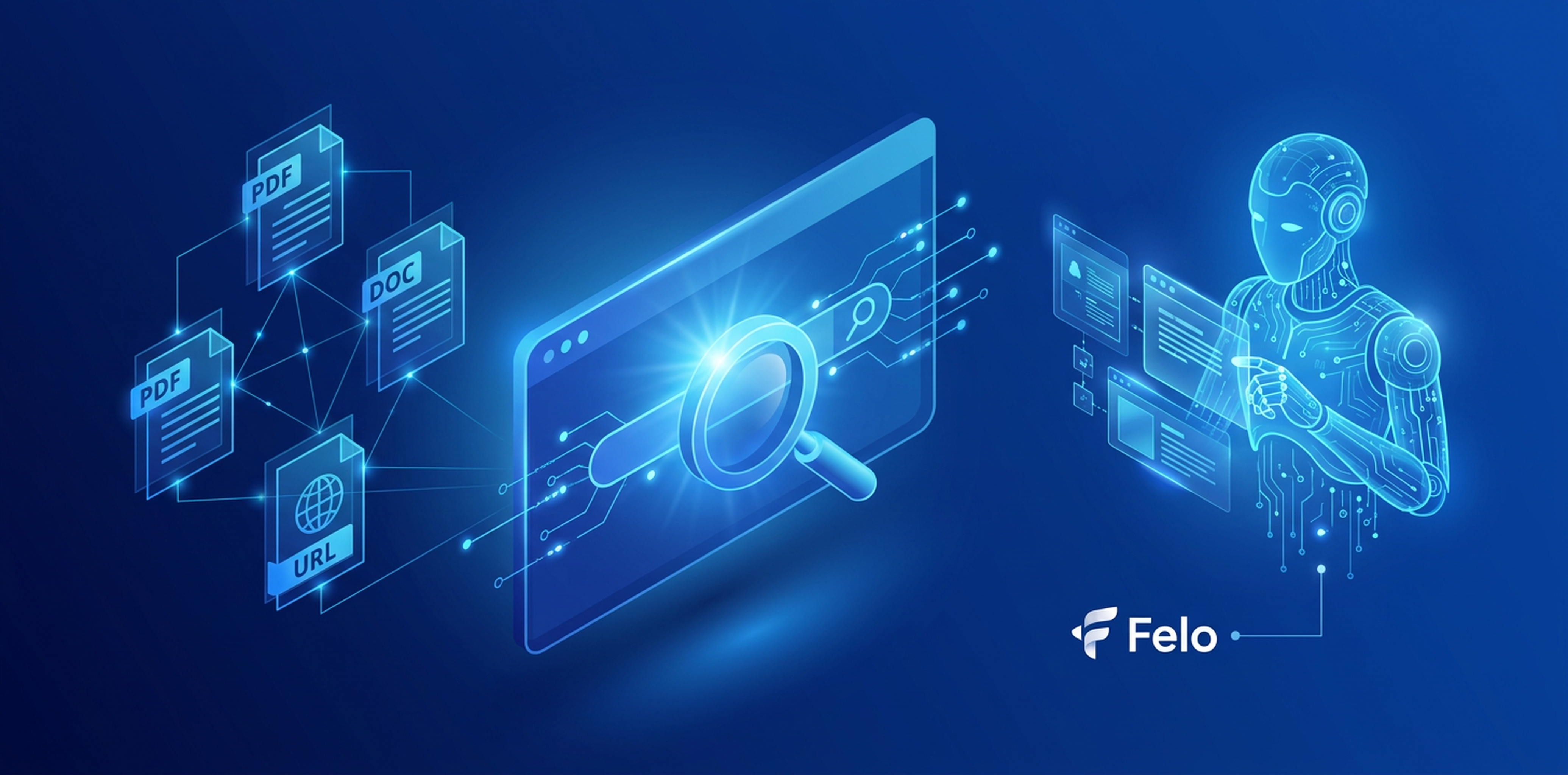
Felo LiveDoc is a Felo Skill that turns your team's documents — PDFs, Markdown files, Word docs, URLs, and more — into a persistent, searchable knowledge base that Antigravity agents can query automatically. You index your docs once. Every agent task that touches those topics retrieves grounded answers instead of guessing.
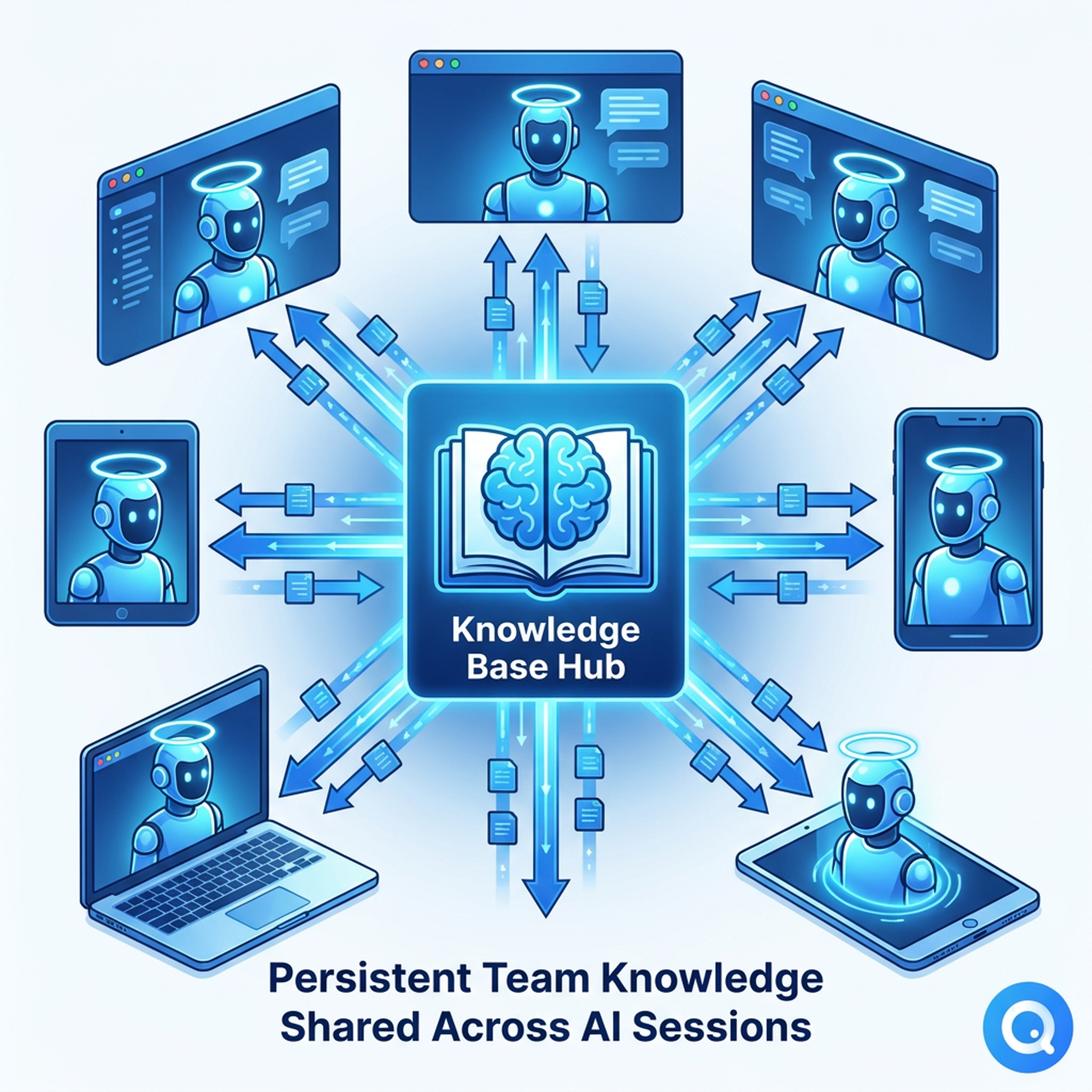
It drops into .agent/skills/ just like every other Felo Skill. Commit it to Git, and your entire team's Antigravity instances pick it up on the next pull. No per-user setup, no configuration drift, no extra infrastructure to maintain.
Try it yourself: Felo LiveDoc — Google Antigravity Skill
The Problem: Context Windows Are Finite and Forgetful
To understand why LiveDoc matters, it helps to look at what Antigravity agents do without it.
The Copy-Paste Workflow
Right now, if an agent needs internal context, someone has to:
- Find the relevant document (good luck if it's buried in a folder structure from 2023)
- Copy the relevant section
- Paste it into the agent's prompt
- Hope the context window is large enough
- Repeat the whole process tomorrow when the same question comes up
This doesn't scale. It burns human time, it burns token budget, and it burns trust — because the agent inevitably gets something wrong when the pasted context is stale.
The Hallucination Problem
When an agent doesn't have access to the right source, it approximates. Gemini 3 is impressively capable, but it doesn't know your internal API endpoints, your deployment checklist, or the decision record from last quarter's architecture review. Without grounding, it fills gaps with plausible-sounding answers that are wrong in exactly the ways that cause production incidents.
The Session Reset Problem
Even when you do provide the right context, the next session starts fresh. Context doesn't persist across agent runs. So the knowledge investment you made at 2 PM is gone by 9 AM the next day.
LiveDoc solves all three problems with a single layer.
How LiveDoc Works
Step 1: Index Your Documents Once
You point LiveDoc at your documentation sources — a folder of PDFs, a directory of Markdown files, a list of URLs, or uploaded documents. It processes them and builds a semantic index that maps content to meaning, not just keywords.
This isn't a simple file search. Semantic indexing understands that "how to roll back a deployment" and "revert a release to the previous version" are asking the same thing, even though the words are completely different.
The index lives in LiveDoc — Felo's persistent knowledge layer — so it survives across sessions, across agents, and across team members.
Step 2: Agents Query Automatically
Once the knowledge base is built, you don't need to tell agents to use it. The skill's SKILL.md acts as a semantic trigger. When an agent task matches the LiveDoc skill's description — anything involving internal docs, runbooks, architecture decisions, or team knowledge — the Agent Manager loads the skill automatically.
The agent sends a query to LiveDoc. LiveDoc retrieves the most relevant passages from your indexed documents. The agent uses those passages to generate a grounded answer. No human intervention required.
Step 3: Answers Are Grounded in Your Actual Docs
The key word here is grounded. The agent isn't improvising from its training data. It's citing specific passages from your actual runbooks, API specs, and process documents. If the answer says "use kubectl rollout undo to revert," it's because that's literally what your deployment guide says — not because Gemini 3 thinks that's probably right.
This is the difference between an assistant that sounds helpful and one that is helpful.
What Makes LiveDoc Different from Just Pasting Docs
Persistent Memory
Context windows reset. LiveDoc doesn't. Your knowledge base persists across sessions, so an agent that learned about your staging deployment process today will still know it next week, next month, and next quarter.
Semantic Retrieval, Not Keyword Matching
A grep for "staging" finds every mention of the word. LiveDoc's semantic retrieval finds the passage that answers your actual question, even if the exact words don't appear in the source document.
Shared Across the Team
Because the skill lives in .agent/skills/ and gets committed to Git, every developer on the team gets the same knowledge base. No more tribal knowledge living in one person's head. No more "ask Sarah, she knows how this works."
Agent-Triggered, Not Human-Triggered
You don't need to remember to activate LiveDoc. The Agent Manager handles skill routing automatically. When the task needs it, the skill activates. When it doesn't, the agent proceeds normally.
Real-World Use Cases
Onboarding New Team Members
A new developer joins the team. Instead of a two-week knowledge transfer process, they get access to the team's LiveDoc-indexed knowledge base. Their Antigravity agent can answer questions about deployment procedures, code review standards, API conventions, and internal tooling — grounded in actual documentation, not approximation.
Before LiveDoc: Senior engineers spend hours answering the same onboarding questions repeatedly. After LiveDoc: The agent retrieves the right passage from the onboarding guide and answers instantly.
Incident Response
Something breaks in production at 3 AM. The on-call engineer needs to know: What's the rollback procedure? Who needs to be notified? What's the escalation path?
Before LiveDoc: The engineer frantically searches Slack history, Confluence, and someone's personal notes while the clock ticks. After LiveDoc: The agent queries LiveDoc, retrieves the incident response runbook, and provides the exact steps — grounded in the official document.
Architecture Decision Records
Teams make architectural decisions. Those decisions get documented (sometimes). Months later, someone questions the choice and the original context is lost.
Before LiveDoc: The decision exists in a meeting notes doc from six months ago that nobody remembers. After LiveDoc: The agent retrieves the ADR, explains the reasoning, and links to the original discussion.
Process Documentation
HR policies, procurement workflows, vendor management procedures — the unglamorous but essential documentation that every organization has and nobody wants to search through.
Before LiveDoc: "I think there's a form for this somewhere. Let me ask in Slack." After LiveDoc: The agent finds the exact policy and the correct form in seconds.
Installing LiveDoc for Google Antigravity
The install path is the same as every Felo Skill — simple, folder-based, Git-committable:
# Clone the Felo skills repository
git clone https://github.com/Felo-Inc/felo-skills.git

# Copy the skill to your Antigravity skills folder
cp -r felo-skills/felo-livedoc ~/.gemini/antigravity/skills/
Or for team-wide availability, put it in your project's .agent/skills/ directory and commit to Git. Every developer's Antigravity instance picks it up on the next pull.
For the full skill page and installation details, visit Felo LiveDoc on felo.ai.
How LiveDoc Fits Into the Felo Skills Ecosystem
LiveDoc is one layer in a three-layer capability model for Antigravity agents:
| Layer | Gap It Fills | Felo Skill |
|---|---|---|
| Live Data | Gemini 3's training cutoff | felo-search, felo-web-fetch, felo-x-search |
| Knowledge | No persistent team memory | felo-livedoc |
| Output | No finished deliverables | felo-slides, felo-content-to-slides, felo-landingpage |
Most teams start by closing the live data gap with felo-search. Then they add persistent team knowledge with LiveDoc. Then they add output generation so agents ship finished deliverables, not just summaries.
Each layer makes the Agent Manager more capable without changing how your team works. The skills auto-trigger based on task context — no slash commands, no manual activation, no configuration per task.
The ROI of a Persistent Knowledge Layer
The return on investment for LiveDoc is straightforward:
- Time saved per query: ~5-15 minutes of document searching, replaced by instant retrieval
- Queries per week: For a team of 10, expect 50-100 internal knowledge queries
- Weekly time savings: 4-25 hours across the team
- Quality improvement: Grounded answers reduce errors from hallucinated or stale information
But the real value isn't just time. It's consistency. When every agent answer is grounded in the same indexed source, every team member gets the same correct answer. No more version drift, no more "oh, that doc is outdated," no more conflicting information from different sources.
Getting Started
If you're using Google Antigravity, adding LiveDoc takes minutes:
- Clone the skills repo —
git clone https://github.com/Felo-Inc/felo-skills.git - Copy the skill —
cp -r felo-skills/felo-livedoc ~/.gemini/antigravity/skills/ - Index your docs — Point LiveDoc at your documentation sources
- Commit to Git — Share with the team via
.agent/skills/ - Watch it work — The next time an agent needs internal context, it retrieves from LiveDoc automatically
The full skill page is at https://felo.ai/skills/antigravity, and you can explore the complete catalog of Felo Skills at https://felo.ai.
The Bottom Line
Gemini 3 is smart. But it doesn't know your company. It doesn't know your runbooks, your API specs, your deployment procedures, or your team's accumulated knowledge. And it forgets everything between sessions.
Felo LiveDoc gives Antigravity agents what they're missing: a persistent, searchable knowledge base built from your actual documents, shared across your entire team, and accessed automatically whenever the agent needs it.
Your AI employee should know what your team knows. Now it can.
This post is also available in 简体中文, 日本語, 한국어, 繁體中文, हिन्दी, Français, العربية, Русский, اردو, Bahasa Indonesia, Deutsch, Tiếng Việt, Türkçe, Italiano, ไทย, Español, বাংলা and Português.