Felo OpenAPI: One API Key to 10x Your AI Agent

Felo OpenAPI gives your AI agent low-cost model APIs, search, web extraction, PPT generation, LiveDocs memory, and more under one key. See how it works.
Your agent can reason. It can plan. It can write a pretty good email draft. But ask it to do actual office work like researching a market, pulling sources, building a slide deck, or generating a landing page, and it hits a wall.

The problem isn't the agent's thinking loop. The problem is that agents lack the tool stack to finish work. No fresh data. No memory of what your team saved last week. No way to produce an actual deliverable beyond a chat message.
Felo OpenAPI was built to close that gap.
What Is Felo OpenAPI?
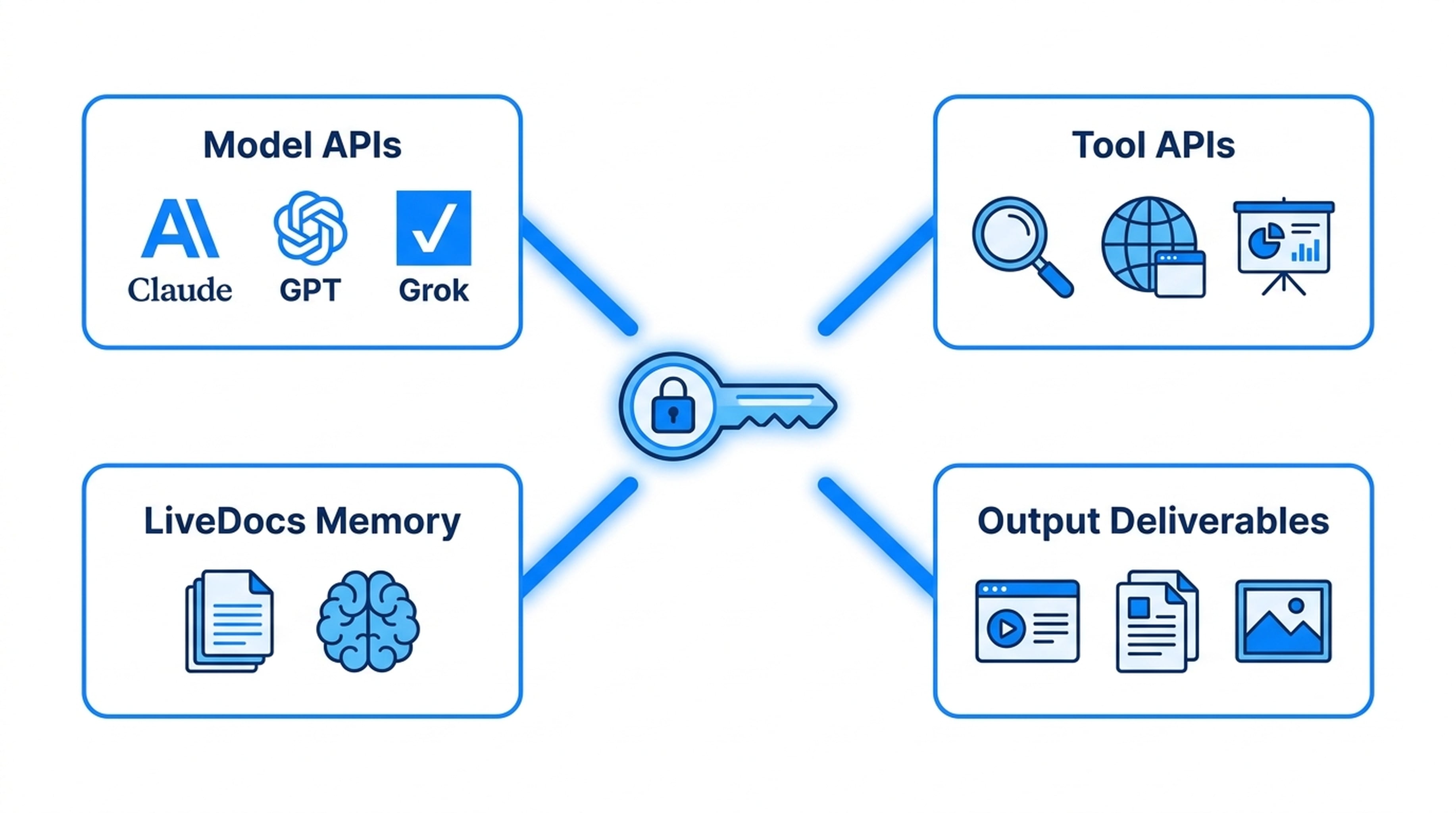
Felo OpenAPI is an API platform that gives AI agents a full capability stack through a single key. It covers four layers:
Model APIs — run top models (Claude, GPT, Grok) at lower cost through OpenAI-compatible, Anthropic-compatible, and Responses API protocols.
Tool APIs — search the live web, extract page content, track X (Twitter) signals, pull YouTube subtitles, generate PPTs, mindmaps, images, and landing pages.
Memory — LiveDocs stores files, URLs, sources, and team context with semantic retrieval. Agents can remember and reuse knowledge across sessions.
Workflows — SuperAgent API handles multi-step conversations with streaming, letting agents chain tools together for complex tasks.
The idea is simple: your agent keeps the thinking. Felo adds the stack it needs to move from chat to finished work.
The Model Layer: Run Better Models for Less
Model APIs are the foundation, and Felo OpenAPI provides access to official models through standardized protocols:
- Claude Opus 4.8, Claude Sonnet 4.6, Claude Haiku 4.5
- GPT-5.6 Sol, GPT-5.6 Terra
- Grok 4.5
All of these run through familiar protocols — OpenAI-compatible Chat Completions, Anthropic-compatible Messages, Responses API, and SuperAgent streaming conversations. One base URL, one API key, no need to manage separate accounts across providers.
Lower model cost matters more than it sounds. When running an agent is cheaper, you test more. You let it run longer workflows. You stop downgrading from a strong reasoning model to a cheaper one just to stay within budget. That difference shows up in output quality, especially when agents need to chain multiple steps together.
The Tool Layer: What Your Agent Was Actually Missing
This is where Felo OpenAPI gets interesting. Models are table stakes now. The real upgrade comes from the tool APIs your agent can call.
Search and Extraction
Agents need fresh data, not just training set recall. Felo provides:
- AI Search — real-time web search with structured results
- Web Fetch — read any webpage and extract content
- X Search — search users, tweets, and track social signals
- YouTube Subtitles — pull transcripts and understand video content
An agent gathers sources, verifies claims against live data, and pulls context from social media or video without manual copy-pasting.
Creation and Output
The gap between an agent's answer and an office deliverable is output capability. Felo bridges it:
- PPT API — generate slide decks with themed templates
- Mindmap API — turn structured ideas into visual maps
- Landing Page API — draft launch pages with copy and structure
- Image Generation — create visual assets on demand
Your agent generates the actual slide deck instead of telling you what it should contain. It drafts a real landing page instead of describing one.
LiveDocs: Memory for the Workspace
Agents that can't remember past context are stuck starting from zero every session. LiveDocs solves this by giving agents a shared memory space:
- Upload files and add URLs as resources
- Semantic retrieval to find relevant context
- Tasks, records, and comments for collaboration
- Reusable knowledge base across team workflows
An agent can pull sources from last week's research, combine them with today's search results, and produce something coherent because it remembers what the team already gathered.
SuperAgent: Multi-Step Workflows
For tasks that require chaining multiple tools together, the SuperAgent API handles streaming conversations where agents plan, execute tool calls, and synthesize results across steps. This is what turns isolated API calls into actual workflows.

Real Workflows Your Agent Can Now Run
Here is what happens when you combine all four layers under one key.
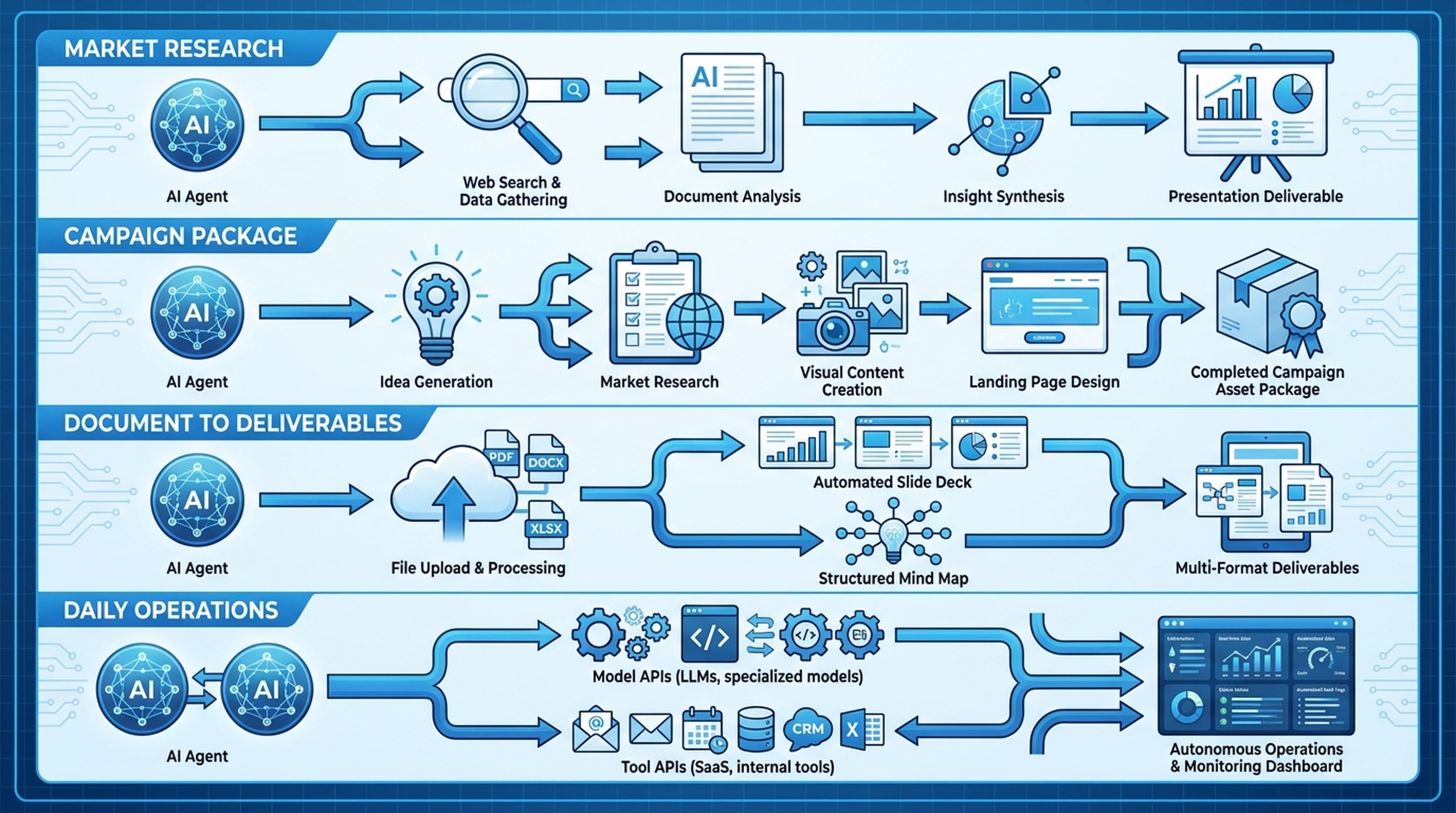
Market research to presentation
Your agent searches for market data, pulls web sources, tracks X discussions for sentiment, saves findings to LiveDocs, and generates a PPT deck. The workflow:
Search API → Web Fetch → X Search → LiveDocs → PPT API
The output is a deck your team can actually review, backed by sources the agent collected and preserved.
Launch idea to campaign package
Start with a product concept. Your agent researches the market, generates visual assets, drafts a landing page with copy and structure, and produces campaign materials. The workflow:
Prompt → Search → Web Fetch → Image API → Landing Page API
You get research, visuals, page structure, and copy from a single prompt.
Document to deliverables
Upload files and URLs, let your agent retrieve relevant content from LiveDocs, and convert everything into slides, mindmaps, briefs, and reusable knowledge assets. The workflow:
Upload files → LiveDocs Retrieve → PPT API → Mindmap API
This turns raw documents and scattered URLs into organized, presentable work.
Daily agent operations
Whether you run OpenClaw, Claude Code, Codex, or Hermes Agent, Felo OpenAPI becomes the capability layer your agent calls for model inference, data gathering, memory, and output. The agent keeps its own logic and planning. Felo adds what it needs to finish work.
Compatible with the Agents You Already Use
Felo OpenAPI does not ask you to switch agents. It plugs into the ones you already run:
- Claude Code — model calls, search, documents, PPTs, LiveDocs
- Codex — low-cost LLM APIs and callable tools for research and content
- OpenClaw — search, X data, extraction, LiveDocs, PPTs, images
- Hermes Agent — full tool layer for custom agent workflows
- Custom agents and scripts — any runtime that speaks REST
Your agent keeps the thinking loop. Felo adds model APIs, tool APIs, memory, and office output abilities.
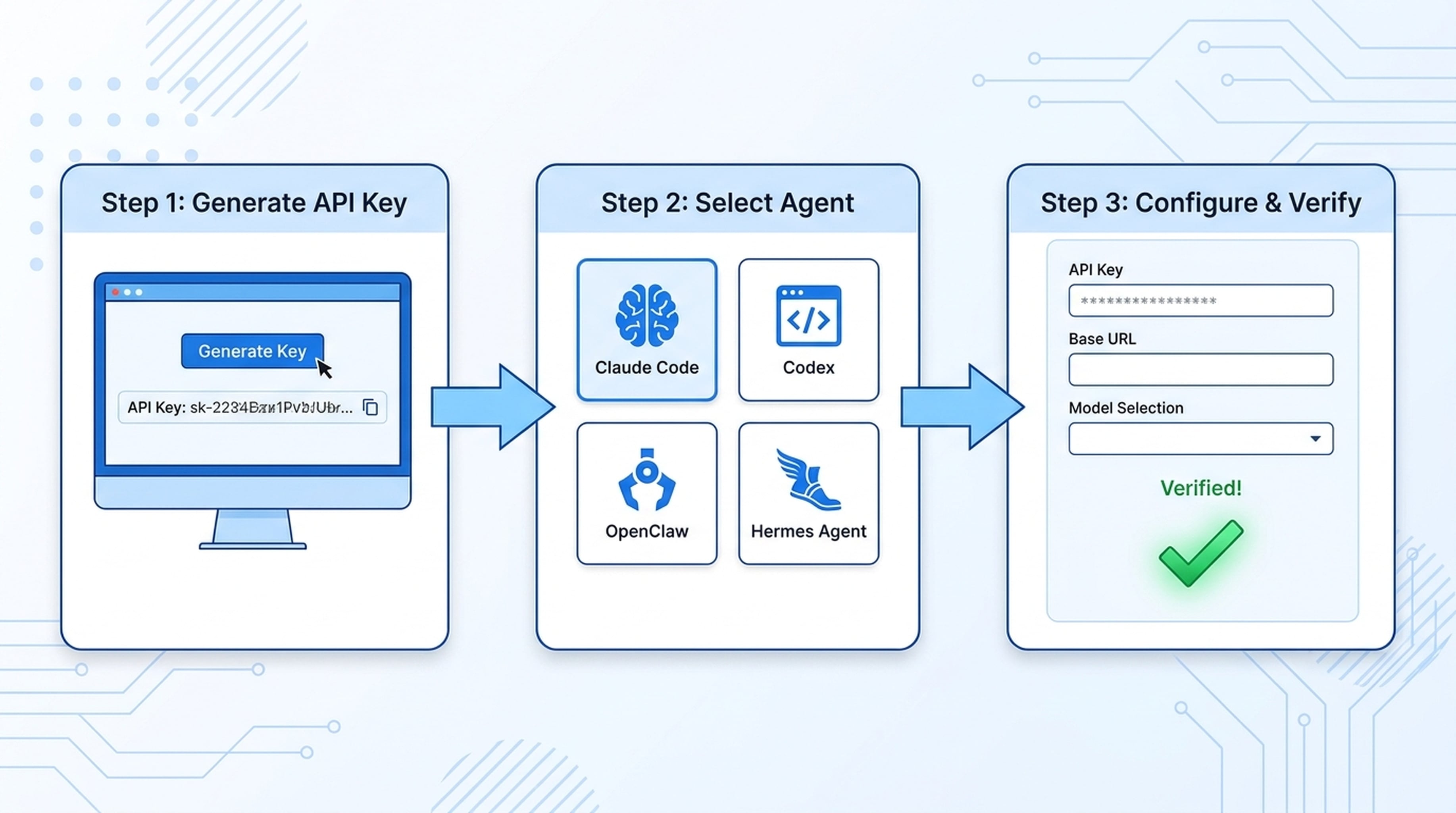
Connect in 3 Steps
Getting started takes about as long as reading this section.
Step 1: Create your API key. Generate one key in your Felo account settings. You will need it during setup.
Step 2: Choose your agent. Open the setup guide for the agent you use: Claude Code, Codex, OpenClaw, or Hermes Agent. Each guide shows exactly where to enter your key.
Step 3: Configure and verify. The guide walks you through setting the base URL, selecting a model, and running a verification step to confirm the connection works.
If you only need model APIs, connecting a model provider is enough. One Felo key also unlocks Search, PPT, LiveDocs, and every other Harness tool with no extra setup needed.
Who Should Use Felo OpenAPI?
Felo OpenAPI is built for anyone using agent tools that can connect third-party APIs.
AI app builders — build apps with model calls, search, web extraction, LiveDocs, and generated pages without wiring every tool from scratch.
Content teams — let agents research topics, fetch sources, generate visuals, and draft campaign materials.
Research analysts — gather sources, preserve evidence, track social signals, and produce presentations.
Creative operations — generate images, landing pages, and visual assets from agent workflows.
Daily productivity — use your favorite agent to run model APIs and tool APIs for everyday office tasks.
FAQ
Is Felo OpenAPI only for developers?
No. Felo OpenAPI is especially useful for people using OpenClaw, Claude Code, Codex, Hermes Agent, and similar agent tools that can connect third-party APIs. If your agent can call an API, it can use Felo OpenAPI.
Can I use it with Claude Code, Codex, or OpenClaw?
Yes. Felo OpenAPI supports model protocols and tool APIs that can be connected to Claude Code, Codex, OpenClaw, Hermes Agent, scripts, and custom agents. Setup guides are available for each.
What does Felo add to my agent?
Felo gives your agent model APIs, fresh information, memory, and output capabilities including web search, page extraction, X data, YouTube subtitles, PPTs, mindmaps, images, landing pages, and LiveDocs.
Why use one Felo key instead of separate tools?
One key gives your agent a coherent stack through a single entry point: LLM APIs to run, tool APIs to gather context, LiveDocs to remember, and output APIs to deliver. No scattered accounts, keys, limits, or billing across providers.
How much does it cost?
You can get started with a free API key and explore the full harness of tools. Pricing details are available on the Felo OpenAPI pricing page.
One API Key. Upgrade the Whole Agent.
Agents are good at thinking. Felo OpenAPI gives them the rest of the stack: models, fresh context, memory, and output power so they can actually finish work.
Start with one free key. Connect your agent. See what it does when it can search, read, remember, and create instead of just chat.
Stop wiring random tools one by one. Give your agent the stack it needs.
This post is also available in 简体中文, 日本語, 한국어, 繁體中文, हिन्दी, Français, العربية, Русский, اردو, Bahasa Indonesia, Deutsch, Tiếng Việt, Türkçe, Italiano, ไทย, Español, বাংলা and Português.