Introducing Felo Academic Search — AI Literature Review, Backed by Real Citations

Ask a research question. Get a structured literature review with verifiable citations from arXiv, PubMed, Google Scholar, CNKI, J-STAGE and more. Pair it with the Felo browser extension for in-page paper translation.
You know the feeling. It's day one of your literature review, you've got twelve browser tabs open, and you still haven't found a clear answer to the question you actually care about. Google Scholar gives you a ranked list of titles. You open each paper, skim the abstract, take notes, and repeat. Two days later you have a folder of PDFs and a rough idea of the field — but no actual review.
Felo Academic Search changes that. You ask a research question. Felo reads across the relevant papers and writes a structured, cited literature review you can verify.

The problem Felo was built to solve
Academic search hasn't fundamentally changed in twenty years. You type keywords. You get a list. The rest is on you. That works fine when there are five papers on your topic. It falls apart when there are five thousand.
Most researchers still spend their first week fighting the search tool instead of reading papers.
Four problems keep coming up:
- A list of titles is not an answer. You still have to open each paper to understand what it says.
- Literature reviews take weeks. Cross-checking dozens of papers for methods, results, and limitations is slow and error-prone.
- AI-generated citations you can't trust. General chatbots fabricate references. You can't use their answers in a thesis or a submission.
- Non-English research gets ignored. English-first engines miss CNKI, J-STAGE, DBpia and other regional databases where important work is published.
Felo Academic Search addresses all four. Here's how.
What Felo Academic Search does
Felo Academic Search is a tool inside Felo AI that turns a research question into a structured literature review — with numbered citations that link directly to the original papers.
Four capabilities work together:
Targeted literature review
Describe the question, the scope, and the depth you need. Felo searches across the relevant papers and writes a structured review, section by section. You get an actual draft, not a bibliography.
Multilingual academic search
One query reaches English, Chinese, Japanese, and Korean sources. Felo translates abstracts and keywords automatically so you don't miss regional research just because it was published in a different language.
Verifiable citation trail
Every sentence in the review links to the exact paper it came from. Click any citation number to open the original PDF or publication page with full metadata. No fabricated references — every source is real and traceable.
Paper speed-reading
Each cited paper comes with a focused summary: methods, findings, limitations, and contribution. You can quickly decide which papers deserve a full read.
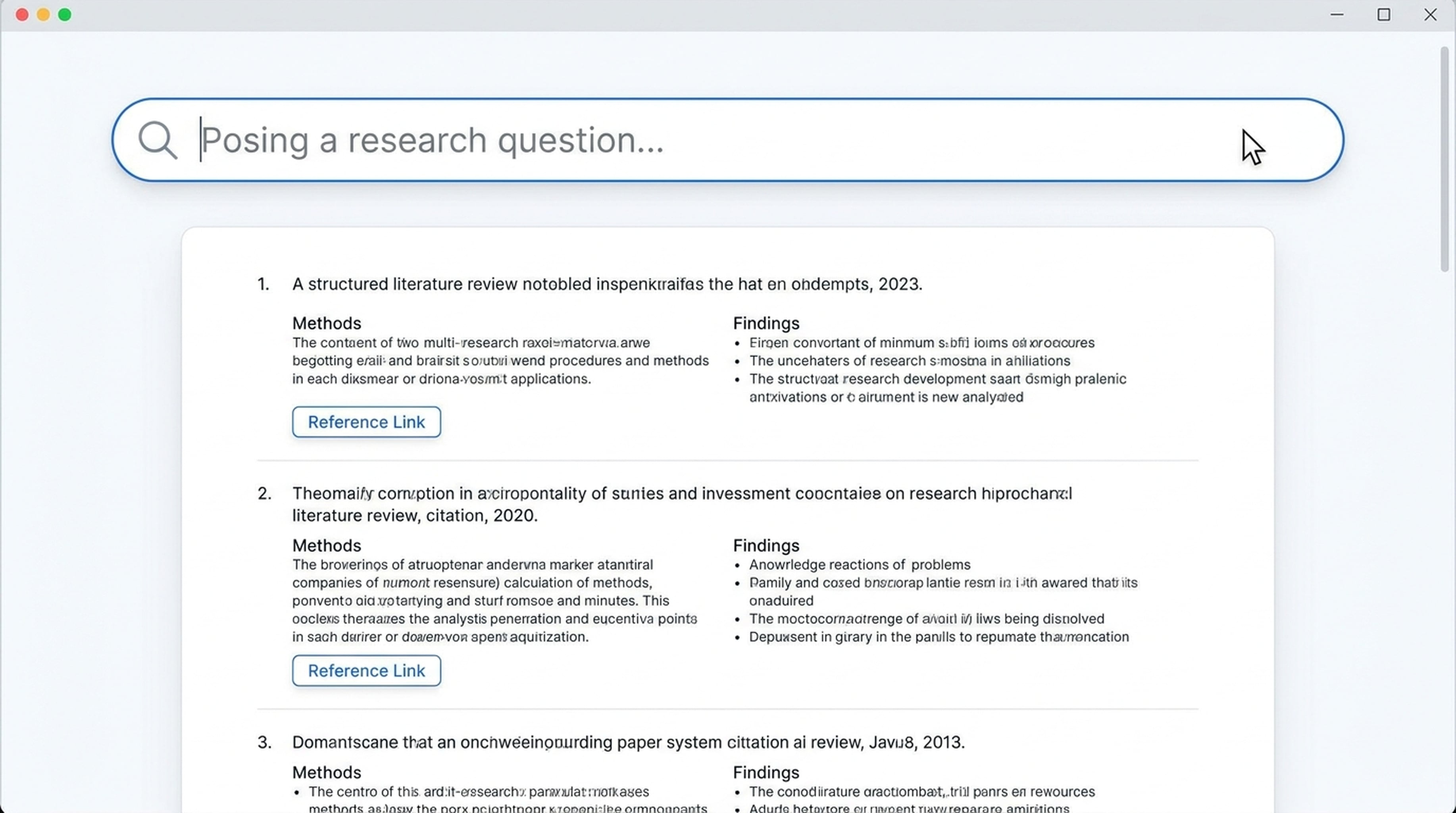
How it works
Three steps. No database hopping, no stitching results together by hand.
1. Ask a research question. Write it the way you'd brief a colleague: the topic, the angle you care about, the time range, and the languages to cover.
2. Felo searches across databases. Queries run in parallel against arXiv, PubMed, Google Scholar, Semantic Scholar, CNKI, J-STAGE and other sources, in the languages you specified.
3. Get a cited review you can verify. Read a structured answer with numbered citations. Click any number to jump to the paper, the specific passage, and the publication metadata.
The whole process takes minutes instead of days.
Go deeper with the Felo browser extension
Academic Search gives you the map. The Felo browser extension gives you the tools to explore.
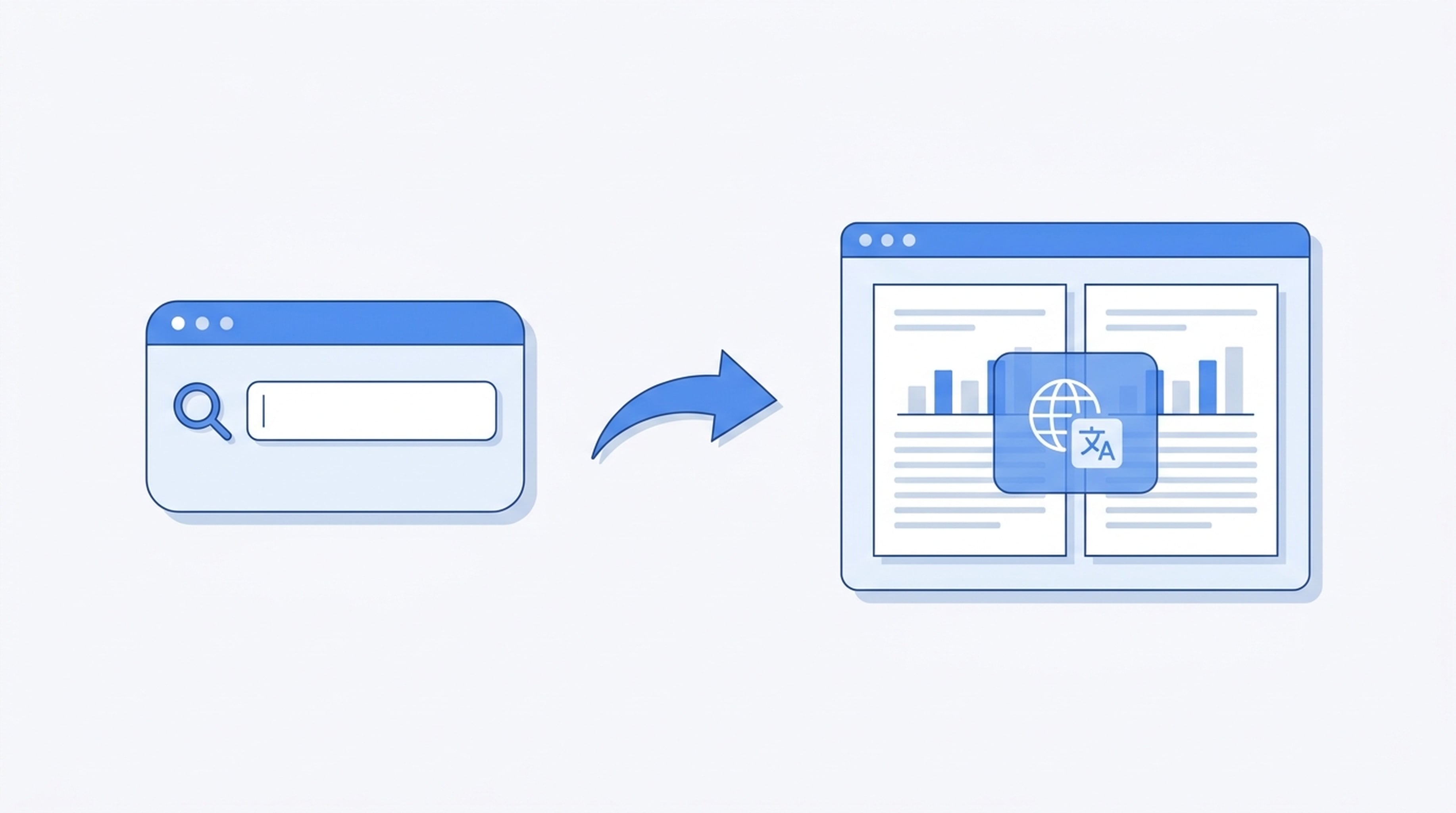
Here's the combined workflow:
- Find papers with Academic Search. Get your cited literature review from felo.ai/tools/academic-search.
- Click through to the source. Every citation links to the original paper — PDF, journal page, or preprint server.
- Read with AI-powered translation. With the Felo extension installed, any paper on any webpage gets translated automatically in your language. No copy-paste, no leaving the page.
- Ask questions about what you're reading. The extension lets you ask anything about the current page and get sourced answers — useful when a paper's methods section needs clarification.
The extension is free, works on Chrome and Chromium-based browsers, and supports 49 languages. For researchers working across language boundaries, the combination of Academic Search and the extension covers the full pipeline: discovery, verification, and reading.
Where researchers use it
These are the situations our early users keep coming back for:
Literature review writing. Open a thesis chapter or grant proposal with a solid draft covering the key papers, debates, and gaps in your field.
Tracking the newest research. Before submission or review, verify the latest work on your topic — including preprints from the past month on arXiv and bioRxiv.
Cross-language evidence. Integrate Chinese, Japanese, and Korean research into an English-language paper. With the Felo browser extension, you can also translate and read the full papers in your own language — without leaving the source page.
Cross-disciplinary exploration. When your topic sits between two fields, Felo searches both at once and shows how each literature frames the same question.
What early users are saying
"I stopped opening twenty tabs. I ask one question and get a review with citations I can actually verify against the PDFs."
— Priya R., PhD Candidate, Computational Biology
"The multilingual search is the real unlock. My students can finally see the Japanese and Korean work on materials science that Google Scholar buries."
— Prof. Daniel K., Associate Professor, Materials Engineering
"I wrote my literature review chapter in a week instead of a month. Every citation traces back to a real paper, so my supervisor trusts it."
— Yuki T., Master's Student, Public Health
"I used to paste abstracts into ChatGPT and pray the citations were real. Now I get a review with working links to the original journals."
— Marco L., Postdoctoral Researcher, Neuroscience
How Felo compares to Google Scholar
Google Scholar returns a ranked list of papers. Felo reads across the most relevant papers and writes a structured review with numbered citations. You start from a draft instead of from a search result page.
Many researchers use both: Scholar to browse, Felo to summarize.
Who it's for
- PhD students writing thesis chapters or preparing comprehensive exams
- Researchers drafting literature reviews for papers or grant proposals
- Master's students exploring a new field for the first time
- Cross-disciplinary teams who need to bridge two bodies of literature
- Anyone who needs to understand a research topic fast — without missing important non-English work
Frequently asked questions
Are the citations real? Yes. Every citation links to a real, verifiable paper. You can click through to the original source and check the exact passage Felo referenced.
What is the Felo browser extension and do I need it? The Felo browser extension is a free Chrome extension that works alongside Academic Search. It provides AI-powered in-page translation for papers in any language, so you can read Chinese, Japanese, or Korean papers directly in your preferred language. You don't need it to use Academic Search, but the combination is powerful for cross-language research. Install it here →
Which databases does Felo cover? arXiv, PubMed, Google Scholar, Semantic Scholar, CNKI, J-STAGE, and more. The list grows over time.
What languages are supported? Felo searches across English, Chinese, Japanese, and Korean sources in a single query. Abstracts and keywords are translated automatically.
Can I use the review in my thesis or paper? The review is a starting point. Every citation is verifiable, so you can check each source and integrate the findings into your own writing with confidence.
Is it free? Felo's core features are free to use. Start at felo.ai/tools/academic-search.
Start your research in one query
Ask your research question. Get a cited literature review you can verify.
Try Felo Academic Search for Free →
This post is also available in 简体中文, 日本語, 한국어, 繁體中文, हिन्दी, Français, العربية, Русский, اردو, Bahasa Indonesia, Deutsch, Tiếng Việt, Türkçe, Italiano, ไทย, Español, বাংলা and Português.