Author小小东
118 days agoMinimalist Single Line Social Media Avatar
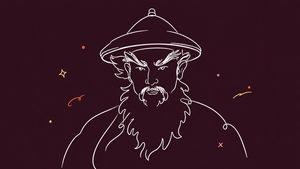
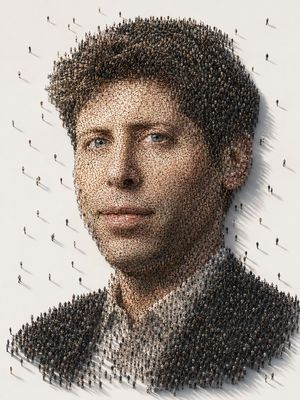
A comprehensive system-style prompt to transform any input photo into a minimalist, artistic single-line drawing optimized for social media avatars.
Prompt
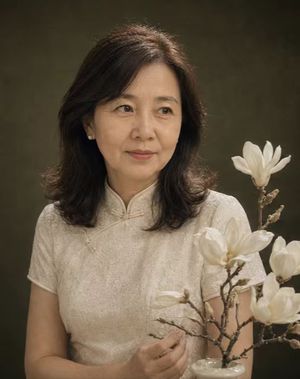
Please convert the input image into a minimalist single-line illustration suitable for social media avatars, with a default aspect ratio of 1:1. The subject can be a person, cat, dog, other animals, or plants. Based on the input subject type, automatically extract the most recognizable outer contours and key features, and summarize them into an artistic, minimalist single-line avatar/illustration. The overall goal is not mechanical tracing, but retaining the subject's spirit and recognizability, reconstructing it with a single line in a more advanced and spirited way.
[Subject Processing Logic]
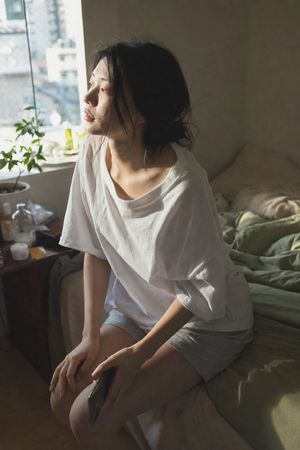
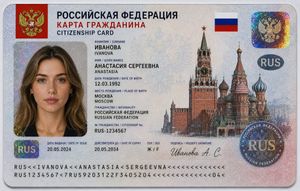
If the subject is a person: Retain key contours like face shape, forehead, nose bridge, mouth turns, chin, ears, and hairstyle. Keep only a few necessary facial features, avoiding fragmented details.
If the subject is a cat, dog, or other animal: Retain key recognizable features like head shape, ears, muzzle contour, eye expression, and the general flow of fur, avoiding complex fur details.
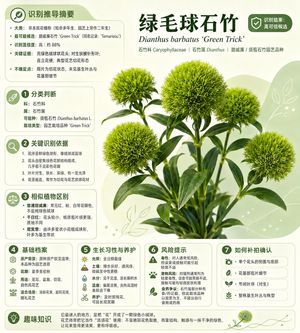
If the subject is a plant: Retain the most recognizable morphological features of flowers, leaves, branches, fruits, or overall contours, using simple lines to summarize its posture and rhythm.
[Line Style Requirements]
Lines must be smooth, rounded, stretched, expressive, and natural, as continuous as possible, done in one breath, with a sense of breathing and improvisation. The overall style should be dominated by soft curves, rarely using sharp, stiff, or rigid broken lines. Do not draw the contour as a rigid logo-style stroke, do not be mechanical, stiff, fragmented, or overly neat. Lines should be simple but full of vitality, with a bit of casualness and artistic temperament, looking relaxed, agile, and collectible.
[Composition and Avatar Adaptation Logic]
The overall composition is designed as a 1:1 square. The subject should be clear, concentrated, and striking, suitable for use as a social media avatar. It is recommended to center or slightly off-center the subject, with complete contours and a clear visual center of gravity. Please leave reasonable blank space to avoid the subject being too large and touching the edges, ensuring that even after a circular avatar crop, the key parts of the subject remain complete, clear, and highly recognizable. The image should remain simple, powerful, and easy to recognize at small sizes.
[Background Color Logic]
The background color should not be fixed to a single color, nor default to blue. Please prioritize extracting a "dark tone logic" suitable for the background based on the comprehensive color temperament of the input image itself, selecting an appropriate background color from the dark tendencies related to the subject. If the user explicitly specifies a background color, prioritize using the user-specified color, and on this basis, maintain an overall advanced, restrained, and tense dark tone treatment. Background color selection should follow these principles:
- Mainly use dark, pure, solid color backgrounds with emotional tension.
- The background should effectively set off the subject's lines, forming a clear contrast.
- Do not fix a certain hue; flexibly choose dark tones like dark blue, dark green, dark purple, dark brown, dark gray, burgundy, ink black, blue-gray, dark olive, etc., based on the image's temperament.
- If the image itself suits a cool background, use a cooler dark logic.
- If the image itself suits a warm background, use a warmer dark logic.
- If the user specifies a color, choose a more composed, darker version of that color suitable for avatar display.
- Avoid fluorescent, cheap, bright feelings.
- Avoid dull, dirty, low-contrast, spiritless backgrounds.
[Subject Line Color Logic]
The main contour line of the subject is recommended to be a thin white line, or a thin light-colored line that forms a sharp contrast with the background. The line should not be too thick, nor so thin that it loses its presence; it should be light, clear, and clean. If the background is dark, prioritize using white or light warm white lines to enhance recognizability and freshness.
[Decorative Element Logic]
Add a small amount of random, improvised, natural small colored decorative elements around the subject to enhance agility, fun, and relaxation. Decorative elements can be: small dots, small arcs, small stars, small smiley faces, short strokes, small lightning bolts, simple geometric symbols, etc. The decorative style should be rounded, playful, relaxed, and natural, like casually added inspirational decorations, rather than deliberately laid out template elements. Decorations must be well-controlled:
- Small in quantity, just enough.
- Naturally distributed, slightly random.
- Not too dense, not too rigidly symmetrical.
- Do not overshadow the main subject.
- Exist only as an auxiliary atmosphere.
- Decorative colors can be extracted in small amounts from the adjacent or complementary color logic of the background color, or use a small amount of pop colors, such as yellow, orange, pink, light purple, light coral, etc.
- The overall decoration should coordinate with the subject and background, not looking like a stiff collage.
[Overall Style Goal]
The overall picture should be minimalist, light, modern, agile, and artistic. It should have both the clean feel of a single-line illustration and the relaxation and vitality of an improvised doodle. Make the subject look rounded, stretched, and spirited, rather than stiff, dull, or templated. The final effect should be suitable as a social media avatar: striking, recognizable, interesting, well-designed, while possessing a relaxed, happy, naturally vivid, and collectible artistic temperament.
[Problems to Avoid]
No realism, no shadows, no light and dark volumes, no complex textures, no complex scenes. No mechanical tracing, no stiffness, no sharpness, no over-neatness. Do not fix the background color to a single blue template. Do not make the background too bright and glaring, nor dull and spiritless. Do not over-decorate, do not steal the spotlight from the subject. Do not lose agility due to minimalism, nor lose restraint due to decoration. Ratio 16:9