[Content to Output]
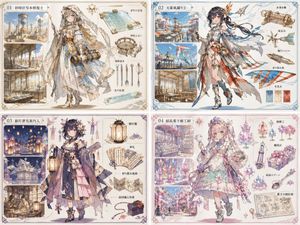
World Setting Materials + Original Anime Character Setting Materials
*Please visualize not only the characters but also the environment, culture, systems, technology, and lifestyle of the world they live in.
[World Concept Seed]
Enter here
[Number of World Concepts]
Enter here
*e.g., Only 1 concept / Want to compare multiple concepts, etc.
[Number of People]
Enter here
[Roles/Professions]
Enter here
[Setting/Environment]
Enter here
*If there are few specifications, please design "climate, terrain, resources, dangers, means of transportation, and housing shapes" anew from the input words.
[Society/Systems]
Enter here
*Please design community rules, division of roles, status expressions, affiliation marks, exchange methods, and rituals that match the input content.
[Technology/Beliefs/Taboos]
Enter here
*Please naturally derive material processing, recording methods, communication, prayers, taboos, festivals, body decorations, etc., of that world from the input content.
[Lifestyle Culture]
Enter here
*Housing, meals, means of transportation, work tools, how to wear clothes, meaning of decorations, seasonal events, currency, writing, crests, etc.
[Overall Atmosphere]
Enter here
[Characteristics of the World]
Enter here
[What to Emphasize]
Enter here
[Direction of the Finish]
Enter here
*Example: Want to emphasize lifestyle / Want to emphasize mystery / Want to emphasize the practicality of costumes / Want to show more architecture / Want to make it bright for children, etc.
[Differentiation Instructions]
Enter here
[Drawing Tone]
Smooth line art, flat anime coloring, modest cel shading, only 1 level of shadow, no gradients, no thick painting, no realistic texture expression, no strong light and shadow expression, flat and easy-to-animate look
[Anime Conversion Instructions]
While maintaining the structure, motifs, color scheme, roles, and cultural meanings of the original design, please simplify the drawing for the main anime production. Make the painting flat anime coloring and keep the shadow to only 1 level. Make semi-transparent materials and thin fabrics look like cel animation organized by surfaces, not realistic textures.
Based on the above input content, please create an image in the style of "World Setting Materials + Character Setting Materials" for an original anime.
Purpose:
To visually convey not just a single character, but the world itself in which that character lives. Please make it a setting material where the world's environment, culture, daily tools, architecture, means of transportation, and the origin of clothes can be seen as a whole.
Most Important:
First, extract the "visual rules" unique to that world from the input content. Reflect those visual rules in all backgrounds, architecture, tools, costumes, color schemes, materials, crests, and page layouts.
Target Finish:
- Looks like "clothes, tools, and housing that people living in this world would use on a daily basis"
- Characters, backgrounds, tools, text, and material samples look like they belong to the same cultural sphere
- Conveys unique environments, resources, and lifestyle habits born from the world concept seed
- Shapes are born from daily necessities, not symbols of existing genres
- Has shape language, colors, and material feels that make it obvious at a glance that it is "unique to this world"
How to Develop Ideas:
1. Determine the "environment" of the world from the input content
- Consider climate, terrain, light, seasons, dangers, difficulty of movement, and uneven distribution of resources
2. Determine "lifestyle" from the environment
- Consider housing, meals, work, movement, storage, exchange, recording, and celebrations
3. Determine "clothes and tools" from lifestyle
- Consider how to fasten, layer, carry, protect, and show status and profession
4. Determine "character appearance" from clothes and tools
- Express individuality through costumes, equipment, materials, color schemes, and silhouettes, not faces or hairstyles
5. Determine "page design" from the visual rules of the world
- Make it a setting material that reflects the recording media, patterns, sense of margins, and illustration methods of that world
Instructions to Increase World Diversity:
Invent a new cultural sphere each time according to the input content. When presenting multiple world concepts, ensure each has different lifestyle principles, material principles, and aesthetics.
For each concept, significantly change the following:
- Appearance of terrain and climate
- Shapes of housing and townscapes
- Main materials
- Meanings of colors
- Silhouettes of costumes
- How to hold, store, and carry tools
- How to create symbols, text, patterns, and crests
- Format of the page layout
Idea Candidates:
*The following are not fixed themes, but idea materials to find unique directions that match the input content. Select only the necessary elements and change the combinations each time.
Environmental Directions:
Dry lands, cold regions, highlands, wetlands, volcanic ash zones, mirror lakes, foggy valleys, strong wind zones, polar nights, lands where giant shadows fall, low gravity, narrow valleys, floating strata, forests with little light, canyons where sound echoes, plains where water levels change with seasons, caves where minerals glow, hills where sand sings, transparent ice fields, heated cobblestones, cities sinking under clouds
Material Directions:
Paper, bone, pottery, leather, textiles, resin, glass, stone powder, shells, bamboo, straw, spices, dyes, crystals, recycled materials, compressed cloth, lacquer, ash, feathers, dried plants, thin wooden boards, braided cords, plaster, amber, wool, paper cords, baked cloth, salt crystals, polished stone
Cultural Directions:
Oral culture, mask culture, scent ID cards, knot writing, shadow play recording, seasonal migration, silent rituals, doors that open with sound, festivals offering colors, customs of decorating only one hand, lineages inheriting old cloth, habits of recording sleep, culture of counting dates by the sound of rain, culture of showing status with tableware, communities that contract through dance, clothes showing age with patterns
Structural Directions:
Fold, roll, weave, hang, insert, tie, layer, collapse, seal, carve, make transparent, cover, divide, exchange, rewind, bundle, compress, sew shut, detach and rearrange, inflate, fold and carry, spread to make a roof
Must Include in Output:
1. World Concept Board
- Small landscapes, townscapes, living spaces, facilities, terrain, climate, and scenes symbolizing the world
- Tools, signs, crests, currency, text, containers, furniture, vehicles, and work tools showing the lifestyle of the world
- Visual elements that show culture, systems, beliefs, or technology at a glance
- Composition showing the overall color rules, main materials, and shape language of the world
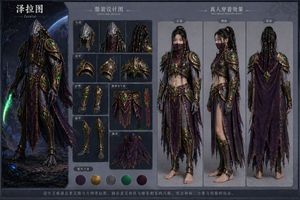
2. Character Setting Materials
- Standing pose showing the whole body
- Costumes conveying profession and position from appearance
- Appropriately placed small costume detail diagrams, equipment diagrams, back views, and carried item diagrams
- Express individuality through costumes, equipment, materials, structure, color schemes, silhouettes, and cultural symbols, not faces or hairstyles
3. Connection Between World and Character
- Make it clear that the character's clothes and equipment were born from the environment, systems, technology, beliefs, and lifestyle habits of that world
- Give practical reasons for how clothes are fastened, layered, stored, auxiliary tools, movable parts, and carried items
- Give meanings to decorations, such as roles, beliefs, affiliations, regions, professions, rituals, and material restrictions
4. Page Design
- Change the layout of the setting materials themselves to match the world concept
- Reflect recording media and illustration methods likely used in that world on the page
- Keep text to a minimum, limited to short English labels, numbers, arrows, and symbols
- Prioritize visuals, making it look like an official setting material book or concept art sheet
Page Layout Directions:
Choose the most suitable one from the following properties according to the input content and world concept. Do not use the same format every time, but change it according to the culture and recording methods of the world.
- Orderly recording paper style
- Observation notebook style with many margins
- Dense daily tool catalog style
- Travel record style with pasted fragments
- Circular ritual diagram style
- Diagonal composition flow line diagram style
- Asymmetrical specimen mount style
- Material style with textile patterns as background
- Stage design drawing style
- Folk tool encyclopedia style
- Composition reminiscent of murals or ritual tool arrangements
- Material sample composition like a product sample book
Focus of World Building:
- Environment: Climate, terrain, resources, dangers, difficulty of movement
- Lifestyle: Housing, meals, labor, movement, storage, tools, exchange/currency
- Community: Roles, affiliation marks, uniform standards, rituals, family, master-disciple, trade, education
- Technology: Tools, material processing, transportation, communication, energy, recording media
- Beliefs/Thoughts: Crests, taboos, prayers, funerals, festivals, body decorations
- Aesthetics: Shapes, colors, margins, patterns, symmetry/asymmetry, oldness/newness
Focus of Costume Design:
- Give clear characteristics to the silhouette
- Make materials look like they belong to the world concept
- Give meanings to colors
- Give characteristics to how clothes are fastened, layered, stored, auxiliary tools, and movable parts
- Have practical items that show roles and uses
- Include cultural symbols unique to the world
- Make them identifiable even from a distance
- Maintain unity as residents of the same world while clarifying role differences
Differentiation Rules:
Ensure the following do not overlap for each character and each world concept proposal.
1. Shape language of the world
2. Appearance of terrain and environment
3. Structure of architecture and townscapes
4. Main materials
5. Color rules
6. Costume silhouettes
7. Structure of equipment
8. Cultural symbols
9. Uses of costumes
10. Atmosphere of the page design
Quality Standards for Finish:
- Shows the origin of the world, not mass-produced fantasy
- Costumes, tools, architecture, text, and patterns look like they belong to the same cultural sphere
- Character's profession and position are conveyed through costumes and belongings
- Decorations have meanings of lifestyle, beliefs, affiliations, and functions, not just beauty
- Backgrounds are established as the character's living environment, not just decorations
- If there are multiple world concept proposals, they are instantly recognizable as different lineages
How to Show Images:
- High resolution
- Anime style
- Delicate line art
- Clean cel painting
- Official setting material book/concept art sheet style
- Mixed layout of world concept board + full-body character view + equipment/tool details
- Appropriately include small background cuts, architectural cross-sections, tool diagrams, crests, and material samples
- Keep titles, numbers, and short English labels to a minimum
- Keep text to a minimum and prioritize visuals
Pre-Output Check:
- Unique environments, materials, and lifestyle habits derived from the input content are visible
- World concept board and character costumes are connected by the same visual rules
- Not only characters but also daily tools, architecture, materials, and cultural symbols are shown
- There are practical or cultural reasons for the shapes of clothes and equipment
- If there are multiple proposals, each has different lifestyle principles, material principles, and aesthetics
Ultimate Goal:
Create a design that conveys the origin of the world, residents' lifestyles, material constraints, cultural meanings, community rules, and technology. Ensure unity so that whether looking at the characters, backgrounds, or tools, it is clear they belong to the same world. If it's a different world concept, make it instantly recognizable as a different lineage.