
A list of titles is not an answer
Keyword search returns ranked papers. You still have to open each one to learn what it actually says.
AI academic search
Ask a focused research question. Felo reads across arXiv, PubMed, Google Scholar, CNKI, J-STAGE and more, then writes a structured review with every claim linked to its source paper.
Built for researchers, powered by verified citations
Covers arXiv · PubMed · Google Scholar · Semantic Scholar · CNKI · J-STAGE
Why another academic search
Keyword search returns ranked papers. You still have to open each one to learn what it actually says.

Cross-checking thirty papers for methods, results and limitations is slow, repetitive, and easy to get wrong.

General chatbots fabricate references. You cannot use their answers in a thesis or a submission.

English-first engines miss CNKI, J-STAGE, DBpia and other regional databases where important work is published.
What Felo does differently
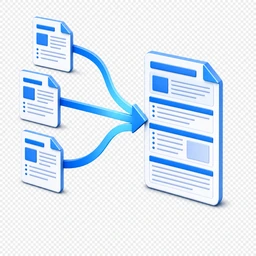
Describe the question, the scope and the depth you need. Felo reads across the relevant papers and writes a structured review section by section.

One query reaches English, Chinese, Japanese and Korean sources. Felo translates abstracts and keywords so you do not miss regional research.

Every sentence in the review links to the exact paper and passage it came from. One click opens the original PDF or page.

Each cited paper comes with a focused summary of methods, findings, limitations and contribution, so you can decide what to read in full.
How it works
Write it the way you would brief a colleague: the topic, the angle you care about, the time range, and the languages to cover.
Queries run in parallel against arXiv, PubMed, Google Scholar, Semantic Scholar, CNKI, J-STAGE and other sources, in the languages you asked for.
Read a structured answer with numbered citations. Click any number to jump to the paper, the passage and the publication metadata.
Use cases

Open a new thesis chapter or a grant proposal with a solid review draft covering the key papers, debates and gaps in the field.

Before submission or review, verify the latest work on your topic, including preprints on arXiv and bioRxiv from the past month.

Integrate Chinese, Japanese and Korean research into an English paper, or let an English-speaking team see the Asian research landscape.

When a topic sits between two fields, Felo searches both at once and shows how each literature frames the same question.
What users say
I stopped opening twenty tabs. I ask one question and get a review with citations I can actually verify against the PDFs.
The multilingual search is the real unlock. My students can finally see the Japanese and Korean work on materials science that Google Scholar buries.
I wrote my literature review chapter in a week instead of a month. Every citation traces back to a real paper, so my supervisor trusts it.
I used to paste abstracts into ChatGPT and pray the citations were real. Now I get a review with working links to the original journals.
For a cross-disciplinary project I searched economics and climate science in one go. Felo surfaced papers I would have missed in either database alone.
As a first-year grad student I had no idea where to start. Asking a research question and getting a cited overview gave me a map of the field in an afternoon.
FAQ
Google Scholar returns a ranked list of papers. Felo reads across the most relevant papers and writes a structured review with numbered citations, so you start from a draft instead of from a search result page. Many researchers use both: Scholar to browse, Felo to summarise.
Start now